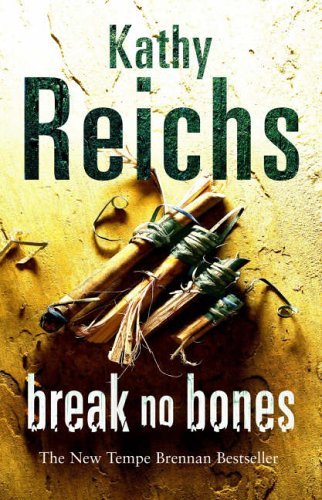
 I have just finished the last Kathy Reichs book, Break No Bones, knowing that the next Tempe Brennan book must be coming out fairly soon. I really enjoy these novels and find them far superior to Patricia Cornwell, but I wish Tempe spent a bit more time in Quebec – it was my fascination with anything remotely Canadian which got me into these stories in the first place. Having said all that, this is still excellent; we find Tempe helping out a colleague by running an archaeological field school in South Carolina, where she and her students find a decomposing body and off we go. I was pulled into the story, with both the whodunnit and Tempe’s personal life becoming ever more complicated, and found the ending very satisfying (even though I had a fairly good idea what the murder(s) were all about). Recommended.
The Book God’s copy of The Prestige by Christopher Priest has been kicking around for 12 years and I have added it to and 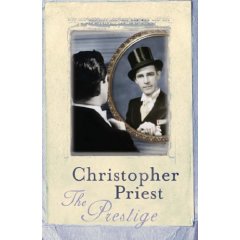 removed it from various reading lists since then. I was finally persuaded to read it by the release of the film version, directed by Christopher Nolan, last year (and now in our possession as a DVD). I really like to read a book before I see its film adaptation. I’m not really sure why – it’s a quirk of my personality that I don’t mind knowing the plot of a film or TV series in advance but absolutely hate the idea of reading ahead; that can really spoil a novel for me.
The Prestige is about the rivalry between two stage illusionists at the turn of the 20th century. Driven by different attitudes to their art and centred around a particular trick where the illusionist is transported from one point of the stage to another, the feud continues until their deaths allow their individual secrets to be revealed.
I loved this book; the atmosphere really gripped me and although I started to get an inkling of what the prestige actually was, I still found the resolution of the story extremely effective. Christopher Priest is a fine writer and I will dig out the other titles by him in the Book God’s collection.
A thin month for book purchases with only a couple of additions to the shelves.
In a previous post I talked about how much I like Stuart MacBride, and so I made sure I got a copy of his new novel Broken Skin as soon as it came out. I haven’t started reading it yet; I’m going to wait until I can get some unbroken (if you’ll pardon the pun) time to really get into the story, and I happen to have some long train journeys coming up in May which should be ideal!
My other purchase is Bloomsbury in Sussex from Snake River Press; this is a guide to Bloomsbury Group through the buildings they were connected with in the county. It’s a beautifully produced slim volume with lovely illustrations, and an interesting approach to one of my big areas of interest.
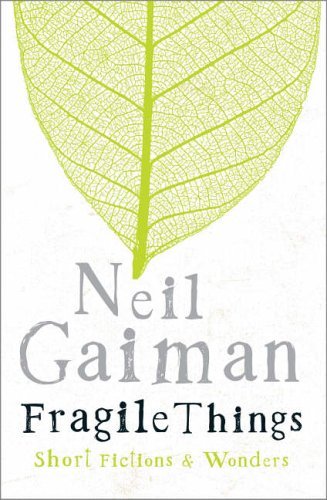 Fragile Things is another wonderful collection of short stories from Neil Gaiman, many previously published in other anthologies and magazines, but still very much worth reading together. I have been a fan since I was introduced to his Sandman graphic novels and have tried to read everything that has come out ever since. Favourite stories include “A Study in Emerald” where the worlds of Sherlock Holmes and HP Lovecraft meet (winner of a Hugo award 2004); “October in the Chair” which won a Locus Award in 2003; “Keepsakes and Treasures” which introduces Mr Smith and Mr Alice, two characters I hope the author will use again; and “How to Talk to Girls at Parties” a new story for the collection which I think is up for an award this year. Even though I’ve singled these stories out I enjoyed them all and can thoroughly recommend the collection if you enjoy fantasy and horror fiction.
 I am sure that I have mentioned elsewhere how much I enjoy books about books, so it was no surprise that I would fall for How to Read a Novel by John Sutherland. Sutherland has produced a number of books on literary puzzles (such as Is Heathcliff a Murderer?) which, besides being enjoyable reads, sent me off in search of classic novels that I knew of but hadn’t read before. For that reason I had high expectations of a book designed (according to the blurb) to be a guide on how to read well, how novels work, and the economics and culture of publishing. I wasn’t disappointed. The Book God was very exasperated at the number of times I read bits out to him, but bore it well.
Sutherland works from two assumptions (1) novels are meant to be enjoyed, and (2) the better we read them, the more enjoyable they can be. He quotes Virginia Woolf, “The only advice, indeed, that one person can give another about reading, is to take no advice, to follow your own instincts, to use your own reason, to come to your own conclusions.”
The main things I took away from this:
- know your taste
- use bestseller lists by picking up titles while they are near the bottom so that you don’t come to them too late (ie when everyone else is reading them – see the Da Vinci Code, which everyone seemed to be reading at the same time, at least on the Tube)
- you can gain a lot of context from looking at the date and publication history and then do a little digging
- if there is an epigraph it’s generally worth reading, for more context
I have also been putting the McLuhan Page 69 test into practice – if you aren’t sure whether you will like a book, flick to page 69, read that, and if you like it, you’ll like the book. It’s working so far!
 Last year I decided that I would expand my Bloomsbury interest by finding out more about Leonard Woolf, and by the power of Amazon was able to get a hold of all five volumes of his autobiography. I have just finished the first, Sowing, which covers the period from his birth in 1880 until his departure for Ceylon in 1904. It’s a nice little Hogarth Press edition from the early 1960s (not the more widely available paperback shown here), designed to slip into the kind of large handbag favoured by the Bride, and is inscribed by a previous owner with her name and the date (of purchase or gift?) – 14 February 1962, 2 weeks after I was born, which feels nice in an odd sort of way.
The book is fascinating in its portrayal of Leonard’s years at Cambridge where he first met many of the figures who would become so prominent in the Bloomsbury circle but I also got a lot of enjoyment from the section on his childhood, particularly the reference to the Marsham Street cow which was pastured at the corner of St James Park in London. The death of his father when Leonard was a boy clearly had a huge impact both emotionally and financially on the family, and the description of his school days makes me glad that things have moved on somewhat. Next volume covers his years in the colonies, and I will read it alongside Christopher Ondaatje’s Woolf in Ceylon, a journey in Leonard’s footsteps.
 I’ve been a member of the Folio Society for a few years now, and despite my best intentions I often end up buying beautiful editions of books I already own and love. The Deptford Trilogy by Robertson Davies is no exception. I have a thing for Canadian authors (and bands although that’s another matter) and came across Davies when I was a student and The Rebel Angels came out. I have to say though that The Deptford trilogy has always been my favourite and I’ll look forward to reacquainting myself with the story of Boy Staunton and how he came to meet his end. If you haven’t read anything by Davies then you should really give him a try, he is definitely worth the investment .
A bumper crop of interesting books found their way into the Bride’s home this month.
I was very keen to get a hold of Heart Shaped Box by Joe Hill, especially once I saw the ringing endorsement from Neil Gaiman, always an attraction for me. Most people now know that Joe is the son of Stephen King, whose work I’ve been following since picking up a paperback of Carrie when I was a teenager. I’ve resisted the temptation to dip into this straight away, but I’m sure it will quickly find its way to the top of the reading pile.
The next two books are the result of information on other blogs. Come Closer by Sarah Gran is ” a scary novel about possession and insanity” so couldn’t be missed. The Green Man is edited by Ellen Datlow and Terri Windling, and I always enjoy their anthologies – it has the added bonus of Charles Vess illustrations as well.
On my way to the IMAX in London to pick up tickets for the Book God and I to see 300 (more of that anon), I finally managed to get to Crockatt & Powell’s bookshop in Lower Marsh, having seen it mentioned in so many other places. I could have spent a fortune, but managed to limit myself to three books. I already have the first volume of the Transylvanian trilogy by Miklos Banffy, and was thrilled to see volumes 2 and 3, which I snapped up as I’ve never seen any of them in bookshops before. Perhaps I just go to the wrong shops. I also picked up The Yellow-Lighted Bookshop by Lewis Buzbee as I’ve never been able to resist books about books.
The Terror by Dan Simmons is about two ships which formed part of Sir John Franklin’s 1845 expedition in search of the North-West Passage. The ships are trapped in the ice, but there is something out there…….
Finally I succumbed to the recommendations of many others, including the Book Panel on Simon Mayo’s radio programme and bought What Was Lost. I’m looking forward to finding out whether it meets expectations.
It’s a bit of a horror and fantasy month as you can see, but a little variety as well. Now I just have to find the time to read them all!
Unavoidable break in posting due to pressure of work; still trying to decide whether to work my way through the list of posts I had planned for the past month, so watch this space.
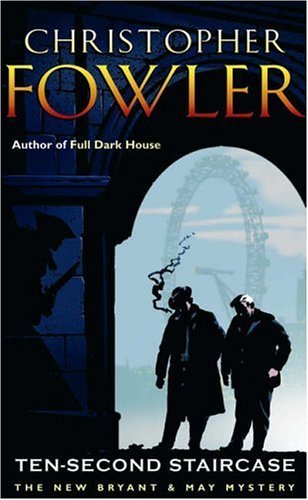 My plan worked and I have spent a very wet Sunday morning curled up in an armchair finishing Ten-Second Staircase by Christopher Fowler.
I first came across Christopher Fowler when I took his novel Darkest Day on holiday with me to Istanbul. The book (which I don’t think is in print any longer) was hugely enjoyable and introduced me to Bryant & May, two elderly detectives who are the main protagonists of the Ten-Second Staircase.
I really enjoy the Bryant and May stories, and always learn something new about London, especially “all the dark and bloody history that’s being forgotten…”, and now have a list of things to Google because I want to know more!
I’m not sure that this novel is the best place to start with these characters – Full Dark House is probably more accessible – but if you have read any of the others you will certainly enjoy this, especially as the case of the Leicester Square Vampire is finally resolved.
BTW, Darkest Day was revised and published as Seventy-Seven Clocks; I must admit I really prefer the original…….


 Bride of the Book God