I have a tendency to enjoy things on the dark side of life, so when I saw this mentioned on Deanna Raybourn’s blog I just had to go and have a look, and so I now know that roughly 124,066 people died worldwide on the day I was born!

People who have died on January 31 over the years include:

  • Bonnie Prince Charlie (of Jacobite rebellion fame) in 1788
  • John Galsworthy (of Forsyte Saga fame) in 1933
  • AA Milne (of Winnie the Pooh fame) in 1956
  • Moira Shearer (of Red Shoes fame) in 2006

Gives a whole new perspective on the day, but won’t stop me enjoying the cake and party hats when the next one rolls around!

It’s that time again, when I confess what I’ve been spending my money on bookwise over the past month!

 The Redbreast by Jo Nesbo – another of the Scandinavian authors I seem to have be drifting towards recently, this looks like a really good read

I Feel Bad About My Neck by Nora Ephron – full of amusing stuff about being a woman, apparently; the reason I bought this was a quote from the book on the back cover “if the shoe doesn’t fit in the shoe store, it’s never going to fit” – how true………….

On The Wealth of Nations by P J O’Rourke – I really don’t know that much about Adam Smith, one of Scotland’s greatest sons, and I’m hoping this will help me understand exactly why he has been (and still is?) so influential

Tatja Grimm’s World by Vernor Vinge – the Book God rates Vinge very highly, and I came across this book via this recommendation on io9.com, and particularly the following observation: “the most memorable aspects of the novel are set in a floating publishing house touring the world on a barge, selling science fiction to the people of Tatja’s continent”

Take Me, Take Me With You by Lauren Kelly – the second of Joyce Carol Oates’s pseudonymous (if that’s how you spell it) thrillers

Daphne by Justine Picardie – this has been reviewed and discussed on a number of the bookblogs so I won’t say more until I’ve had the chance to read it

Wild Nights by Joyce Carol Oates – a collection of short stories which focus on the last days of some of the greatest writers from the USA, including Poe, Dickinson and Twain

Child 44 by Tom Rob Smith – another title that’s been discussed extensively elsewhere, and I ‘m really looking forward to reading it


Picked up from Cornflower and Harriet Devine, this requires you to find the nearest book, go to page 123, find the fifth sentence then post the next three, so…………

Nearest book is Murder on the Orient Express by Agatha Christie (I pulled it from the shelves while writing my thoughts on the film version), and the fifth sentence on page 123 is:

“I thought she too had been murdered!”

Next three:

“I came at a run, and there she was screaming like a madwoman, and she cried out that she must fetch you and she departed, screeching at the top of her voice and telling everybody whose carriage she passed what had occurred.”

He added with a gesture of the hand: “It is in there, monsieur. I have not touched it.”

Lauren Bacall handled it very differently in the movie, of course, not a screech in sight (or sound)!

Why not have a go?

I’m not reading as much non-fiction as I would like, with a pile of historical biographies in particular glaring at me reproachfully. So this seems like a good idea, and I’ve tried to identify a starting list, though these may change:

1. The Undercover Economist by Tim Harford [16 July]

2. Travels with a Medieval Queen by Mary Taylor Simeti [22 June]

3. A Brief History of Secret Societies by David V Barrett [2 July]

4. The Age of Illusion by Ronald Blythe replaced by The Awful End of Prince William the Silent by Lisa Jardine [10 August]

5. Ubiquity by Mark Buchanan [4 August]

The challenge is to read five non-fiction works between May and September 2008, with one that is different from the others (so for me 4 history-type books and one on economics).

Murder on the Orient Express [1974], directed by Sidney Lumet, starring Albert Finney and many, many more.

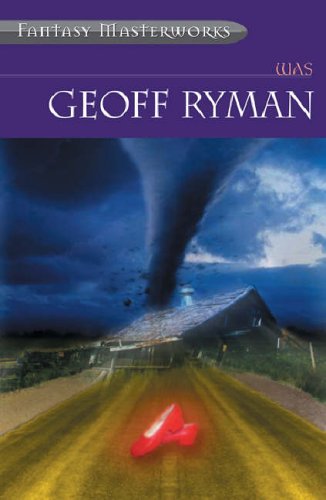
I have found this a difficult book to review, because once I started reading it I realised that it isn’t really a fantasy; in fact Ryman himself in his afterword (which some reviewers have seen as a part of the novel itself) says that he is “a fantasy writer who fell in love with realism”, in as much as some of the events which make up his story didn’t really happen, or might have happened in a world that is slightly different to our own.

Was tells the story of three people, all of whom have an involvement with The Wizard of Oz. Jonathan is an actor dying of AIDS who was due to play the Scarecrow in a stage adaptation of Oz when he discovered how ill he was, and whose childhood in Canada was affected deeply by seeing the first TV broadcast of the Oz film. Frances Gumm is a child singer who will grow up to become Judy Garland with all that entails. Dorothy Gael is an orphan who goes to live with her Aunt Em and Uncle Henry in Kansas in 1875, where she leads a harsh life including being abused by someone close to her, and has an encounter with a young teacher called Frank Baum which provides some of the inspiration for his children’s story.

The structure of the novel is very similar to that of Michael Cunningham’s The Hours, but very different in tone and more unbalanced. What I mean by that is that the novel is really about Dorothy, and Jonathan’s search for her at the end of his life, and there really isn’t that much about Frances. The blurb on my copy describes this as “an epic fable of lost innocence” and I that feels right to me.

As I said at the beginning, whether this is really a fantasy novel in the traditional sense I’m not sure, but I found it very powerful; I became totally gripped about a third of the way through and wanted to know how things were going to turn out. The bleakness of Dorothy’s life in particular will be difficult for some to read, but I’m glad that I had the experience.

This is my second read for the Once Upon a Time II challenge.

Susan over at You Can Never Have Too Many Books put up a fascinating post on reading horror last week, and having thought quite a bit about this, and having consulted the local book-loving vampire bat (from Whitby no less) I thought I would throw in my tuppenny’s worth!

Do you read horror novels?

Yes, but not as many as I used to. I’ve become really disappointed by the number of series there are which get less satisfying the longer they go on (Anne Rice and Laurell K Hamilton spring to mind). I find that I’m reading more and more short stories, where the authors have to work harder to get the feeling of dread across to the reader.

If so, who do you read?

Stephen King is still my favourite (I first read Carrie when I was 15 in 1977, and haven’t really stopped). Christopher Fowler (pre Bryant and May) and Kim Newman are also interesting, along with HP Lovecraft of course, and MR James for ghost stories. New discoveries yet to be read include Dan Simmons and Joe Hill.

What kind of horror?

It used to be anything with vampires would get me hooked (but see my answer to the first question). I don’t mind a bit of blood and gore, but I do like originality, and atmosphere is particularly important for the ghostly stuff. And I do like a bit of Gothic.

If you’ve stopped reading horror, why?

Still persevering, still looking out for new and interesting things. A lot of the good horror seems to overlap with fantasy quite a bit, which suits me fine.

Favourite horror books

Salem’s Lot is still my favourite King, and is due for a re-read this year, I think.

Couldn’t pick a favourite MR James, they’re all too good, and I look out for repeats of the BBC adaptations which are often shown here at Christmas.

At the Mountains of Madness and The Shadow Over Innsmouth are my favourite Lovecraft tales. By the way, if you want a good Lovecraftian pastiche, you can’t go wrong with the Neil Gaiman short story Shoggoth’s Old Peculiar (hope I’ve got the title right, couldn’t find my copy).

Ooh, I nearly forgot Dracula – still the best vampire story. One of my best holiday experiences ever was listening to the Richard E Grant audio version while being driven across the North Yorkshire Moors – fantastic!
So no challenges for over a year and then three come along at once! Becky’s challenge looked really interesting, and I’m glad it’s over a long period of time as, despite how much I love the whole Arthurian thing, Camelot overload needs to be avoided. The goal is to read 6-12 books starring characters found in or inspired by Arthurian legends. Still thinking about my list for this, but have the first few marked out:

1. The Coming of the King by Nikolai Tolstoy

2. The Once and Future King by TH White (this is a re-read but in a spanking new Folio Edition so don’t care!)

3. The Enchantresses by Vera Chapman

4. The Mists of Avalon by Marion Zimmer Bradley

5. The Idylls of the King by Alfred, Lord Tennyson

6. The Merlin Codex by Robert Holdstock (this is a trilogy, haven’t decide if I’m going to treat them as separate reads)

I will probably add to this as I rummage through the bookshelves and find more on the theme.

Another book about a murder, but this takes a very different approach from my previous read.

Julie Myerson’s Something Might Happen plunges you directly into the story. A woman is horrendously murdered near her home in a small seaside town, and this is the starting point for a novel about grief, and the effect that such traumatic events can have on the people they touch. The main character in the novel is Tess, the murdered woman’s best friend, and we see the unfolding events through her eyes as the police arrive and carry out their investigation, and the questions they must ask start to expose complex feelings. Tess herself becomes drawn to one of the other characters, but then another tragedy strikes and makes her reassess her situation.

It’s quite difficult to describe this book without giving too much away, not that it’s a mystery in the conventional sense at all, but the developing emotional situation that Tess finds herself in is so well written and beautifully paced that it would be a shame to examine it too much and spoil the effect for other readers. All I can say is that I found it very moving; it’s really compelling, and for that reason is the first book for some time that I have effectively read in a sitting. Towards the end I found myself close to tears, though not quite as embarrassingly so as with another novel (about a time-traveller’s wife) that I had to stop reading on the bus in case I totally lost control.

This novel it makes very clear that real life is a mess and things are never tied up as neatly as we might like to think. Very, very sad but well-worth reading.

The Blood-Dimmed Tide is, I suppose, best described as a police procedural, a type of crime fiction which I enjoy very much (as long as it is done well). The novel is set in the early 1930s and involves John Madden, a former police inspector who, following a harrowing case described in Airth’s previous novel River of Darkness, has given up his career to settle in Surrey with his wife and children and become a gentleman farmer. His connections with his former colleagues are still very alive, and when he assists with a search for a missing child which results in him finding her mutilated body he inevitably gets drawn into the investigation of what appears to be a serial killer at work.

That’s the bones of the story but what I enjoyed about this novel was the tone, which is rather melancholy; Madden had some terrible experiences in World War One and these colour his attitude to life. This makes Madden a genuinely sympathetic character, to my mind, and gives the novel a moral centre which is there even when we are following the activities of the other characters. I also found the backdrop of growing unease about what is happening in Europe, particularly in Germany, gave the story some depth. Unfortunately it looks like Rennie Airth has only written these two John Madden books which is a shame as I would have liked to see what happened to him. If I’m wrong and there are others in this series I would love for someone to let me know.

Bride of the Book God

Follow brideofthebook on Twitter

Scottish, in my fifties, love books but not always able to find the time to read them as much as I would like. I’m based in London and happily married to the Book God.

I also blog at Bride of the Screen God (all about movies and TV) and The Dowager Bride, if you are interested in ramblings about stuff of little consequence

If you would like to get in touch you can contact me at brideofthebookgod (at) btinternet (dot) com.

The Sunday Salon.com

Goodreads

Blog Stats

  • 48,578 hits
March 2026
M T W T F S S
 1
2345678
9101112131415
16171819202122
23242526272829
3031  

Categories

Archives