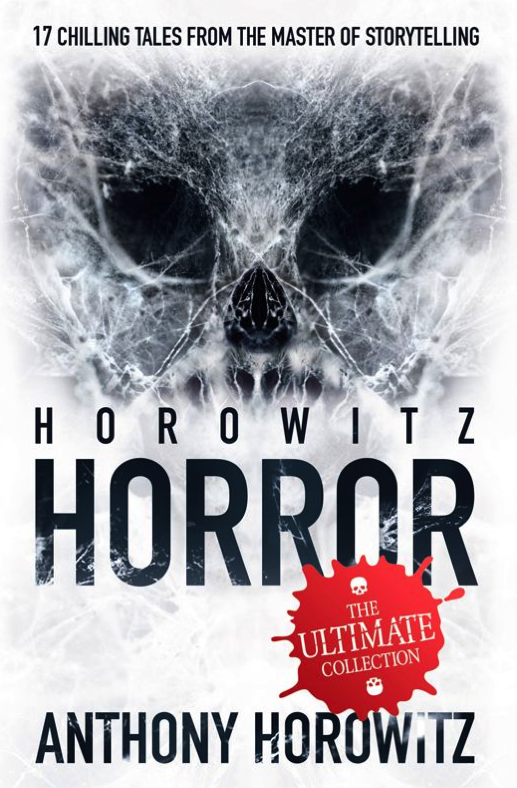
IMG_0122What’s it all about?

So Horowitz Horror is exactly what it says on the tin; a collection of horror stories for young adults by Anthony Horowitz, he of the Alex Rider books (amongst others).

Why did I want to read it?

I love a good horror story. As a teenager I religiously collected the Pan Book of Horror series (as edited by Herbert van Thal) with their gruesome stories and lurid pulpy covers (this one  a particular joy). My parents were probably appalled but very much of the view that reading was reading was reading and let me get on with it as there was no evidence that I was turning into an axe-murderer. These stories are much less nasty, to be fair, but suitably creepy.

What did I think of it?

I’m not the target audience for this collection by a good 35 years but I enjoyed them all; particular favourites were The Hitchhiker and Bath Night. I liked the ordinariness of the situations the protagonists found themselves in, how unsettling everyday objects can become. Light touch in the story telling.

Conclusion

Really great fun.

This was a read for RIP VIII.

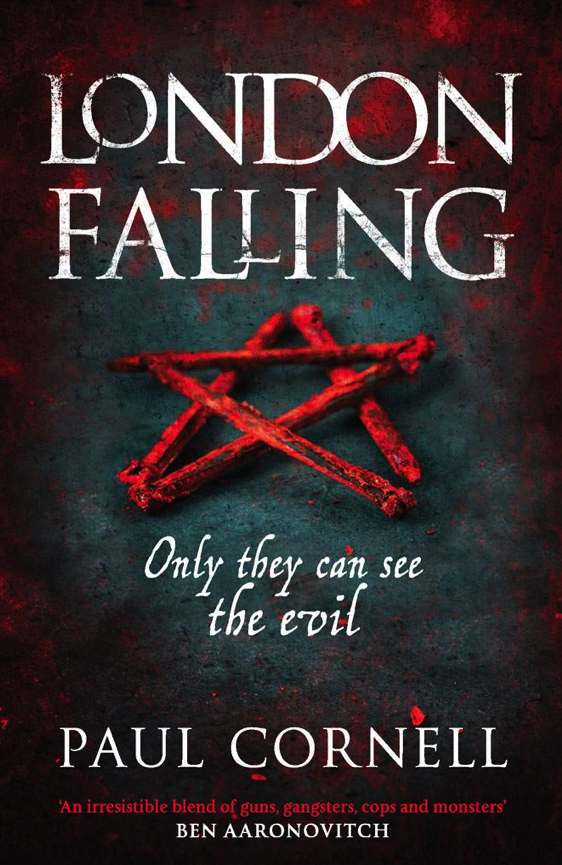
IMG_0121So, the first of a flurry of mini-reviews to clear my backlog and leave me with a relatively clean slate for 2014. Apologies in advance for swamping timelines and feeds and whatnot but it has to be done!

What’s it all about?

So London Falling is basically a police procedural which takes an unexpected turn.  DI James Quill is managing an undercover op as part of an investigation into London’s organised crime when it all goes horribly wrong and his main target is killed in a gruesome and unusual manner, and it becomes clear that there is something evil lurking around London. Cue the creation of a team of misfits shunned by their colleagues and using unorthodox methods to get to the bottom of something very old. There’s a witch. There’s a talking cat. There’s a football connection. And there’s a lovely set up for what is clearly going to be a series.

Why did I want to read it?

I like Paul Cornell; I follow him on Twitter, I’ve got his Wolverine comics on my iPad and he’s written some cool stuff for Doctor Who. I liked the premise for the novel, especially as I’m a sucker for anything in which the history and mythology of London is as big a part of the story as the human characters.

What did I think of it?

Loved it. Read it over a couple of days, felt the story pulling me along, really wanted to know how it was all going to work out. It would be lazy to say that it’s similar to the Rivers of London series by Ben Aaronovitch and Christopher Fowler‘s Bryant & May books, both of which I love deeply. London Falling is grittier than the former and not quite as peculiar (peculiar is a positive word in this context) as the latter but they do all complement each other very nicely.

Conclusion

Enjoyed it a great deal and am looking forward to the next one (The Severed Streets, due out here in May)

This was a read for RIP VIII.

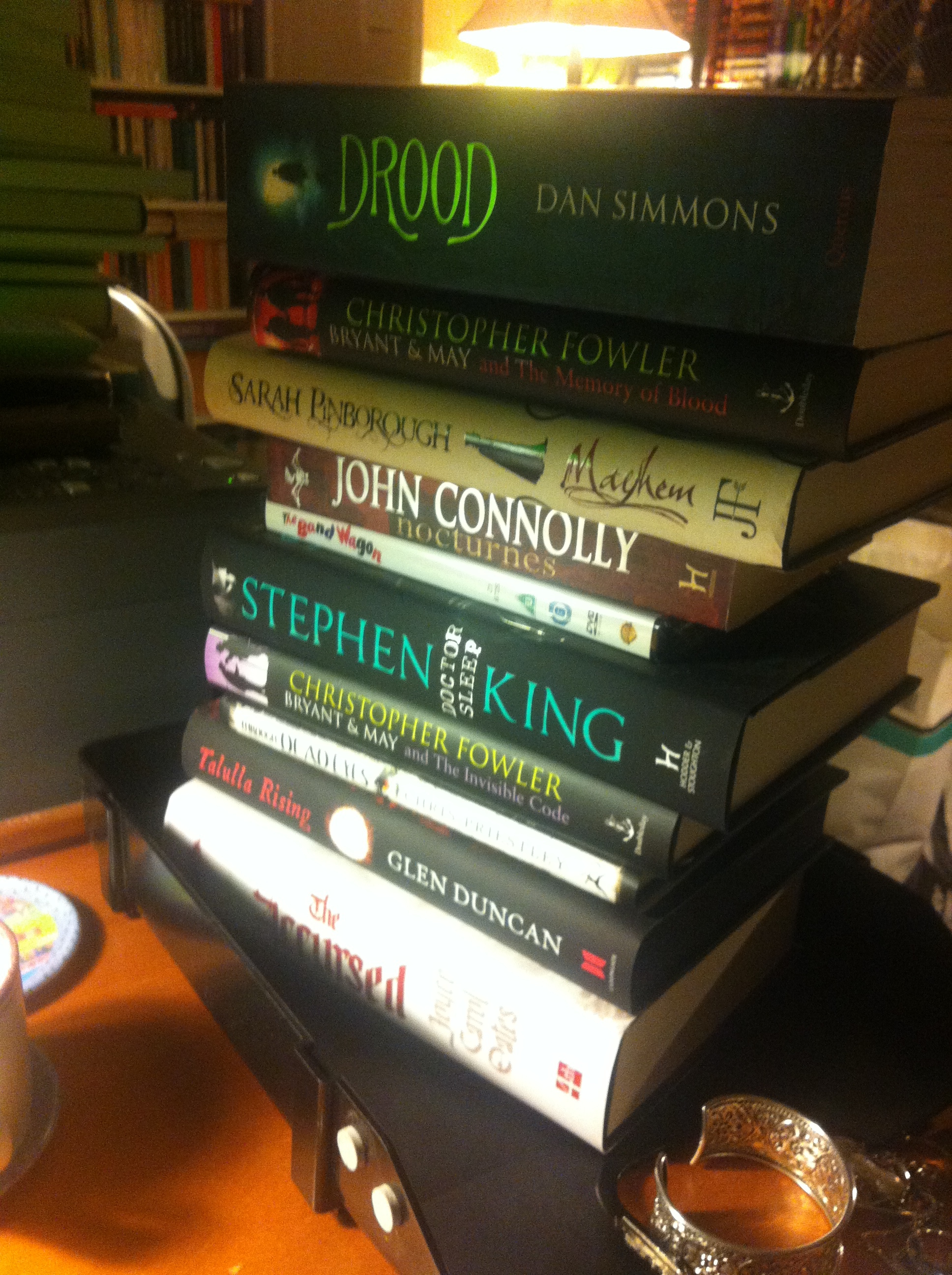
IMG_0349So I stuck this photo up on Facebook earlier this evening as a reminder to myself of the size of the task before me, and I know I said it the last time I posted here but I really really mean it this time. I am going to finish all of my outstanding reviews by the end of the year and either publish or have them scheduled so that I can start 2014 with as clear a state as possible. I don’t mind things leaching over from one year to the next but I read some of these books (and watched some of these films) way way back in September and a grip must be got.

In terms of what I’m reading now, just finishing off Sixty-One Nails (recommended by both the Book God and Silvery Dude and extremely enjoyable). Talking of Silvery Dude, he and I have just had a Twitter exchange about Stoner, the book everyone seems to be talking about which is why I’m not reading it (yet). My tendency not to read in the crowd is probably the reason why I am only just picking up The Thirteenth Tale (though that may have much to do with the TV adaptation which will be on over Christmas with Olivia Colman and Vanessa Redgrave). It looks like being one of the highlights alongside Doctor Who, Sherlock and The Tractate Middoth (the one I am most looking forward too *gasp*!)

So it’s been slightly over a month since I last posted here and something similar over at Bride of the Screen God. This was an unplanned break due largely to dealing with a range of health issues (all diagnosed and manageable but nevertheless unsettling), a heavy workload and then disappearing for three weeks on holiday in Scotland with the Book God. So I now find myself with a backlog of ten book and five film reviews which I’m hoping to sort out so that I can get back on schedule by early December. Lots of good things to read and see while I was away from the blog and although the reviews may be a wee bit shorter than normal I do want to try and cover everything if possible. Will be very interesting to see how much I’ve retained about some of the older stuff; at least one of the movies goes back to August Bank Holiday which doesn’t seem that long ago in some respects but the gap will certainly weed out those that had a lingering impact. I hope you’ll enjoy what’s coming up, especially all the RIP reads!

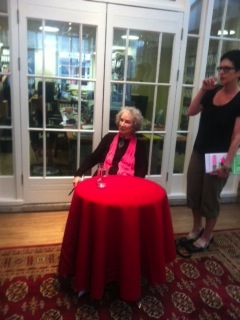
ImageI was very lucky to get a ticket to hear Margaret Atwood speak about her new novel MaddAddam at the Hatchards Bloomsbury Book Club in Bedford Square at the end of August (and of course to get my copy of the book signed). (Apologies for the fuzzy photo!)

I have been an Atwood devotee since I was a teenager but this is the first time I’ve heard her speak in person, and what a thrill it was. She is such a presence, so articulate and willing to engage and debate, and I took piles of notes which I don’t intend to repeat here you’ll be relieved to note.

  • I was interested to hear that she hadn’t originally intended Oryx & Crake to be the first in a trilogy but when she finished it she realised that the abrupt ending would lead to questions and that she would have to revisit the world she had created.
  • She talked about the distinction between speculative and science fiction. She said this wasn’t about one being better than the other but about accurate labelling; when she sees something described as science fiction she expects rockets and planets and feels cheated if they aren’t present. She distinguished between two pioneers – Jules Verne (close to reality, might happen, potentially true) and HG Wells (fantastic, not real).
  • She reads the back pages of science journals to see what people are working on (and encourages us to do so too)
  • One of humanity’s first technologies was telling stories, and the ability to understand stories begins in children at an early stage, within the first year.
  • “We speculate what Spot the Dog is thinking, but he’s probably not thinking about who makes dogs”

All fascinating stuff, and the promise of more to come. I left the event even more of a fangirl than when I went in!

Girl in a Green GownEarlier this year I enjoyed watching a series on BBC4 about Flemish painting written and presented by Andrew Graham-Dixon. One of the paintings featured was the Arnolfini portrait by Jan van Eyck, one of the most recognisable pictures in the world, and a firm favourite of mine. A few days later I happened to be in King’s Cross station and spotted Carola Hicks’ Girl in a Green Gown: the history and mystery of the Arnolfini portrait and just had to buy it.

I’m so glad that I did.

What I hadn’t realised is that, unusually for a painting this old, its provenance can be tracked from the date it was painted right up until it became part of the collection in the National Gallery in the 1840s. What makes this book so fascinating is that it alternates the stories of the various owners (including one of my favourite historical figures, Philip II of Spain) with various detailed aspects of the picture itself – the mirror, the clothes, the chandelier, the dog etc. – explaining both the symbolism and the technical skills involved.

There is heaps of information in this book but it’s presented in a light and engaging way which certainly held my interest and had me looking up further information elsewhere. there is also a fascinating chapter on how perceptions of the picture have changed over time and how it has ben adopted and adapted for satirical and advertising purposes among others.

Sadly, Carola Hicks died from complications relating to cancer before she had put the finishing touches to the book, but her notes and amendments were incorporated by her husband so that her work could be published. I’m so glad he was able to do so because this is just a delight and if you are at all interested in art you should seek this one out.

About time for another National Gallery visit I think!

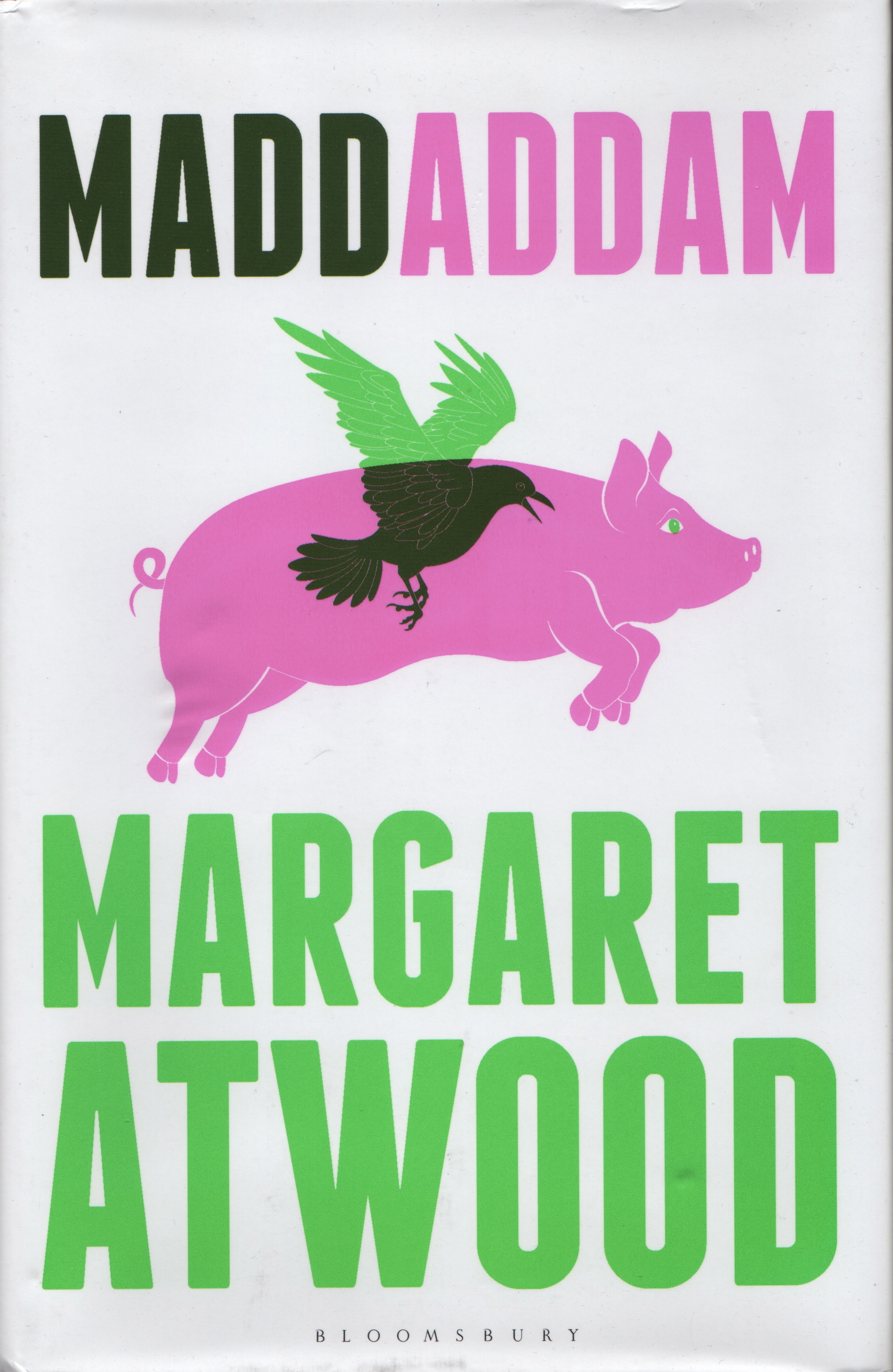
MaddAddamSo, MaddAddam is the final volume in the eponymous trilogy by Margaret Atwood which began with Oryx & Crake and The Year of the Flood which I have reviewed separately here and here respectively. At the end of the previous volume the various threads of narrative came together and we are now moving forward into the future.

After the man-made plague a small group of humans have survived and we watch them come together and try to form a community and find a way to live in a world where supplies are dwindling, there uncertainty about just how many other people are still alive, and where they have to adapt to sharing the world with the Crakers, a genetically designed species of people who were designed to replace humanity which should have been wiped out. In amongst all this there are two threats: a few extraordinarily unpleasant men who seem to enjoy nothing other than inflicting pain and misery and, more interestingly, the pigoons, genetically modified intelligent carnivorous pigs who become really key to the survival of our little group in quite unexpected ways.

Although the novel is primarily focussed on establishing a new society (albeit a very localised one) there continue to be flashbacks to the past told through the eyes of Zeb who has become the partner of my favourite character Toby, and in telling her his life story illuminates us further on the background to the creation of the plague and the founding of God’s Gardeners, a sect which turns out to have been more than it seemed.

I enjoyed MaddAddam, was pleased to find out more about characters I had come to feel strongly about, but I’m not sure that it really comes to a conclusion, unless the conclusion is that no matter how well you think you have designed something (in this case the Crakers) you cannot plan for everything and once things are out in the world they will develop as they must. And it is very amusing in places.

IMG_0312I’m glad I took the time to read the trilogy so close together as I feel that I might have got lost if I’d read them as they were published; I found them dense (in a good way), lots to think about and jeep track of. If you enjoy speculative fiction you should give these a try.

And I was thrilled to get my copy signed by the great lady herself; more of that in a future post.

Year of the FloodThe Year of the Flood is the second book in Margaret Atwood’s MaddAddam trilogy. It takes us back to the events described in Oryx & Crake (my review of that is here) but where the first novel told the story of the events around the man-made plague which devastates the world from the inside through one character, Snowman, The Year of the Flood addresses the same events from the perspective of two women in the outside world.

Though it comes as no surprise that, as we work our way through the stories of Ren and Toby, we become aware of links and connections with Snowman’s tale, some more obvious than others.

Ren is an exotic dancer who finds herself trapped in quarantine in the club where she works. Toby has taken refuge in an abandoned health spa and watches and waits on the building’s roof garden. The book alternates between the stories of each woman, and within their individual tales between the present and the past. This helps us build up a picture of the society destroyed by the actions of Crake, and gives us some clues as to why he thought it all had to be wiped away. The segregation, casual violence and exploitation of technology is vividly described in the novel, and the voices of the two women are strong and affecting.

I became particularly fond of Toby as a character, especially her involvement with the sect known as God’s Gardeners and her habit of noting the sermons and saints days and rituals that they practised. And of course her tending of the bees. Inevitably she and Ren come together and the book ends at almost the same point as Oryx & Crake, bringing the two narrative strands together and setting us up for the final instalment.

I loved this book and read it very quickly; middle books often suffer (just like middle films) from being a bridge between the set-up and the denouement and being unresolved in themselves, but I didn’t feel that was the case here at all. Perhaps it was the female point of view, perhaps it was the greater understanding it provided of the world the story is set in, perhaps it was just that I loved Toby so much, but for me (and without pre-empting my review of the final novel) this was the strongest instalment in the trilogy and the one I can see myself going back to. Very enjoyable.

Scan 1I have been reading Margaret Atwood since I got a hold of Lady Oracle when I was 15 years old and was totally smitten; that was *gulp* 36 years ago, which is really hard to have to acknowledge, so let’s move swiftly on. I have always wanted to see her in person so was thrilled to get an opportunity to hear her speak about her newest novel, MaddAddam (more of that in another post). Then I realised that I hadn’t read the previous two volumes in what has become known as the MaddAddam trilogy, so I decided to put that right.

Oryx and Crake is set in the not terribly distant future and is seen through the perspective of Snowman who believes himself to be the only survivor of humankind after a man-made plague has wiped out all but the Crakers, a genetically engineered species of humanoid. The book alternates between the difficult present where Snowman struggles to survive, and his memories of the past where he was Jimmy, the best friend of the man who would become Crake and in love with the beautiful Oryx. Before the great catastrophe, the world (or at least the world that Jimmy knew) was split into the Pleeblands, where the majority of the ordinary population lived, and the various Compounds in which the elite lived and worked for corporations and were involved in experimentation in genetic engineering, producing strange hybrid animals which are now roaming free. Snowman is a sort of guardian to the Crakers, for whom the world was swept clean. Sort of.

I thought this was a wonderful piece of speculative fiction (Atwood doesn’t like this novel to be referred to as science fiction, which I’ll pick up on in a future post). Typically I found the build up to the dreadful events more interesting than Snowman’s current struggles and if I’m honest I found the Crakers a bit irritating at first, but it as it becomes clear that their designer had not been able to remove those human traits that he considered destructive (he was not a fan of speculative fiction) they grew on me, as did Jimmy/Snowman himself.

The ending of the book is inconclusive but I quite liked that, the uncertainty of what was going to happen next seemed to me to fit well with the tone of the novel, although I don’t believe at the time that Atwood had a trilogy planned, though se has said that she realised that readers would have questions which she aimed to respond to in the later books.

This had sufficient impact for me to start the sequel immediately, something that I hardly ever do (in fact I can’t think of the last time that happened). More of that anon.
RIP8main200So it’s September tomorrow and that means the start of one of my favourite blogging event’s, Carl’s RIP VIII and the opportunity to read scary and thrilling stuff along with lots of other members of the book blogging community.

As is traditional I have pulled together a book list out of which I hope to be able to meet Peril the Second, where I need to read four books that fit the description of perilous. I’d love to be able to read them all, but we’ll see how that goes.

My list is (in no particular order):rip8peril2nd

A pretty good selection I think, and I’m looking forward to all of them.

rip8perilonscreenI may also take part in Peril on the Screen but no real plans on what that might involve, though it is really about time I re-watched one of my Desert Island Films, Son of Frankenstein with *sigh* Basil Rathbone.

Bride of the Book God

Follow brideofthebook on Twitter

Scottish, in my fifties, love books but not always able to find the time to read them as much as I would like. I’m based in London and happily married to the Book God.

I also blog at Bride of the Screen God (all about movies and TV) and The Dowager Bride, if you are interested in ramblings about stuff of little consequence

If you would like to get in touch you can contact me at brideofthebookgod (at) btinternet (dot) com.

The Sunday Salon.com

Goodreads

Blog Stats

  • 48,484 hits
March 2026
M T W T F S S
 1
2345678
9101112131415
16171819202122
23242526272829
3031  

Categories

Archives