
You are currently browsing the tag archive for the ‘Serial killers’ tag.
 I can’t believe that we are nearly at the middle of February and, although I have been reading away quite happily, I haven’t got around to posting any thoughts on what I have read. So before I launch into the first book of 2014, apologies in advance for a bit of a blog-post-fest over the next couple of days as I try to catch up.
So to The Poisoned Island, the second novel by Lloyd Shepherd in his (hopefully going to continue for ages) series about the Thames river police in the early years of the 19th century.
What’s the book about?
It is 1812, and many years after Captain Cook’s first voyage the British are still obsessed with Tahiti, and in particular the astonishing botanical specimens that could be found there, many of which a recently arrived ship, Solander, has brought back to populate the botanic gardens at Kew. Harriott and Horton are asked to take an interest in the security of the ship and its valuable cargo, but of course there is more to the story than that, as several of the crew members wind up dead in brutal circumstances with their personal belongings ransacked. What was the killer looking for?
Why did I want to read it?
If it’s possible to mildly stalk someone then that’s what I do in relation to Lloyd Shepherd having read and thoroughly enjoyed The English Monster as my first read of 2012 (which I reviewed here); he’s worth following on his blog and on Twitter and I’m a bit of a fan (but in a healthy middle-aged woman way, I hope). I feel really bad because I bought this as soon as it came out in hardback and then it sat in the stacks while I was distracted by bright and shiny things. Also I used to live and work near Kew and it was very interesting to read about the early years of the gardens that I used to walk past every day on my way to the office.
What did I think of it?
Very, very enjoyable and a worthy sequel. I particularly liked learning more about Harrington and Horton and the way in which the relationships of all of the main characters develop was convincing and really drew me in; I desperately wanted to Horton to work out what was behind the dreadful deaths of the seaman from the Solander. I became very attached to Horton’s wife Abigail who has a significant role to play and I hope we see a lot more of her in future books. The historical background, especially how awful the Prince Regent was, covered a lot of things that were either new to me or about which I had only a superficial knowledge and like all the best books it pushes you towards reading more widely (don’t miss the author’s note at the end). I will admit to having twigged just before the reveal who the murderer was but that doesn’t matter at all.
Conclusion
Worth saying that I read the last 175 pages in one sitting on a dark Sunday afternoon which should tell you something about how immersed I became. Excellent.
 At least I think that’s how you’re supposed to write it…..
What’s it all about?
Very nasty serial killer with supernatural car and obsession with Christmas seems to have come back to life and is going after the girl who got away in order to wreak his revenge.
Why did I want to read it?
It’s complicated.
What did I think of it?
That’s also complicated. N0S-4R2 had the same effect on me that Drood did only slightly more so. I have several Joe Hill books but until this had only read one (Heart-Shaped Box which I reviewed here). I should have loved this one; after all serial killer, nasty accomplice, heroine who has had her life ruined by early trauma having to face up to her fears, plucky small boy, flawed but loving husband. And then there are the supernatural elements, our heroine’s special ability, the whole Christmasland thing, and of course the car. I didn’t mind the violence; let’s face it I’ve read and enjoyed a lot of horror so violence isn’t something I’m overly bothered about. I came to like several of the characters. There was just something that didn’t click for me which left this being a good book rather than a great one. I think it was just too long and baggy for the story that was being told; I stopped reading it for a bit because a little voice in my head which kept asking why is this taking so long? And yet despite that the ending felt a bit rushed to me (while also setting up a possible sequel). What it comes down to is that I felt tense and anxious for the Vic and Lou and Wayne while I was reading it but I was never actually scared
Conclusion
A hard one. I really wanted to like this more. It’s by no means bad, has real flashes of inventiveness but *whispers* it outstayed its welcome. Hasn’t stopped me buying the comic though (Lord knows what that says about me).
 What’s it all about?
Mayhem is set in the height of the Jack the Ripper murders, but body parts found at New Scotland Yard are definitely the work of a different killer, no matter how much the authorities wish it wasn’t. Thomas Bond is the police surgeon working on both cases, and as he delves into the murders he begins to suspect that something more supernatural than a rampaging serial killer is at work in London.
Why did I want to read it?
Serial killers, Jack the Ripper, Victorian London, what’s not to like? Plus although I had a couple of her e-books I hadn’t read any of Sarah Pinborough’s books and wanted to give her a try, partly due to the subject matter and partly because she is great fun to follow on Twitter (there’s that word again).
What did I think of it?
I liked it a great deal. It was a very interesting experience reading it so soon after Drood (reviewed earlier) as there are some similarities in the use of the supernatural, the main character’s tendency to dabble in drugs, the mix of real and fictional characters and events. I thought this was much more successful; I liked Thomas Bond very much and found his struggle with opium and the effect it had on him much more sympathetic, as were the domestic elements in the story contrasting with the grimness of the crimes being investigated. But I don’t want to dwell too much on comparisons with someone else’s work, this is a really good novel.
Conclusion
Recommended. I’m going to be searching out more of Sarah Pinborough’s work, although disappointed that the next volume in this series won’t be published until 2015.
This was a read for RIP VIII
 So it’s September tomorrow and that means the start of one of my favourite blogging event’s, Carl’s RIP VIII and the opportunity to read scary and thrilling stuff along with lots of other members of the book blogging community.
As is traditional I have pulled together a book list out of which I hope to be able to meet Peril the Second, where I need to read four books that fit the description of perilous. I’d love to be able to read them all, but we’ll see how that goes.
My list is (in no particular order):
- London Falling by Paul Cornell
- NOS4R2 by Joe Hill
- Horowitz Horror by Anthony Horowitz
- Bryant & May and the Memory of Blood by Christopher Fowler
- The Night Eternal by Guillermo del Toro & Chuck Hogan
- Nocturnes by John Connolly
- Through Dead Eyes by Chris Priestley
- Mayhem by Sarah Pinborough
- Drood by Dan Simmons
- The Accursed by Joyce Carol Oates
A pretty good selection I think, and I’m looking forward to all of them.
 I may also take part in Peril on the Screen but no real plans on what that might involve, though it is really about time I re-watched one of my Desert Island Films, Son of Frankenstein with *sigh* Basil Rathbone.
 Every so often a book comes along that everyone seems to be reading and talking about all at once, and because I can be a bit perverse I tend to avoid them until the puff dies down a bit, then I dive in when no-one else is looking and often fall in love with them quietly in a corner. I did that most recently with Gone Girl (which I thought was great as you can see here) and was going to do the same this time round with Lauren Beukes’ The Shining Girls which only came out in April. But something drew me in, possibly the tagline; after all who can resist the idea of “the girl who wouldn’t die hunting the killer who shouldn’t exist”? Certainly not me.
So the book opens in Chicago in the 1920s where we meet Harper Curtis who I think its fair to say is not a nice man at all. He’s in pretty dire straits when we first come across him, beaten and hunted, but he finds himself in possession of a key to a very particular House one that allows him access to other times (and for that reason really deserves to be capitalised). Harper is a killer, hunting down the shining girls, young women of promise and vitality whom he taunts and murders rather brutally. But he meets his match in Kirby Mazrachi who astonishingly survives his horrendous attack and when the police cannot (understandably) find her would-be murderer begins to investigate and comes across evidence which points to a situation which cannot possibly be true. But of course is. And she goes after him.
The Shining Girls is absolutely brilliant, a fabulously clever idea and a wonderfully constructed book which twists and loops through time as we follow both Harper and Kirby. The structure of the novel is complex but never confusing though it must have required a phenomenal amount of organisation to keep the various stories straight over 80 years of events. The young women whom Harper kills are all proper characters; we learn quite a bit about each of them and that makes what happens to them so awful. Kirby is a wonderful character, trying to make sense of the terrible thing that was done to her but still flawed and damaged as you would expect. Harper is just a dreadful human being; it isn’t clear whether the House “makes” him do these awful things or whether he would have done something like this anyway, it’s just the spread of his attacks over time which keeps him hidden. But totally totally odious.
I really loved the mix of time-travel and serial killer and I appreciated that not all of the answers are handed to you as a reader. The situation is just as it is and I found that was good enough for me. Definitely a book worthy of re-reading.
 About Gilles & Jeanne:
Gilles & Jeanne studies, clinically and voluptuously, the progress of the French ogre, Gilles de Rais, the original Bluebeard, who was burned in 1440 for sorcery, sodomy and the slow slaughter of scores of innocent children… [AS Byatt, Sunday Times]
When did I first read this? 1989
What age was I? 27
How may times since then? Once again I’m surprised to find that this is the first time I’ve reread this novella
Thoughts about the book:
I was only vaguely aware of Gilles de Rais before reading this novella. My interest grew out of a fascination with Joan of Arc which peaked in the mid 1980s, and through Joan I inevitably came to Gilles, her companion in arms and a man who seems to have believed in her implicitly. And although much of the focus of this novella is the story of Gilles (by the very nature of his survival and his crimes), it also tells Joan’s remarkable and tragic story in some detail. In particular it paints a picture of Gilles as a changed man after witnessing Joan being burned at the stake, implying perhaps that this is what triggered his depravity.
Tournier’s view is that Joan’s arrival to persuade the King of France to fight had an immediate impact on Gilles and that he saw something significant in her:
Yet there was one man who recognised Jeanne at first glance, as soon as she entered the throne room. This was Gilles. Yes, he immediately recognised in her everything he loved, everything he had waited for for so long.
This is a short book but it in its brevity it gets straight to the point; Gilles himself hardly figures in the later sections but the people around him paint a picture of a man driven by obsession and desire, egged on by a misguided (at best) adviser who seems to believe that by aiding his master’s descent into hell he can bring him back redeemed from his sin.
And his crimes, if true are shocking in the extreme, and fed into the legend that became Bluebeard.
One of the things I hadn’t realised until fairly recently is that there is a view that Gilles, despite being found guilty of murdering many children, mostly but not exclusively boys, through his own confessions, the accounts of his confederates and the testimony of the parents of his victims, may have been the subject of a plot by the Church or other noblemen who desired his lands and wealth. We will probably never know, after all this time.
I can’t really explain why this version of the story has had such a grip on me; I have read quite a few books about Gilles over the years but this is the one that had the most emotional resonance. The puzzle of Gilles, his descent from a great soldier and Marshal of France to serial killer, is compelling and as told here shows that even the most dreadful deeds can be turned into art.
This is the fourth book in my Big Re-Read project.
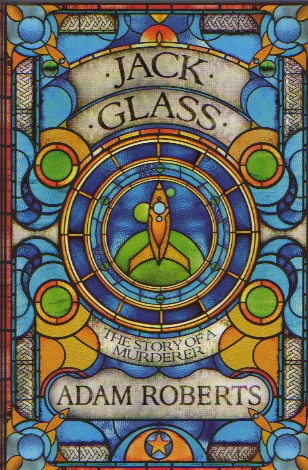 So, I asked and was pleased to receive Jack Glass as a Christmas present and it was always going to be my first proper read for 2013. I will admit that there were two big attractions for me: (1) the astonishingly lovely cover which you can see alongside and really caught my eye and (2) and the subtitle “the story of a murderer” which is intriguing for a sic-fi novel. It was also the first time I had read anything by Adam Roberts and it’s no spoiler to say that I’m going to be looking for more of his stuff.
The novel starts with a bit of scene setting by someone who is identifying themselves as a Doctor Watson figure and tells us what we need to know about what we are going to read, which includes the following:
A quantity of blood is spilled in this story, I’m sorry to say; and a good many people die; and there is some politics too. There is danger and fear. Accordingly I have told his tale in the form of a murder mystery; or to be more precise (and at all costs we must be precise) three, connected murder mysteries.
And so we are presented with a prison story, a regular murder whodunit and a classic locked-room mystery. In a properly sci-fi setting with lots of technical stuff which I always love. So this looked like it was going to be a real treat and I am very pleased to say that I wasn’t at all disappointed and read it in two sittings. All of the stories are equally fascinating but its worth noting that the first one, set on a prison asteroid where seven men have been sentenced for eleven years to mine the thing so that it can be turned into a luxury dwelling of the mini-planet style at the end of that period, so they have to cooperate to survive, is fairly brutal and grim and quite astonishing in its ending and the effects ripple into the rest of the book. That’s not to say that the other two stories are not as good, as they most certainly are, but they are more traditional and less gorily violent (well I thought so at least).
As always I don’t want to say too much about the plot because the fun is in discovering whats seems to be going on as things unfold, but Jack is a compelling character, much more complex than the set up might lead you to believe. And I developed a bit of a girly crush on Diana, one of the other key characters who is a rather privileged fifteen-about-to-turn-sixteen year old faced with some significant events. The world-building is also excellent but never force-fed so you begin to understand the political and other structures as the story unfolds rather than huge chunks of exposition.
 I really recommend this one, loved it, and it proved an excellent read for the 2013 Sci-fi Experience.
Couple of small things:
- the opening section identifies the murderer(s) but I totally forgot by the time I got to the last story particularly, so it was a bit of a revelation and I felt like a total idiot when I realised I should have known;
- the author’s drive for writing this was to bring together some of the conventions of Golden Age sci-fi and detective fiction (which I think he has achieved admirably); and
- a Champagne Supernova is a real thing that astrophysicists are pondering, named after the Oasis song (which is a favourite) and made me giggle
 This novel is one of those lovely surprises, a book that came in under my radar and was all the more enjoyable for me not knowing anything about it before I started reading.
The English Monster was brought to my attention via Silvery Dude, who had gone on a little book-buying spree and had been told by one of the nice people at Waterstones Piccadilly that given what he had already picked up he should read this, and he passed the info onto me and I bought it immediately on reading the plot synopsis. Silvery Dude and I had planned a bit of a readalongathon but that turned out to be impractical as (1) SD has been incredibly busy workwise and (2) I just couldn’t put the darned thing down.
It’s a nicely constructed novel which tells two stories in alternating chapters. The first is the tale of the Ratcliffe Highway murders in the Regency London and the nascent police force investigating the killings. The second is the tale of William Abless as he begins his career under the Tudor sailor John Hawkyns in developing the English slave trade. The two stories are clearly going to cross at some point and the fun of reading the novel is in seeing exactly how that happens and why.
I thought this was fabulous, and I say that as someone who normally avoids stories involving pirates like the plague. The Big Thing that happens is handled very cleverly and I had to read it through again just to make sure that what had happened was actually what had happened. The murder mystery sections are fascinating and truly horrible and paint a picture of Regency justice which shows how much the city needed a proper police force when it finally came along. I found the ending really satisfying and am glad that this is the first of a series.
I always enjoy reading the author’s note but this is a particularly fascinating in giving us the lowdown on what’s real and what’s invented but especially in the discussion about Britain’s involvement in setting up the slave trade and all the attendant awfulness, something which has been overshadowed by the focus on abolition. It made me dig out Harry Kelsey’s biography of John Hawkyns from my 16th Century history pile to read more about him.
So, a hidden gem for my last proper read of 2012.
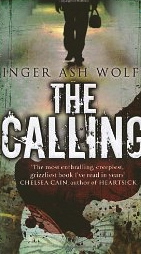 I sometimes worry that in the highly unlikely event that I became a suspect in a murder case the police would turn up chez Bride, look at the number of books (both fiction and non-fiction) that I have about serial killers and huckle me off immediately, convinced they had me bang to rights.
And The Calling is another one of those. Set in Canada, a country for which I have had a fascination bordering on obsession since I was quite small (I may have mentioned this before), its the story of a series of murders which are only connected when our heroine, for it is a she, DI Hazel Micallef, spots a link and there’s a race against time (as always) to catch the killer before he strikes again.
I’m a bit ambivalent about this one, and not entirely sure why. I read it on holiday and the setting and all-round grimness jarred a bit with the warm Italian sunshine – though it didn’t stop me cracking through the story. I thought the conceit behind the murders was quite clever, and the killer himself interesting in his motivations, I like Hazel in many ways, sympathising with her back pain and her having to share a home with her mother, but she was also pretty irritating at times – the thing with her ex-husband I could understand I suppose but if I’d been the second wife I would probably have been unable to resist smacking her one.
It is not at all bad but I will admit after a a couple of months that I struggled a bit to remember the details but it was good to read at the time. I may give the next one in the series a try, but not just yet.
 I can’t believe how long it’s been since I last sat down to update this blog, but that’s been a constant refrain this year due to a combination of not reading as much as I used to and other distractions (mostly work) leading to me only really thinking about this sort of ting at the weekend when there are competing priorities. But I am determined to catch up on my reviews before I go on holiday to Italy in the middle of September.
And where better to start than with a book I picked up purely on spec in our local branch of Waterstone’s.
I don’t know why it caught my eye – a combination of the cover and the fact that this is a new imprint designed to
showcase unjustly neglected works by great writers from the 1930s – the so-called golden age of crime writing – through to the 1970s
Francis Beeding is a pseudonym for two guys who wrote collaboratively over more than 20 years, and five of their novels have been made into films – haven’t gone looking for those yet – so clearly very successful but until now I hadn’t heard of them at all, and there works seem to have drifted into relative obscurity. Which is a real shame because this is an absolute cracker.
So we have a seaside resort in England, nothing special about it really, except that at least one of its residents has a pretty significant secret. And then the murders start.
This is a classic police procedural; we see the impact from the local angle as well as from the press (a reporter happens to be on holiday here and covers the story) and the detectives from London brought in to help solve the case. There is a real sense of unease as the community turns in on itself, wondering why this is happening to them. Perhaps unusually for this sort of story there is not only an arrest but a court case and a wonderful twist at the end which I will confess I didn’t really see coming and which has a really modern (to my mind) approach. Without giving anything away, I worked out the what but had no idea about the who.
Death Walks in Eastrepps was once apparently described as one of the ten greatest detective stories of all time, and its easy to see why. Highly recommended.
This was my fourth Readathon read.


 Bride of the Book God