
You are currently browsing the tag archive for the ‘Crime’ tag.
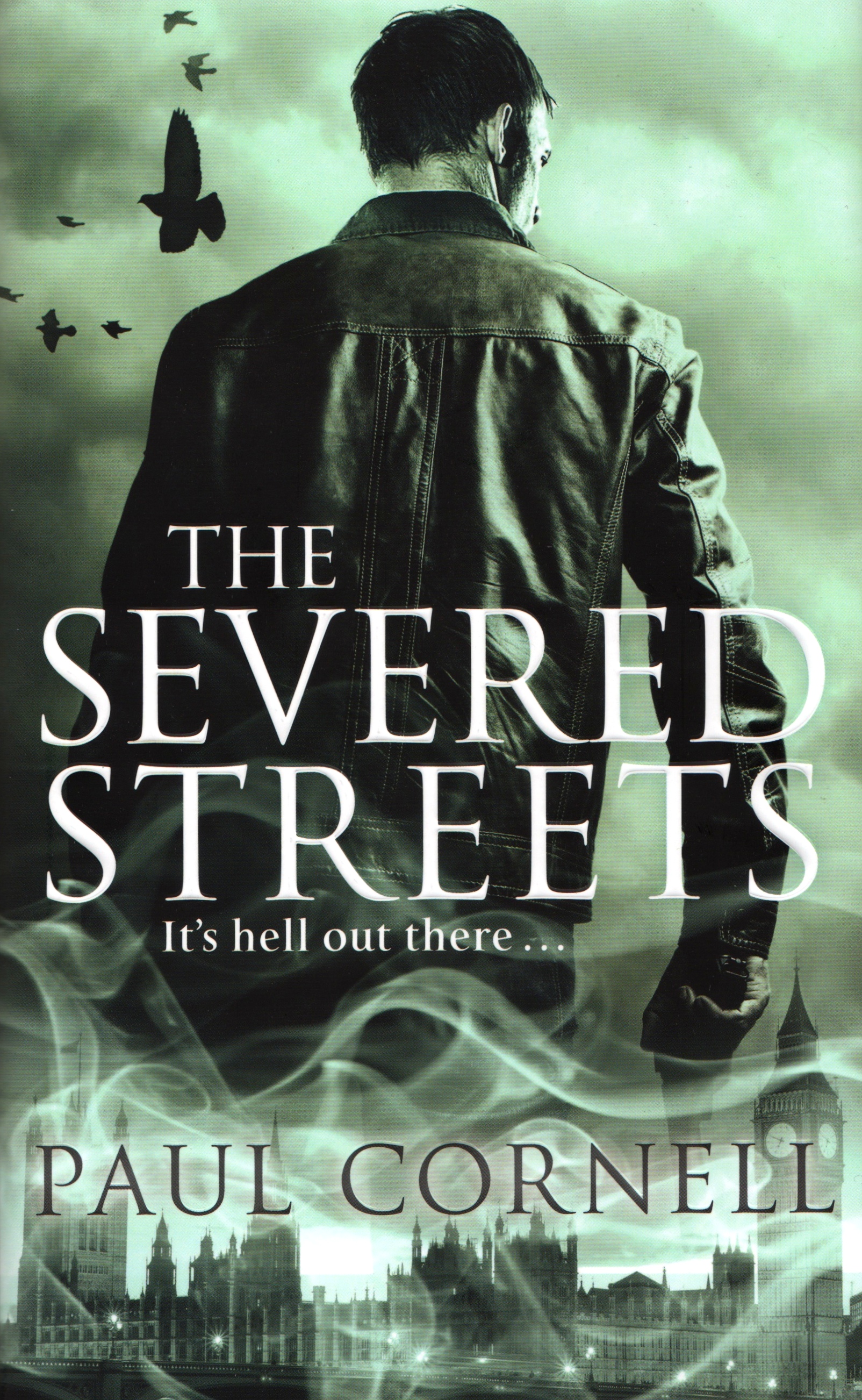 What’s the book about?
So, The Severed Streets is a sequel to London Falling which I read and enjoyed last year (you can find my thoughts about it here), though it’s a sequel in the sense of using the same characters and advancing their story arc with a standalone story.
It’s London, it’s summer and there are protests and riots with masked mobs blocking the streets and causing chaos. An MP is being driven in his official car when he is surrounded by one of these mobs and as a result is brutally murdered. But there is something odd; how did the killer get in (and out of ) the car without being spotted. And is what the driver saw really believable?
Enter Quill and his team who are still feeling their way around their new ability of second sight, and who are clear that something out of this world is involved in the death. And the others that follow. So they go into the underground community to find out what they can alongside good old-fashioned policing methods.
Why did I want to read it?
I really enjoy the whole urban fantasy genre (which I think this fits into but I’m sure someone will correct me if I’m wrong) and this series sits nicely alongside Fowler and Aaronovitch, and regular readers will know how much I love them. I really wanted to see how the team would develop and deal with the personal issues arising from the first book.
What did I think?
I read the final two-thirds of the novel during one of my many recent bouts of insomnia and it is meant as a real compliment when I say that I was so engrossed I actually forgot I was tired. I liked the way the characters developed, still the people we met in the first book but obviously changed by their experiences and trying to find a way to use their new abilities without any help or guidance. I though the story itself was very enjoyable and timely given recent events on which I won’t elaborate as I don’t want to get into the plot too much.
I particularly enjoyed the Neil Gaiman cameo; in other hands it might not have worked but he is properly integrated into the story (a bit more than I expected actually and in a very interesting and unexpected way). I liked the resolution and the introduction of new elements and characters which I hope will continue into future volumes. Quill is a great protagonist and it’s really nice to see a detective with what appears to be a happy home life.
New readers could start here but I would recommend reading them in order. I really enjoyed this and I’m looking forward to the next one.
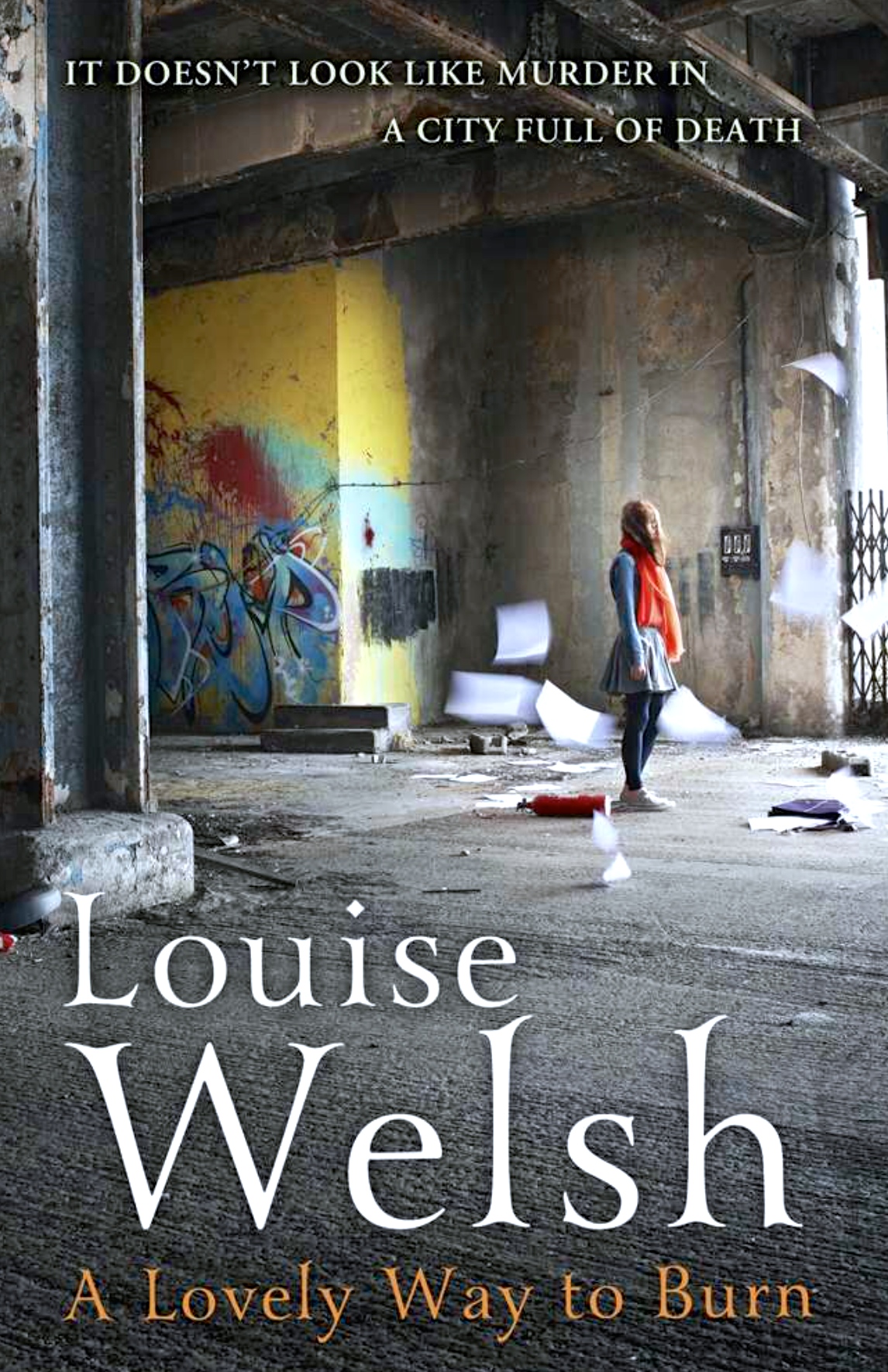 What’s it all about?
Stevie Flint is a presenter on a TV shopping channel (she used to be a journalist), with a job that seems to suit her (up to a point) and a glamorous doctor for a boyfriend. But something is going wrong in the London she works in; a mysterious disease, “the sweats” is spreading though out the population at a rapid rate. When her boyfriend fails to turn up for their planned date she finds him dead in his flat and of course first thoughts are that he too has succumbed to the same sickness as so many others. But it becomes clear to Stevie that his death doesn’t fit, and she starts to investigate his apparent murder against a backdrop of death and paranoia and societal breakdown.
Why did I want to read this?
I’ve not read much of Louise Welsh’s work but I’ve really enjoyed what I have read, particularly The Girl on the Stairs which was one of my last reads of 2013 and was really gripping, so a dystopian thriller slash murder mystery which is also the first of a trilogy couldn’t be resisted.
What did I think of it?
I enjoyed it so much I mentioned the author in a Tweet (what a fangirl I can be sometimes, even at my age) (and she very kindly replied, even better!).
A Lovely Way to Burn is a really interesting book which starts off with some action (the random shootings carried out by three different people) implying one sort of book and then heads off in a rather different and in some ways more interesting direction.I kept expecting certain things to be connected and was consistently wrong-footed which I particularly liked. Stevie is a fabulous character, strong but vulnerable, and determined to get answers.
I read this in two sittings over a weekend and was desperate to get to the end. The stuff about how quickly society can fall apart under duress was really convincing and provided an unsettling backdrop to what could have been a fairly standard murder mystery. I’m so glad this is part of a series, I can’t wait to see what the next volume has in store. Recommended.
 What’s it all about?
Antony Gillingham is in the country and realising that he is not too far away from The Red House where his friend Bill Beverley is spending the weekend decides to wander over on a surprise visit, arriving just in time for a locked room mystery; the discovery of a dead body, a missing host and a soon-to-be-baffled local constabulary. And of course he decides to look into the matter himself, because that’s what you would do, wouldn’t you?
Why did I want to read this?
Recommendation from someone else’s blog (and sorry to that person, I can’t remember exactly where I saw this mentioned) plus attractive cover plus love of classic era whodunits made this irresistible.
What did I think of it?
The Red House Mystery is the only detective novel written by AA Milne, he of Winnie the Pooh fame, and the latter fact is hammered home to us several times on the cover of this book.
Far from the gentle slopes of the Hundred Acre Wood lies The Red House
[..] a lost gem from the time before Tigger [..]
and so on; you get the drift. And in some ways the harping on at Milne’s more famous creation seems to suggest the publisher is almost apologetic about this book which is a real shame as this really is a little masterpiece of detective fiction and I thoroughly enjoyed it. The lead characters are charming, the mystery is just mysterious enough and although I guessed the “twist” quite early on (which just shows that I spend far too much time watching crime shows on TV) and I had a fairly good idea of who the killer might be, I had absolutely no inkling as to the motive and none of this spoiled my enjoyment of a brisk and breezy read which was really great fun.
 And as a bonus there is an introduction from Milne who outs himself as an aficionado of this type of fiction and makes very clear his likes and dislikes and that basically he wrote this novel for himself.
Such a shame that this is his only one. Really smashing, and a good start to Readathon.
 What’s The Bleeding Heart all about?
The resolution of the Peculiar Crime Unit’s relationship with Oscar Kasavian which took place in the previous volume (reviewed here) means a new home for the team (now under the auspices of the City of London police) and a super duper new liaison person who has a great line in management-speak, the sort of thing that has you banging your head on the desk (or is that just me).
While they all try to work out exactly how (or even if) they’re going to get along under the new arrangements they have two cases to deal with; a man who may (or may not) have risen from his (recent) grave and the disappearance of the ravens from the Tower of London.
Why did I want to read it?
I’ve said it before but its worth repeating, this is one of the most consistently enjoyable series of books I’ve had the pleasure to read. Sadly it looks like this may be the penultimate Bryant & May story (at least in novel form) which will be a real shame.
What did I think of it?
As always I really enjoyed this. I read a chunk of it during a bout of insomnia and it was great fun to read about someone apparently climbing out of their grave while I was sitting in the relative dark in the wee small hours of the morning, quite creepy. The two story threads aren’t really connected apart from the involvement of Bryant but one of the great pleasures of these books is seeing the development of all of the characters and the new dynamic means that all of them are taking stock in one way or another.
And of course I learned fascinating stuff about London along the way. Bleeding Heart Yard is another one of those places that I walk past regularly on my way from my office on Kingsway to London Wall where Silvery Dude works and next time I’m heading that way I really will make a detour to have a look. St. George’s Gardens, where the rising takes place, is also close by and I’m sure is on my preferred route to St Pancras where I occasionally meet friends for drinks, and made me think a little bit of Postman’s Park which is a shortcut I often take and well worth a visit, though less extensive I think.
I was also interested to find out that the whole legend of the ravens and what may happen to the nation if they disappear is a relatively modern invention.
So, really enjoyable and what do I have to do to get you lot to read these if you haven’t started already?
Postscript: and the Book God reminded me that we have a copy of Andrew Taylor’s Bleeding Heart Square which is set in the same area so that’s now been pulled out of the stacks to be read shortly. I like making these connections!
And this is my 600th post on the blog which is very cool and mildly astonishing! Glad to be marking it with a favourite author.
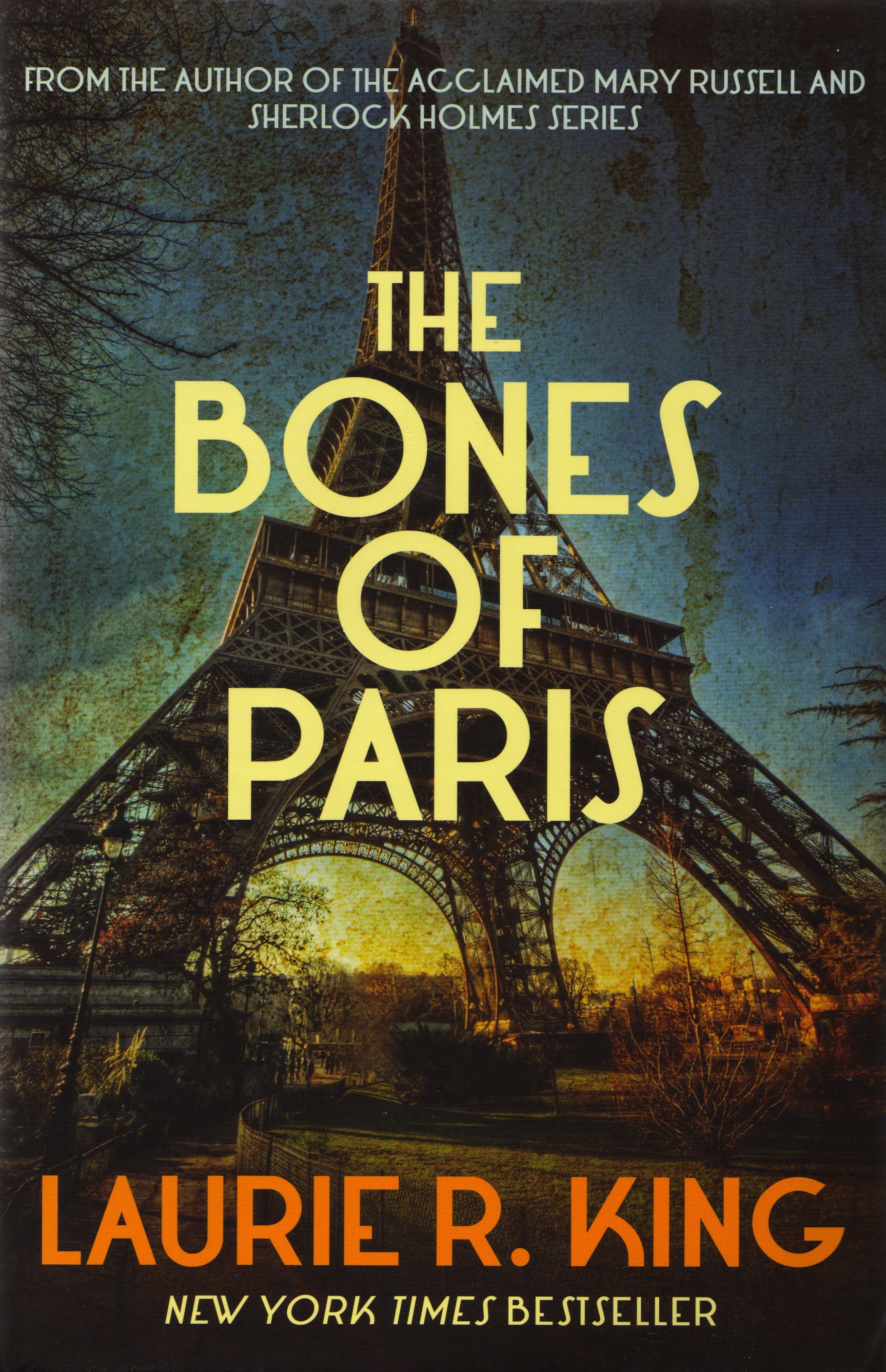 What’s the book about?
Directly from the blurb:
Paris. 1929. For Harris Stuyvesant, his current assignment is a private investigator’s dream – he’s getting paid to trawl the cafes and bars of Montparnasse , looking for a pretty young woman.
This is the background to Laurie King’s second novel involving Stuyvesant and his friend Bennett Grey, following on from the events of Touchstone (which I reviewed here); although I don’t think you need to have read that first it makes the relationships between the three main characters easier to understand. Stuyvesant is being paid to look Philippa Crosby who just seems to have vanished without trace, and in doing so he begins to realise the unpleasantness that lies underneath 1920s Paris and the fact that there may be a serial killer on the loose.
Why did I want to read it.
I think I’ve read every single one of Laurie King’s novels and there seemed no reason to stop now. And I liked the idea of revisiting the Paris of that time following my unsatisfactory visit there through the medium of film (namely Midnight in Paris – you can find out what I thought about that here).
What did I think of it?
I think I found this the hardest of King’s books to get going, partly because the main attraction for me is not Stuyvesant but Grey, and although we begin with him in a very tantalising way, we then leave him and leap back to Paris in one of those “48 hours earlier” type things that you often get in US crime series and which I’ve learned to spot within about 3 seconds of the opening sequence. And that was a bit unsatisfying.
I also found Stuyvesant harder to like this time round, he seemed more boorish that I remember although he does feel mildly guilty (he knew the missing girl slightly if intimately – not a spoiler, we find that our pretty early on) and of course he is suffering from lost love in the form of Grey’s sister Sarah, who of course pops up as everyone who was everyone was in Paris at that time (or so it seems).
But the book really picks up when it becomes clear that there is a pretty nasty murderer with a fiendish plot and some rather unusual friends kicking around, and of course at least one character gets kidnapped, and of course the local police are suspicious of our hero(es), and of course (not quite) every famous artist/writer/character appears or gets mentioned by someone else. Which sounds like I’m criticising but I’m really not; once all the grand guignol stuff starts it becomes a great read and I enjoyed it very much. Must have done; I stayed up until 1.30 in the morning to finish it off.
I will be very interested to see where the characters go from here.
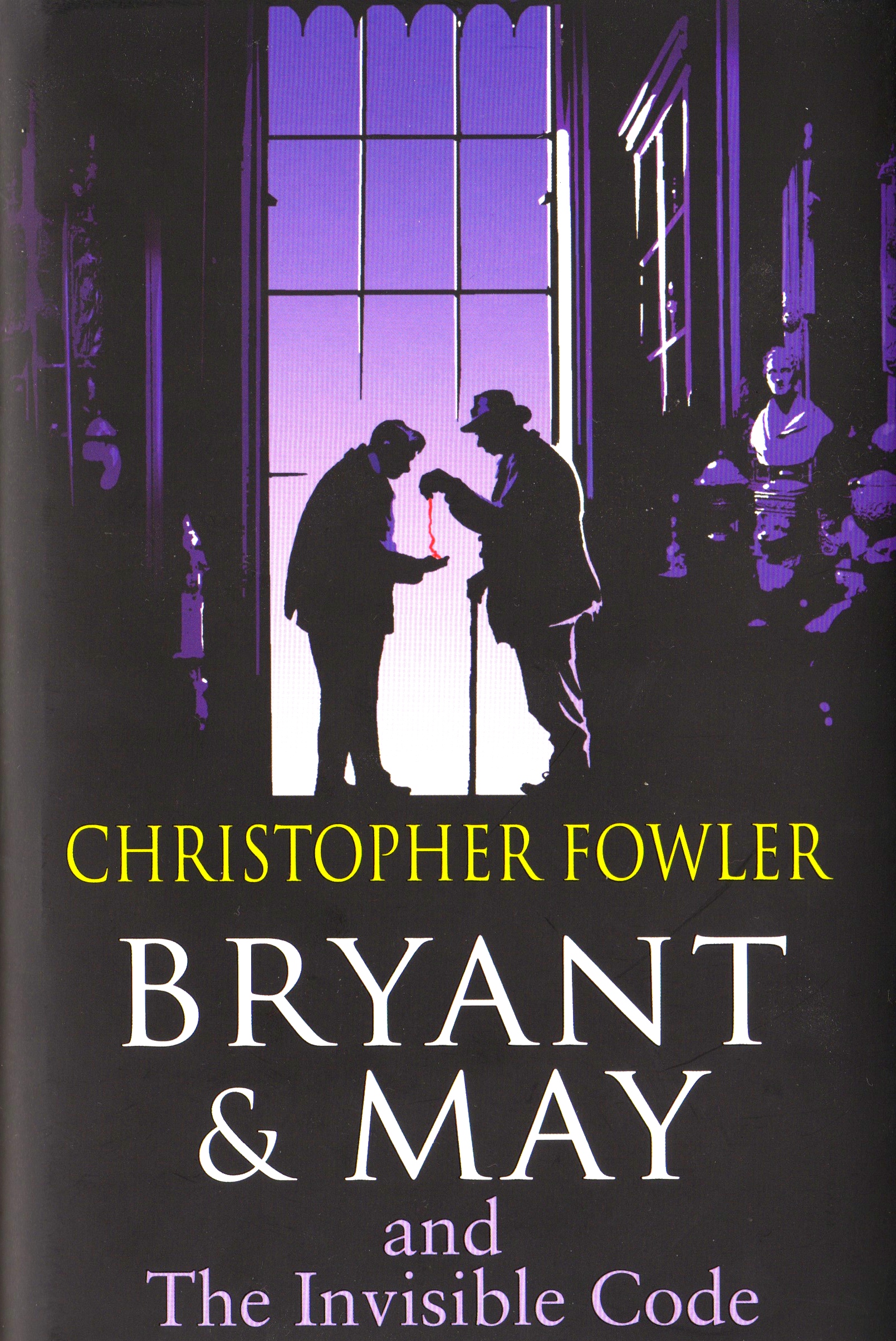 What it’s all about?
A mysterious death in a church. Children playing a game of witch-hunter. The world turned upside down as Bryant and May are asked by their arch-enemy Oscar Kasavian to find out what’s happening to his young eastern European wife Sabira – is someone trying to drive her mad in order to get at her husband or is she (as she believes) the victim of witchcraft? Secrets from the past. All brilliant stuff.
Why did I want to read it?
The answer is here. Love these books.
What did I think of it?
At the risk of sounding like a broken record, I loved The Invisible Code. I found this one particularly touching for some reason. I really felt for the plight of Sabira who loved her husband but just didn’t fit into his world and found herself struggling to make sense of it all. I liked Bryant keeping things to himself (which he often does to be fair) in order to protect his friends and colleagues. I felt anxious all the way through reading the novel (that’s a good thing by the way).
I also realised that I really have to visit Sir John Soane’s Museum, which should be an easy thing to do as I work on Kingsway and often walk past the building on my way to visit my friend who works on Fetter Lane but I have never been inside. You may not think this is a big thing but I have been working here for thirteen years and really have no excuse whatsoever.
Conclusion
This series just keeps on getting better and better. Which given that it started at a pretty high point is a remarkable thing. Two more already written I believe. Fabulous.
 What’s it all about?
Mayhem is set in the height of the Jack the Ripper murders, but body parts found at New Scotland Yard are definitely the work of a different killer, no matter how much the authorities wish it wasn’t. Thomas Bond is the police surgeon working on both cases, and as he delves into the murders he begins to suspect that something more supernatural than a rampaging serial killer is at work in London.
Why did I want to read it?
Serial killers, Jack the Ripper, Victorian London, what’s not to like? Plus although I had a couple of her e-books I hadn’t read any of Sarah Pinborough’s books and wanted to give her a try, partly due to the subject matter and partly because she is great fun to follow on Twitter (there’s that word again).
What did I think of it?
I liked it a great deal. It was a very interesting experience reading it so soon after Drood (reviewed earlier) as there are some similarities in the use of the supernatural, the main character’s tendency to dabble in drugs, the mix of real and fictional characters and events. I thought this was much more successful; I liked Thomas Bond very much and found his struggle with opium and the effect it had on him much more sympathetic, as were the domestic elements in the story contrasting with the grimness of the crimes being investigated. But I don’t want to dwell too much on comparisons with someone else’s work, this is a really good novel.
Conclusion
Recommended. I’m going to be searching out more of Sarah Pinborough’s work, although disappointed that the next volume in this series won’t be published until 2015.
This was a read for RIP VIII
 What’s it all about?
In The Memory of Blood the Peculiar Crimes Unit get called in to deal with the death of a child thrown from his bedroom window while elsewhere in the apartment his parents hold a party for the cast and crew of a play being performed in the theatre owned by the child’s father. It’s a PCU case because the door was locked, there seems to be no forensic evidence, and, well, there’s a life-size puppet of Mr Punch on the floor. Supernatural activity or human agency? Oooh.
Why did I want to read it?
My love for the Bryant & May series is well-documented on this blog. I’ve read the lot in order and wasn’t going to miss this one.
What did I think?
Loved it. I am a sucker for stories about the theatrical world and this one is chock full of corruption, venality and oddness amongst the suspects, plus a nice political back story for the assistant stage manager and the spectre of Home Office disapproval hanging over the case. As always I learned loads – about London, the theatre, Punch and Judy and much more. Didn’t work out who the murderer was which was nicely satisfying in a strange way. The series just gets better and better.
Conclusion
If you haven’t read any of the Bryant & May books, why ever not? Get on with it. You won’t be disappointed.
This was a read for RIP VIII
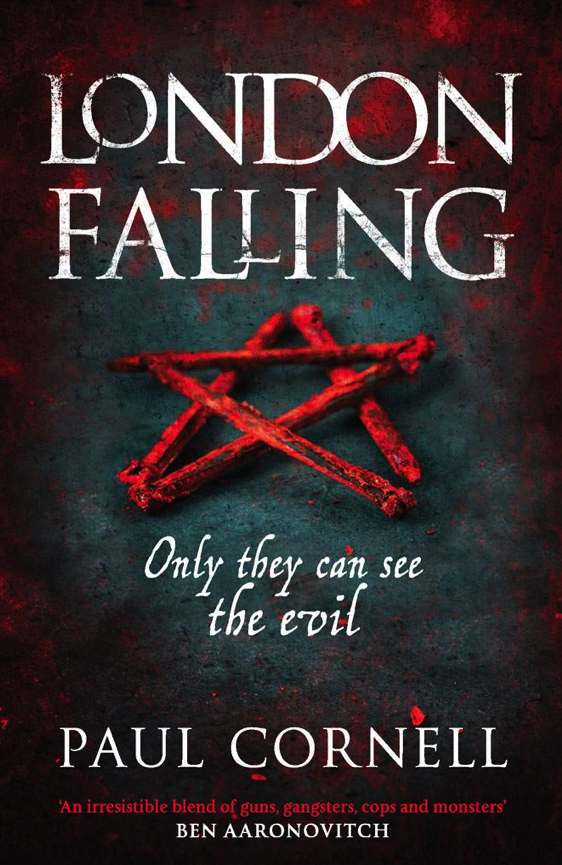 So, the first of a flurry of mini-reviews to clear my backlog and leave me with a relatively clean slate for 2014. Apologies in advance for swamping timelines and feeds and whatnot but it has to be done!
What’s it all about?
So London Falling is basically a police procedural which takes an unexpected turn. DI James Quill is managing an undercover op as part of an investigation into London’s organised crime when it all goes horribly wrong and his main target is killed in a gruesome and unusual manner, and it becomes clear that there is something evil lurking around London. Cue the creation of a team of misfits shunned by their colleagues and using unorthodox methods to get to the bottom of something very old. There’s a witch. There’s a talking cat. There’s a football connection. And there’s a lovely set up for what is clearly going to be a series.
Why did I want to read it?
I like Paul Cornell; I follow him on Twitter, I’ve got his Wolverine comics on my iPad and he’s written some cool stuff for Doctor Who. I liked the premise for the novel, especially as I’m a sucker for anything in which the history and mythology of London is as big a part of the story as the human characters.
What did I think of it?
Loved it. Read it over a couple of days, felt the story pulling me along, really wanted to know how it was all going to work out. It would be lazy to say that it’s similar to the Rivers of London series by Ben Aaronovitch and Christopher Fowler‘s Bryant & May books, both of which I love deeply. London Falling is grittier than the former and not quite as peculiar (peculiar is a positive word in this context) as the latter but they do all complement each other very nicely.
Conclusion
Enjoyed it a great deal and am looking forward to the next one (The Severed Streets, due out here in May)
This was a read for RIP VIII.
 So it’s September tomorrow and that means the start of one of my favourite blogging event’s, Carl’s RIP VIII and the opportunity to read scary and thrilling stuff along with lots of other members of the book blogging community.
As is traditional I have pulled together a book list out of which I hope to be able to meet Peril the Second, where I need to read four books that fit the description of perilous. I’d love to be able to read them all, but we’ll see how that goes.
My list is (in no particular order):
- London Falling by Paul Cornell
- NOS4R2 by Joe Hill
- Horowitz Horror by Anthony Horowitz
- Bryant & May and the Memory of Blood by Christopher Fowler
- The Night Eternal by Guillermo del Toro & Chuck Hogan
- Nocturnes by John Connolly
- Through Dead Eyes by Chris Priestley
- Mayhem by Sarah Pinborough
- Drood by Dan Simmons
- The Accursed by Joyce Carol Oates
A pretty good selection I think, and I’m looking forward to all of them.
 I may also take part in Peril on the Screen but no real plans on what that might involve, though it is really about time I re-watched one of my Desert Island Films, Son of Frankenstein with *sigh* Basil Rathbone.


 Bride of the Book God