 I have been looking forward to reading Anthony Blunt by Miranda Carter for some time, and I haven’t been disappointed; this is an extremely well-written and assured biography of a complex man which tries to separate the facts from the various theories that have been kicking around ever since he was exposed in 1979. It makes clear the amazing influence he had on art history after the war, particularly in building up the Courtauld Institute into a place of learning to rival the schools of art history on the continent. It doesn’t shy away from the details of his personal life and talks about his spying in a measured and non-judgemental way which allows the facts to speak for themselves. What is particularly interesting is the impact he had on works of art produced by others; Carter refers in particular to the fact that Blunt was the inspiration for the main (female) character in The Finishing Touch by Brigid Brophy (which I haven’t read), John Banville’s The Untouchable (which I have and consider magnificent), and A Question of Attribution by Alan Bennett. She also speculates that Anita Brookner, who was one of Blunt’s students and later taught at the Courtauld, may have based some of her female characters on the many single, “slightly naive and plain” women who seem to have fallen hopelessly in love with Blunt over the years. I can’t recommend this highly enough.
 I read my first Stephen King novel, a paperback version of Carrie, when I was 15 (an astonishing thirty years ago) and was totally hooked. I have read almost everything that he has written with the exception of some of his Richard Bachman stories, and always look forward to the experience. Lisey’s Story was no exception, and I have been very impressed with this novel, so much so that at one point before Christmas I had to put it down as I had come to care about Lisey so much that I simply didn’t want to read about the horrible thing that was about to happen to her (this is King after all); I had a strong feeling of dread and wanted to be in the right frame of mind to continue. So when I picked it up on my return to work after the holidays as my commuting read I was prepared for the worst, but of course shouldn’t have worried, because yes, unpleasant things happen but there is triumph over adversity and lessons learned and good wins over evil, but as always there is a price to pay.
I found Lisey a really convincing character, and the descriptions of her relationship with her much-loved late husband, the famous author Scott Landon, really rang true – the secret language, the shorthand, the in-jokes – and her relationship with her sisters was also compelling.
When the novel was published last year King said in several interviews that his wife was concerned that people would assume the Landons were based on them, and there is a temptation to try and fit some of the non-supernatural events into what is known of King’s own career, but the strength of tha characters soon leads you away from that road.
I know that King isn’t to everyone’s taste, especially those of a squeamish disposition, but I wish that he was more highly regarded by the literary establishment and not just pigeon-holed as a genre best-seller.
I can hardly wait for his next novel, which is due out very soon.
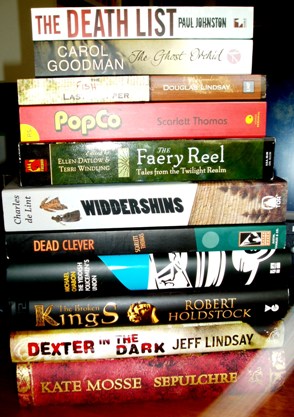 The Book God has been most generous once again this year, and has provided me with enough reading to keep me going for some time. There is a mixture of fantasy (The Faery Reel, Widdershins, The Broken Kings) crime and mystery (The Death List, The Ghost Orchid, Dead Clever, Dexter in the Dark, Sepulchre) and more general fiction (The Last Fish Supper, PopCo, The Yiddish Policemen’s Union).
In non-fiction I got the usual mix of history (Mary Tudor, Katherine  Swynford, Singled Out), memoirs & diaries (The Journals of Joyce Carol Oates, Harriette Wilson’s Memoirs), biography (Myself & the Other Fellow), and the most wonderfully beautiful coffee table volume At Home With Books which just makes me envious of people with proper library spaces, and has had me rushing off to measure walls for shelving!
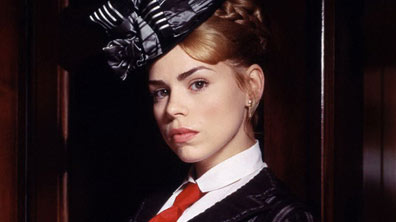
Contunuing the Philip Pullman theme, the Book God and I really enjoyed the BBC’s adaptation of The Shadow in the North on Sunday night. I know there have been unfavourable comments about the casting on some message boards, but I didn’t have a problem with it; the RSC and other theatre groups have been taking similar decisions over the past few years so it’s not really an issue for me. I saw it as a piece of good fun, though it helps to like Billie Piper as I do (being a huge Dr Who fan). I haven’t read any of the Sally Lockhart stories so far but will definitely pick up the two that haven’t yet been dramatised and give them a go.
 In all the excitement around Christmas preparations and the shock of the one day I spent at work between Christmas and New Year, I forgot to post my impressions of the Golden Compass, the film version (as I’m sure you all know) of Northern Lights, my most recently completed read. I have to say that I found myself a bit disappointed – the special effects were wonderful, the casting was on the whole sound, but I felt that the changes that had been made for dramatic purposes detracted from what I thought was a strong, dark story. I’m not a purist about these things; as someone who has read Lord of the Rings more times than I like to admit, I found the changes Peter Jackson made for the film versions did not undermine my enjoyment of them, but that hasn’t been the case here. A missed opportunity, I’m afraid.
I will be very interested to see what the other two films will be like, assuming they go ahead as the box office returns in the US were not as high as expected, which can often scupper future plans.
The Book God, who is half way through the novel, quite enjoyed the film, but has promised to tell me what he thinks in retrospect once he has read the whole book.
By the way, a “Guid New Year ” to one and all!
 I know that I have come to read the His Dark Materials trilogy really, really late, especially since the Book God has had all of the books for some considerable time (though to be fair to me, he hasn’t read them either). I’m not sure why it has taken me so long, perhaps it’s because of Harry Potter overload and not being able to face another fantasy children’s book (although there really is no comparison between the two apart from the fact that they are children’s books); or perhaps it’s because a couple of people I know had not warmed to the first novel at all, and that kind of word of mouth often gives me pause. At any rate, the trigger for finally picking up Northern Lights has of course been my desire to see the film version, The Golden Compass. Whenever I want to see a film based on a novel or short story I am compelled to read the book first, and no change this time. I have to say that, although it’s taken me a little longer to read than I expected, I was pleasantly surprised and have very much enjoyed the story of Lyra and her Daemon. So many of you have probably read this that I won’t go into any of the plot, but I found that the darkness of tone really appealed to me, and the alternative version of our world worked very well. So, not only will I be going to see the film over Christmas, but I intend to read the remainder of the trilogy early next year, and the Book God has committed to reading it as well. That’s what I call a result!
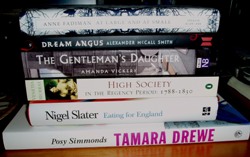 A quiet month on the book buying front as we head towards Christmas; the Book God and I have exchanged wish lists and are both under strict instructions not to buy anything between now and the day itself. So only a handful to talk about really. Anne Fadiman’s At Large and Small looks fascinating; I enjoy reading essays, (Gore Vidal’s various collections are particular favourites) and I really loved Ex Libris, so looking forward to this. Nigel Slater’s Eating for England has already been dipped into; I heard him interviewed about this on the radio and it brought back so many memories of my own childhood that there was no way I wasn’t going to get this, and I bored the Book God by reading out bits and pieces over lunch one Saturday; I have been made to promise not to do it again. Dream Angus by Alexander McCall Smith is part of the Canongate series re-telling myths; I have a couple of these but haven’t been buying the series religiously, but thought that this looked interesting.
The Georgian period isn’t one that I have been particularly attracted to in the past; regular visitors will know that the sixteenth century is more my thing, but over the past year or so I have accumulated a small quantity of books about the period, of which The Gentleman’s Daughter and High Society are the two most recent.
But my big treat this month is Posy Simmond’s new graphic novel Tamara Drewe; I have loved Posy since I was a student and used to read her weekly cartoon in the Guardian, and have have quite a few of her books including her children’s works; I love her drawing style so much (she has also done the cover for this month’s Slightly Foxed); this is definitely going to be one of my Christmas holiday reads.
 I’m not sure I can do justice to The End of Mr Y by Scarlett Thomas; the central idea is so fascinating and based on such interesting but difficult theories that I’m not sure I can get my head around them all, and I’m sure I will have to re-read the novel again at some stage so that I can work through the concepts without having to work through the unfolding plot as well. Superficially it seems very straightforward: Ariel Manto is a PhD student whose sponsor has disappeared; they shared an interest in a Victorian author, Thomas Lumas, and in particular his mysterious lost work, The End of Mr Y, which is apparently cursed. Forced out of her university one day by the collapse of a building on the campus, she finds herself in a second-hand bookshop, stumbles across the book in a box with several other titles, and buys the lot with the last of her money. She reads it and discovers a key page is missing; while clearing out her sponsor’s things to make way for others to share her office, she comes across the missing page which he had in his possession all along, and now has the recipe for a potion (for want of a better word) which will allow her to access something called the Troposphere and is of course determined to try it out. Then it all gets weird. When this was reviewed on Simon Mayo’s Book Panel on Radio 5 earlier in the year, all of the reviewers raved about this book, and I agree that it is a wonderful thing, both in content and how it looks, and boy does it leave you with a lot to mull over.
 The latest Temperance Brennan novel hasn’t disappointed, another pacy tale about our (well, my) favourite forensic anthropologist. This time around the focus is on a friend from Tempe’s past who disappeared as a young teenager, never to be heard from again, until the finding of some young bones starts Tempe wondering again what happened, and she enlists the help of a friendly cold case detective to solve the mystery, alongside several other cases on which she is working. Add to that tensions in her relationship with the lovely Andrew Ryan and the arrival of Tempe’s sister and you have a good story which I read in a few train journeys to and from work. Admittedly it gets a bit thrillerish towards the end, and I did guess what the mysterious illness the bones girl had suffered from, but I learned a bit about the Acadians of Canada and more than I needed to about processing bones for analysis so honours are pretty much even. I much prefer the novel version of Tempe to the one that appears on TV in Bones, but have noted that the Book God enjoys the series never having touched the novels, so suppose its horses for courses once again. I have caught up with my Kathy Reichs reading now so will have to wait a while for the new one, presumably coming out next year.
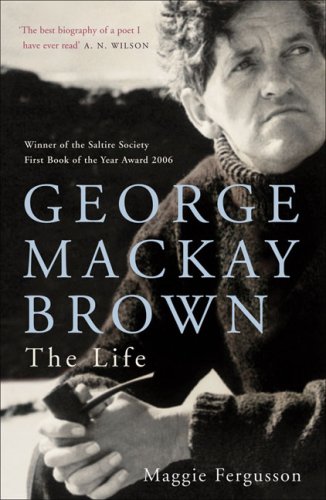 The final batch has a Scottish theme, (which makes sense given that that’s where the Book God and I spent the larger part of our holiday!) although the first book was actually bought in Carlisle. It’s a biography of George Mackay Brown, the Orkney poet and novelist, whom I have found fascinating ever since I had to study Greenvoe in school at the end of the 70s. The biography is by Maggie Fergusson and has some fine endorsements from such as Allan Massie and Claire Tomalin, so I hope to learn a great deal about this rather enigmatic man.
 The other books are all Scottish history, one by Alistair Moffat about the Borders which, although I have visited often, I know very little about other than the obvious stuff. The others by Rosalind Marshall and Pamela Ritchie are about Mary of Guise, mother of Mary Queen of Scots and regent while her daughter was living in France. I’ve been looking for material about her for a while, and like buses two came along at once, so the sixteenth century stack piles ever higher.


 Bride of the Book God