You are currently browsing the category archive for the ‘Reviews’ category.
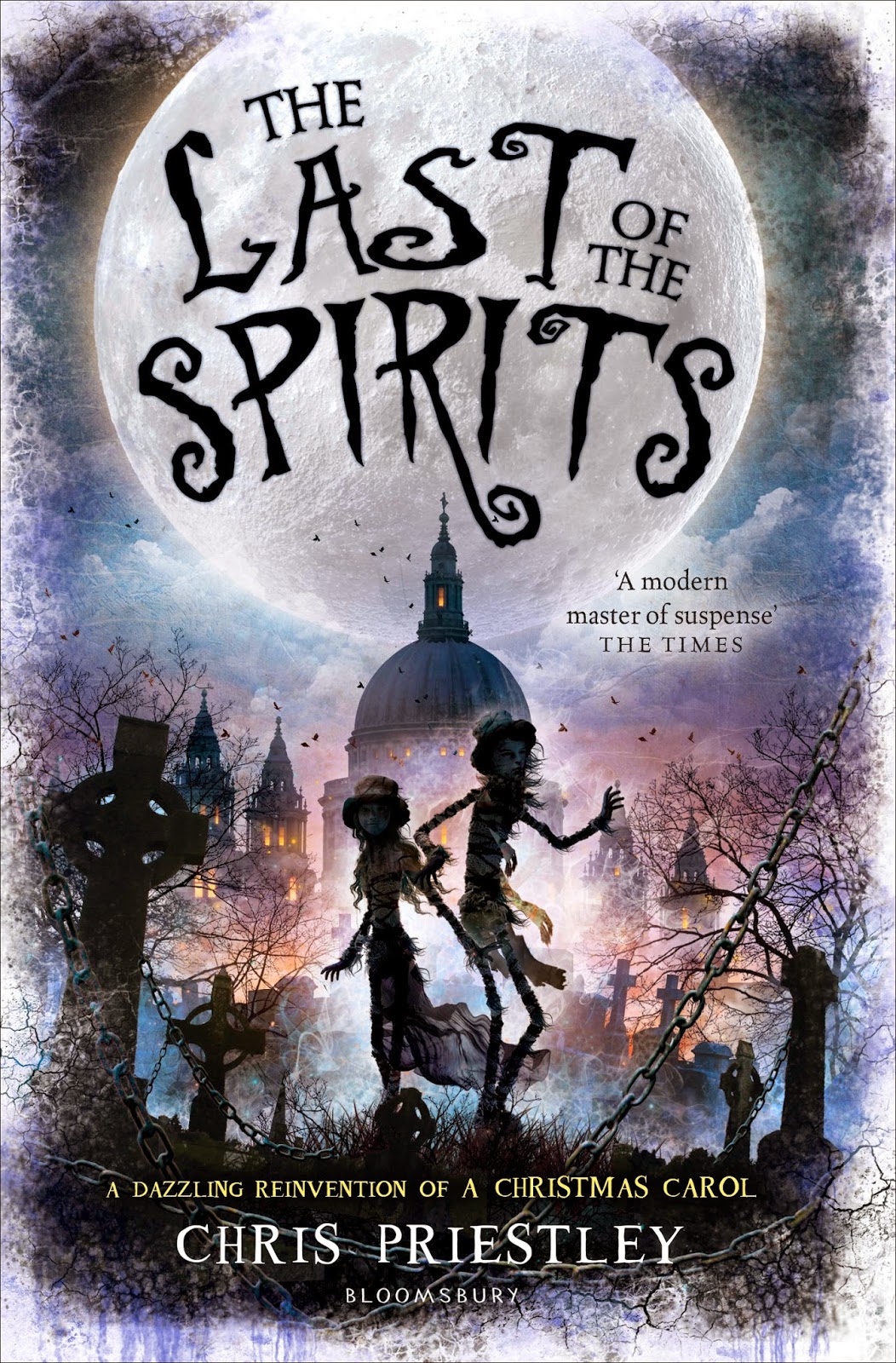 What’s it all about?
Sam and his sister Lizzie live on the streets of Victorian London, and on a freezing Christmas Eve beg for money from a wealthy Ebenezer Scrooge who rebuffs them nastily, filling Sam with anger and a desire for revenge.
Later that night they are huddling together for warmth in a cemetery when they see a ghost rising from a grave and heading towards Scrooge’s home. And in that way they become witnesses to the events of Dickens’s A Christmas Carol.
Why did I want to read it?
I am a great fan of Chris Priestley’s works which I’ve been reading over a number of years. This is the latest in his re-tellings of well-known stores for younger readers (the others are Mister Creecher and The Dead Men Stood Together). And as I’ve said on my Screen God blog I love A Christmas Carol, so reading The Last of the Spirits was a no-brainer.
What did I think about it?
I just loved this beautifully written short book. I have always enjoyed stories that are written from the perspective of an onlooker to major events (the two that spring most easily to mind are Valerie Martin’s Mary Reilly (Dr Jekyll and Mr Hyde) and Rosencrantz and Guildenstern Are Dead (Hamlet)) and although Sam and Lizzie become direct participants in Scrooge’s story they fit into that trend very well, of an observer illuminating a well-known story by presenting it from a different point of view. And of course given the story we’re watching here it has a happy ending.
Just lovely and will become a regular read for Christmas in the future.
I do love a good sci-fi short story and recently read three for Carl’s Sci-Fi 2015 Experience.
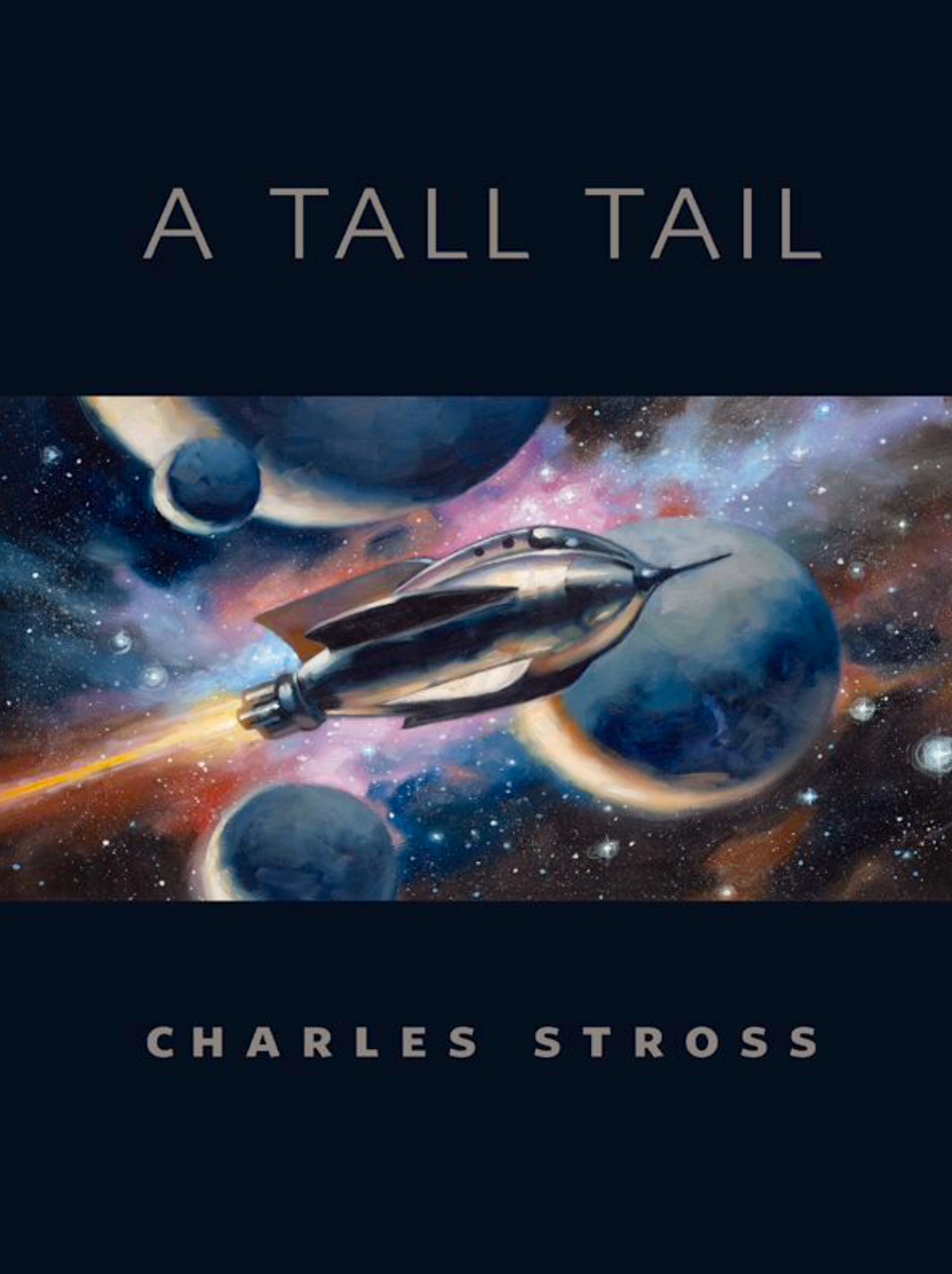 A Tall Tail by Charles Stross
A really enjoyable is-it-or-isn’t-it-true story set at a Pentagon-hosted conference about the 100 Year Starship, where our author bumps into the rocket scientist twin brother of the writer Gregory Benford who introduces him to Leonard-not-his-real-name who tells him the tall tale/tail of the title, involving all sorts of Cold War shenanigans. Great fun, and apparently most (if not all) of the science is accurate. Stross is becoming one of my favourite sci-fi writers.
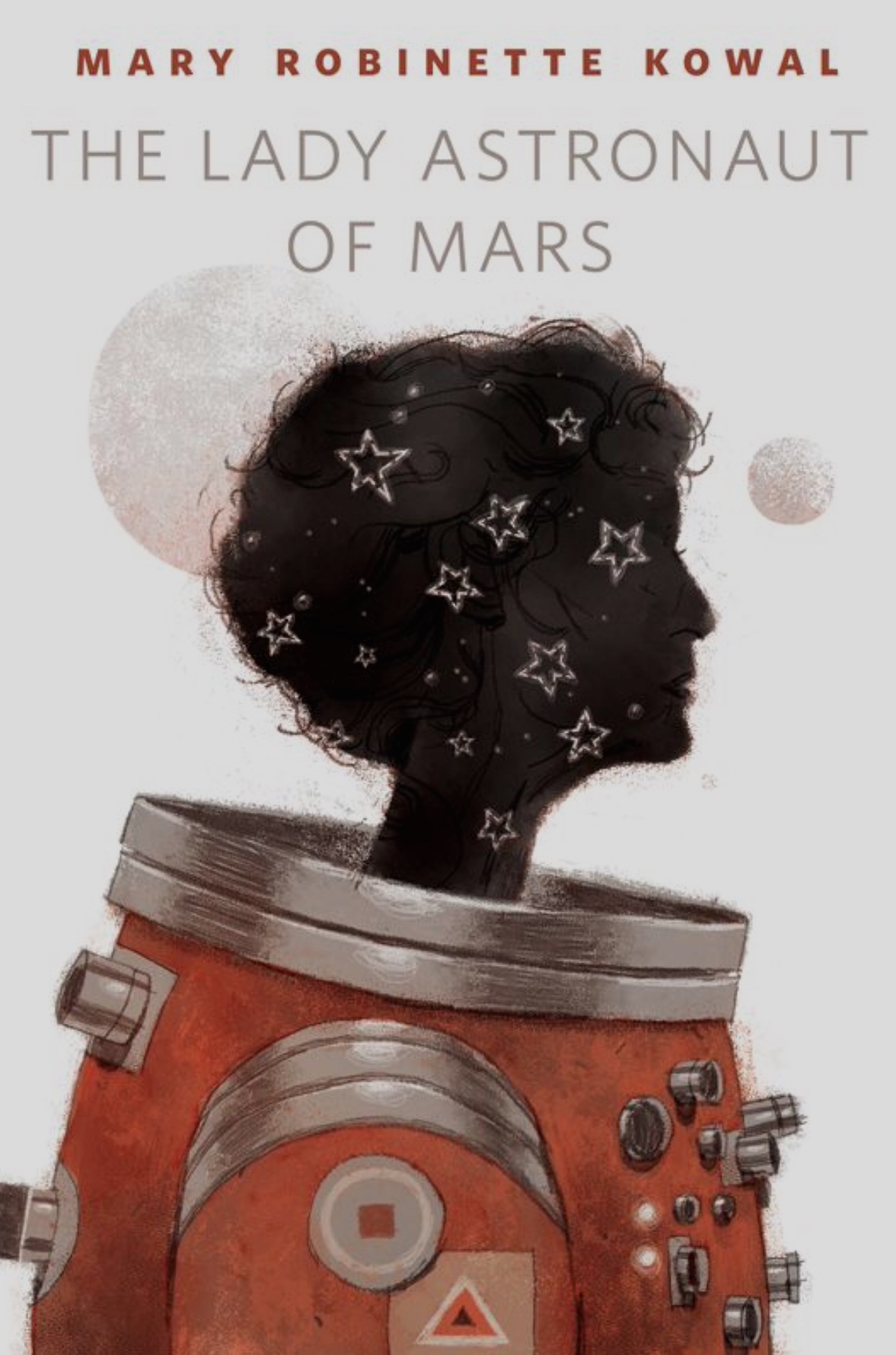 The Lady Astronaut of Mars by Mary Robinette Kowal
This is just a wonderful but sad but hopeful short story. It starts off with the Lady Astronaut herself being given a check-up by her doctor Dorothy (from Kansas who lived with her Aunt Em and Uncle Henry on a farm before a dreadful space-related accident, so yes, it’s that Dorothy). Dorothy came to Mars because she was inspired by the LA, Elma, now elderly and with an ailing husband and a burning desire to go back out into space. She is unexpectedly given the opportunity to do so and has to make a difficult choice – go and leave her husband behind or stay and watch him pass away. Lovely, nominated for a Hugo and I’m not ashamed to say I cried a little bit reading this. A new author to me but I am going to look for more of her work.
 A Short History of The Twentieth Century by Kathleen Ann Goonan
Or When You Wish Upon A Star. This is the story of Carol, whose parents were both scientists but whose mother gave up her career for the reasons women did in the 1950s. Her Dad was a rocket scientist with leftist leanings who didn’t like the use made of German science brought to the US after the War. Influenced by the future as described by Walt Disney, Carol wants to follow in her Dad’s footsteps but it’s not a career for girls. According to Amazon (annoyingly) this is only science-fiction by association. I’m not sure I agree with that. But a lovely and inspiring story and I loved Carol’s Mum and how hey watched the moon landing on TV (something I do vaguely remember, being only 7 at the time). I read a couple of Goonan’s novels many years ago and this reminded me why liked her and that I really should pick up her work again.
 What’s it all about?
The Mistletoe Bride and Other Haunting Tales is a collection of ghostly and supernatural stories by Kate Mosse, set mostly in France or Sussex, area of the world that she knows very well and which have featured in her other works.
Why did I want to read it?
Creepy stories are ideal for this time of year. Plus I have a number of her books (not read) and had previously picked up and enjoyed The Winter Ghosts.
What did I think of it?
I really enjoyed this collection of quite gentle stories. They aren’t particularly gruesome and not really frightening, but they are very traditional, often about premonitions or the settling of old scores before a departed person can find peace or slippage into the past when visiting a historical setting (as in the title story). My favourite is probably The Revenant, set in the Fishbourne Marshes in 1955; a mysterious female figure appears to our heroine in the marshes seeking a form of justice for a crime which took place during the war. Very atmospheric.
I particularly enjoyed the stories set in Sussex as that’s the county where the Book God was born and I know enough of it for some of the places to be recognisable. One of the particular pleasures of the book is the author’s note for each story, giving some background on place or inspiration, especially interesting for those stories based on folklore.
I had planned to read a story a day and pace the book out over the run up to Christmas but got through them much more quickly than that, which should say something about the pleasures of reading these well-written tales.
 What’s it all about?
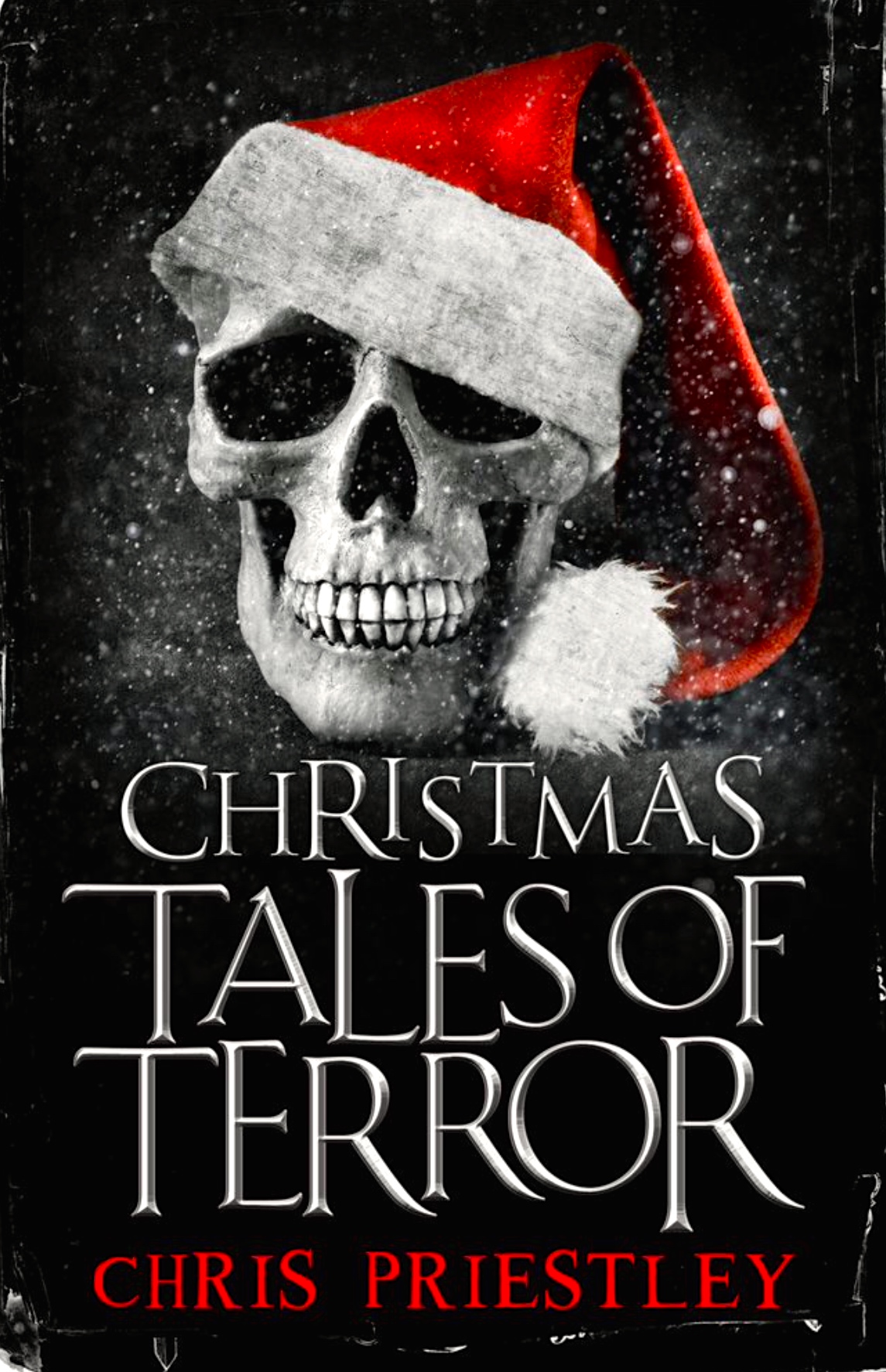
Christmas Tales of Terror is exactly what it says, a collection of scary stories for the younger reader all based around Christmas from the author of the Takes of Terror series (which started with Uncle Montague ages ago)
Why did I want to read it?
I really like Chris Priestly’s work, his love of the traditional MR James type story and his re-tellings of some famous tales for a young audience (a particular favourite being Mister Creecher) make him an author always worth seeking out.
What did I think of it?
Great fun. Set in an indeterminate but possibly Edwardian era they are nicely creepy and usually with a moral (though never in a heavy handed way). As I said, these are very much for younger readers so I didn’t find them scary but I think I would really have enjoyed them when I was about 10 (though I was reading HP Lovecraft at 11 so maybe not).
I will definitely be very careful where I pick my Christmas greenery this year…..
 What’s it all about?
I can’t do any better than the blurb on the back cover to explain what Lock In is all about:
Fifteen years from now, a new virus sweeps the globe. 95% of those afflicted experience nothing worse than fever and headaches. 4% suffer acute meningitis, creating the largest medical crisis in history. And 1% find themselves ‘locked in’ – fully awake and aware, but unable to move or respond to stimulus.
Because one of the highest profile victims was the President’s wife a lot, and I mean a lot, of effort and money was put in to managing this. So those who are locked in, known as Hadens after the First Lady, have access to what are basically robot bodies to which they can connect their consciousnesses so they can move around an interact with the world and get jobs; a virtual reality space called the Agora which is dedicated to their needs; and some people who have survived the disease but have been left with the ability to allow Hadens to enter their minds and have access to their bodies for a fee (they are known as Integrators).
It’s against this background that our story plays out, a sci-fi murder mystery in which one of the FBI agents is a Haden, a very famous one too. Chris Shane became ill and locked in as a child and then a poster boy for the illness as his Dad, a famous sportsman, used him in his campaigning. His Dad’s a nice guy actually so not an exploitative thing at all, by the way.
And now he’s just joined the FBI and has a nasty Haden-adjacent murder to solve with his partner, Agent Vann.
Apologies for the info dump, but there’s a lot of backstory it’s worth getting your head around, and I’m not spoiling anything (I think).
Why did I want to read it?
John Scalzi is one of those authors whom I’ve heard a lot about (and follow on Twitter where he is very entertaining) but had never read, though I do have Redshirts downloaded and after this may add it to my Sci-Fi Experience reading list. I had picked up the companion short piece to this which gives an oral history of the disease and the technological advances made to support those who have been incapacitated by it. It’s a very good read and led directly to me picking up the novel.
What did I think of it?
This is the third of the novels that got me through my recent bout of illness and it was exactly what I needed, a really well written and interesting murder mystery set against the politics of disability. The murder itself is fascinating but what adds depth to it is the debate that goes on underneath, about whether the amount of money spent on helping survivors is justified, whether it goes beyond helping people cope and gets into the realms of giving them an advantage over those who have not been locked in. The prejudice, whether intentional or the result of ignorance, is overt and realistic.
But as I said, this is primarily an ingenious puzzle. I really liked both Shane and Vann, and there was a rich cast of supporting characters. The solution to the murder was clever and plausible and it was great fun to read.
I hope this becomes a series as I would definitely read more.
Recommended.
I really need to find a different way to say that as I seem to have been using it a lot recently 🙂 but I mean it!
 What’s it all about?
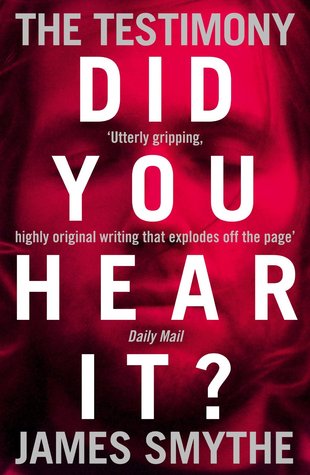
So imagine you’re just going about your daily business when you hear something like static, the sort of noise you get from your TV when you have all that snow in the screen. What if (almost) everyone else heard it like you, in their heads, at the same time? What if it wasn’t just noise but there were words as the experience is repeated, three times? “My Children” “Do not be afraid”. “Goodbye”. Then nothing. What do you think would happen?
That’s what The Testimony is all about.
Why did I want to read it?
I discovered James Smythe earlier this year when I read The Explorer and The Echo in rapid succession, and since then I’ve been getting my hands on the small number of other titles he has published. He’s an intelligent writer of sci-fi thrillers, cleverly plotted and proper page turners. The Testimony is the fourth of his novels I’ve read and I think one of his earliest.
What did I think of it?
I thought this was fantastic. It’s worth putting it in context; I was going through a bout of illness and was stuck on the sofa and needed something diverting to help me stop feeling sorry for myself and so glad that I picked this up as it was exactly what I needed. It’s one of those narratives told in the first person by a number of different people (I think I read somewhere there are 26 narrators) with the full range of nationalities and genres and ages and experience of the phenomenon which becomes known as The Broadcast.
Of course, humanity does not behave well and instead of bringing everyone together the whatever-it-is actually tears the world apart because they don’t know what it is or where it comes from and as humans will gaps are filled in and assumptions made. So we have terrorism and ear and suicide and protests and disaster and accusations of hoaxes. And then something else is thrown into the mix and people become very very afraid. Unlikely to end well.
I was particularly interested in the people who’d didn’t hear anything and wonder what all the fuss is about. Is there something wrong with them? As you might expect others wonder about them too; if it’s the voice of God and you haven’t heard it are you going to hell?
This is a really enjoyable thriller showing how the things can fall apart all too easily. Although they are quite different books it did remind me at times of The Three which I read earlier in the year, probably because of the structure.
There are worse things to do when you are feeling poorly. Recommended.
 What’s it all about?
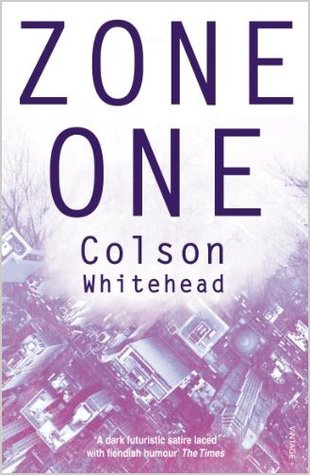
The world has been devastated by a virus which has turned the huge majority of the population into *gasp* zombies. However, time has passed and the survivors have fought back and stabilised areas of the USA and have optimistically started to rebuild civilisation (as far as they can anyway). The book follows our main character, known only by his nickname Mark Spitz, over three days in Zone One (Manhattan) as he and his small unit sweep up straggling zombies so that the island can be re-inhabited.
Why did I want to read it?
I’m in bit of a zombie kick at the moment, plus I’m pretty sure I saw this favourably reviewed in a blog that I can’t remember (I really must get better at recording recommendations from other bloggers so they can be properly acknowledged) and was keen to give it a go as it sounded a bit different.
What did I think of it?
I thought this was a really well-written and affecting novel of the zombie apocalypse. I liked the structure, split over the three days of single weekend where we got to know the characters, how they are doing now and just as importantly how they got here. Flashbacks are used effectively to describe the suddenness of the epidemic, and how devastating it was for individuals. For example Mark Spitz comes home from a weekend away with his friend to find his infected mother attacking his father and just has to make a run for it. I liked the fact that not all of the survivors are the ones you would obviously think would make it. And the story of how Mark Spitz got his nickname is great.
My only quibble isn’t with the book or the author Colson Whitehead, whom I wasn’t at all aware of (my knowledge of contemporary US mainstream fiction is patchy at best to my shame), but rather with the critical reaction to it. As I’ve said I thought this was really well written, a strong story with an interesting approach to a staple of the horror genre but a number of the reviews I read talk a lot about the marrying of genre and literary fiction, because Whitehead has won a Pulitzer prize and that somehow makes his approach to the subject matter more valid and of greater value than more obviously genre authors (to some commentators at least).
And perhaps it’s just my own sensitivity but I get annoyed at the idea that it’s OK to like genre fiction as long as it is written by someone who is a mainstream author, so we can all pretend it isn’t really genre fiction at all but using tropes to talk about something else, as if that isn’t what genre and speculative fiction does anyway.
But, climbing down from my soapbox, you should give Zone One a try, it’s a really good take on what happens when you think you’ve overcome the zombie hordes and worth reading.
 What’s it all about?
Shoggoths in Bloom is a collection of shorter fiction by Elizabeth Bear, must-award winning sci-fi and fantasy author. Includes a couple of tales that bagged her one or two Hugos.
Why did I want to read it?
I’ve read some of her work before in anthologies and her stories have always stuck out for me (she was probably my favourite from the recent Lovecraft themed collection which I read and reviewed here), particularly as she often writes tales related to the Cthulu mythos. So I wanted to get to know her work better.
Plus I loved the cover.
And the title.
What did I think of it?
A really strong collection showcasing the variety of her work. If I’m honest I was a tiny wee bit disappointed in the title story, which was good but not great IMHO. But there wasn’t a bad story in here and my particular favourites were:
- Tideline – one of the Hugo winners, very moving. Loved Chalcedony.
- In the House of Aryaman, A Lonely Signal Burns – a murder mystery in a futuristic India, with one of the characters being a genetically manufactured hyacinth parrot-cat
- Cryptic Coloration – dealing with mythical beasties in the real world
- Confessor – what’s really going on in that hidden lab up that mountain trail?
There are some themes that Bear is clearly interested in, mythical creatures and genetic modifications but two. I like the fact that she writes well across a range of genres and she is a genuine pleasure to read. I’ve already got my hands on more of her stories. Recommended.
 What’s it all about?
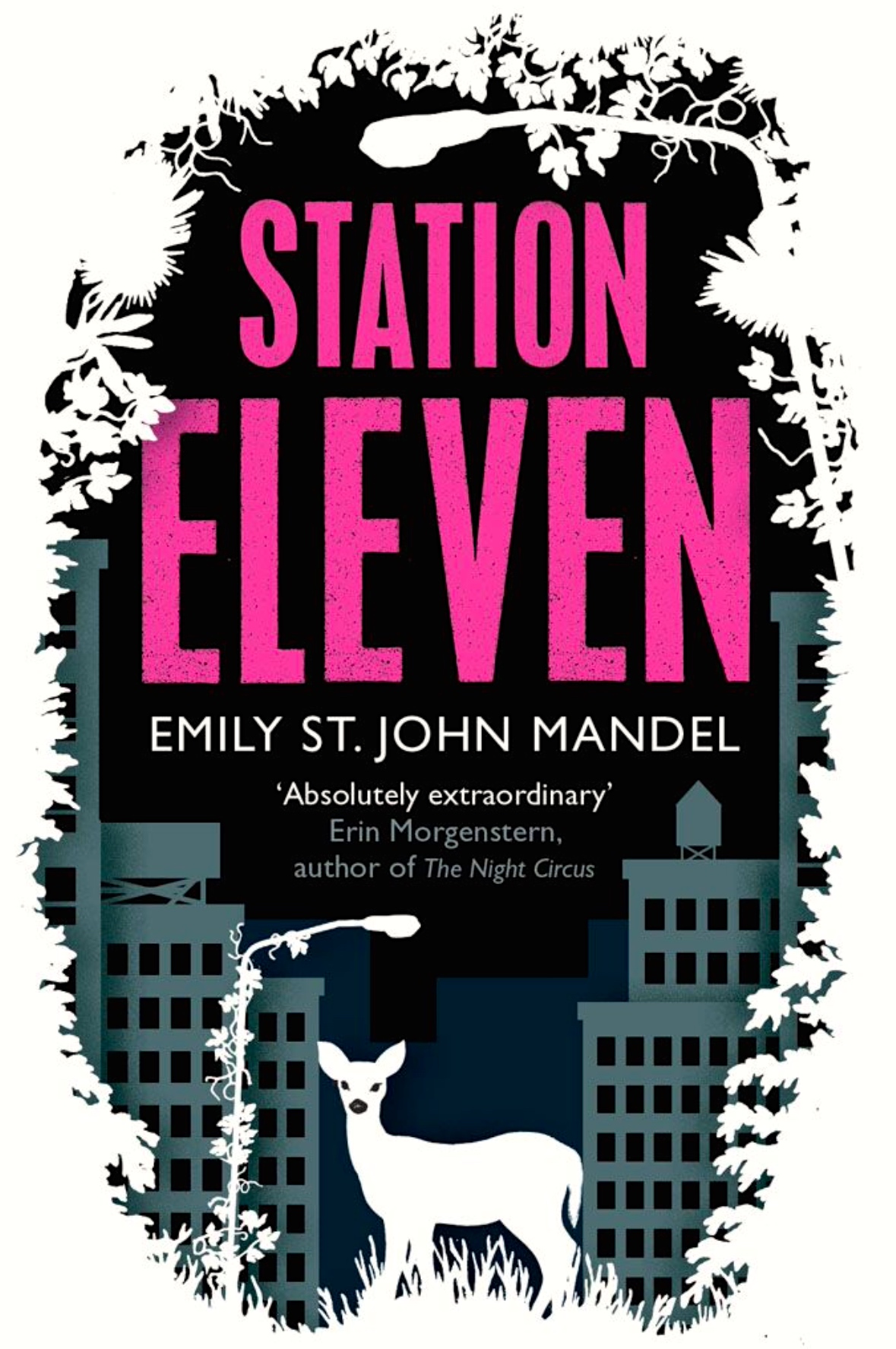
Station Eleven is a novel about the coming of the end of the world as we know it and how we cope with it afterwards. It follows a small group of people who are all connected to the actor Arthur Leander, and the story starts with his death on stage in Toronto just before the illness that wipes out the vast majority of the world’s population. The book is mainly set went years after the Georgia flu hits, and focusses particularly on Kirsten and the theatrical group that she travels with, but flashes back to show the lives our handful of characters were living before it all fell apart.
Why did I want to read it?
Absolutely word of mouth and good reviews and I seem to be absolutely in the middle of an end-of-the-world-novel reading spree at the moment (just wait until you see the next couple of reviews).
What did I think of it?
I absolutely adored this novel and have been trying to encourage like-minded friends to read it by describing it as a cross between The Girl With All The Gifts (which it absolutely isn’t except in the quality of the story telling) and A Visit From The Goon Squad (which it sort of is because of the connections between key characters). I read it in a couple of sittings (but I’ve been doing a lot of that recently!)
I loved Arthur’s story, a flawed man dealing with his fame and the impact that had on all the people around him, including the person who tried to save his life when he collapsed, and how some of that survived into the future through the memory of Kirsten who was so young when I tied but still has copies of the comic he gave her (drawn by his first wife) which gives the book its title and also provides a link to one of the more mysterious and unpleasant characters in the new world, The Prophet. The charismatic religious fanatic who creates a cult of personality and rules with an iron will is a bit of a cliché but in this incarnation at least is totally believable. I think people would look to someone like him to fill a void and give them a sense of purpose and direction even when they know that it isn’t right. It doesn’t take too much thinking to work out who The Prophet probably is but I don’t think that’s a big deal, it’s not meant to be a mystery but shows the impact such a disaster can have on an impressionable mind and how they night find the means to cope, however warped that might be.
But the book is really about relationships, professional and personal, friendship and love and how they resonate through time. There wasn’t a character that I didn’t engage with or feel some sympathy for and I wondered, as I always do with this type of novel, how I would cope in a similar situation.
If you haven’t done so already you must must read this. It’s so good I definitely intend to revisit it.
Just wonderful.
Another selection of recent short reads
 Edie Investigates by Nick Harkaway
This short story features Edie Banister, elderly lady with a past full of derring-do and at present involved in investigating (unofficially of course) a rather unusual murder. This is either a teaser for or an outtake from Angelmaker, the novel in which Edie features heavily. As such it’s very enjoyable and it was lovely to meet Edie again, but I would recommend you get your hands on the novel which I read a year or so ago and thought was absolutely wonderful.
 The Face at the Window by Louise Welsh
A collection of three short ghostly stories originally written for BBC radio (and broadcast on Radio 4 I believe). I enjoyed them (I do like a ghostly tale) and found them atmospheric but wonder if they wouldn’t have been even better read aloud on a grey chill winter afternoon. Louise Welsh is becoming one of my favourite authors and it was good to read some of her shorter fiction.


 Bride of the Book God