
You are currently browsing the category archive for the ‘Challenges’ category.
 2312 is exactly the kind of sic-fi novel that I adore; lots and lots of hard science, detailed techie details and complex societies explained at length. I was absolutely in my element reading this as part of Carl’s sci-fi experience and its up there with Jack Glass as my favourite reads of the year so far.
So, those of you who know Kim Stanley Robinson will be aware that apart from the stuff I’ve mentioned above he is brilliant at world building and deeply concerned about what humans are doing the planet. All of those themes are on show here but expanded away from Earth to the other planets and moons of the solar system which humanity has colonised. We are many years into these developments, so Mars, Mercury and so on have been bio-engineered, have their own social structures in place and people have altered themselves in many different ways so gender is a complicated matter. As is the politics, which is the thrust of the story – terrorist attacks (or are they), alliances and rivalries at individual and planetary levels. The role of artificial intelligence is also a big issue – can we trust the technology used to smooth things along, can we really hide things from the implants in our heads and so on.
This is a terribly rambling description of the book and doesn’t really describe the plot terribly well. Against this messy background is basically a love story between Swan and Warham, the former from Mercury and the latter from Titan, physiologically very different but a couple who come together during the course of the story as they try to work ou what’s really going on. I really liked them both and found their relationship convincing and rather lovely.
One of the most interesting things about the book is the structure, which intersperses the main plot developments (which are often described in terms of the main relationships within each of those sections) with extracts from relevant documents and lists of, well, stuff. I love lists so not at all unhappy with this but I think these interjections do slow the pace of the story, and I occasionally got a tiny wee bit impatient.
Reading this through again I feel I haven’t really captured what the novel is about but that’s not surprising. When the Book God asked me what 2312 was about while I was reading it I simply couldn’t describe the story in any coherent way. All I know is that I had a ball reading it and wonder if there will be a sequel because if there is I will so be there!
Loved it.
 About Gilles & Jeanne:
Gilles & Jeanne studies, clinically and voluptuously, the progress of the French ogre, Gilles de Rais, the original Bluebeard, who was burned in 1440 for sorcery, sodomy and the slow slaughter of scores of innocent children… [AS Byatt, Sunday Times]
When did I first read this? 1989
What age was I? 27
How may times since then? Once again I’m surprised to find that this is the first time I’ve reread this novella
Thoughts about the book:
I was only vaguely aware of Gilles de Rais before reading this novella. My interest grew out of a fascination with Joan of Arc which peaked in the mid 1980s, and through Joan I inevitably came to Gilles, her companion in arms and a man who seems to have believed in her implicitly. And although much of the focus of this novella is the story of Gilles (by the very nature of his survival and his crimes), it also tells Joan’s remarkable and tragic story in some detail. In particular it paints a picture of Gilles as a changed man after witnessing Joan being burned at the stake, implying perhaps that this is what triggered his depravity.
Tournier’s view is that Joan’s arrival to persuade the King of France to fight had an immediate impact on Gilles and that he saw something significant in her:
Yet there was one man who recognised Jeanne at first glance, as soon as she entered the throne room. This was Gilles. Yes, he immediately recognised in her everything he loved, everything he had waited for for so long.
This is a short book but it in its brevity it gets straight to the point; Gilles himself hardly figures in the later sections but the people around him paint a picture of a man driven by obsession and desire, egged on by a misguided (at best) adviser who seems to believe that by aiding his master’s descent into hell he can bring him back redeemed from his sin.
And his crimes, if true are shocking in the extreme, and fed into the legend that became Bluebeard.
One of the things I hadn’t realised until fairly recently is that there is a view that Gilles, despite being found guilty of murdering many children, mostly but not exclusively boys, through his own confessions, the accounts of his confederates and the testimony of the parents of his victims, may have been the subject of a plot by the Church or other noblemen who desired his lands and wealth. We will probably never know, after all this time.
I can’t really explain why this version of the story has had such a grip on me; I have read quite a few books about Gilles over the years but this is the one that had the most emotional resonance. The puzzle of Gilles, his descent from a great soldier and Marshal of France to serial killer, is compelling and as told here shows that even the most dreadful deeds can be turned into art.
This is the fourth book in my Big Re-Read project.

About ‘Salem’s Lot:
‘Salem’s Lot is a small New England town. Like so many others it contains the usual quota of gossips, drinkers, weirdos and respectable folk. Of course, there are tales of strange happenings – but not more than in any other town its size.
Ben Mears, a moderately successful writer, returns to the Lot to write a novel based on his early years, and to exorcise the terrors that have haunted him since childhood. The event he witnessed in the house now rented by a new resident. A newcomer with a strange allure. A man who causes Ben some unease as things start to happen…
When did I first read this? 1976 or thereabouts (Genesis had just released Wind and Wuthering which was being advertised on the radio almost constantly as I was reading this so I think the date is about right)
What age was I? An impressionable 14
How may times since then? I can’t believe this is only the fourth time I’ve read this but the stats don’t lie (at least not in this case)
Thoughts about the book:
This wasn’t the first Stephen King book I had read; I had devoured Carrie earlier the same year, enjoying the thrill of unhappy teenager getting her own back and loving the style of the book with its mix of traditional narrative alongside eyewitness reports and newspaper clippings and so on. But ‘Salem’s Lot was the big one for me, setting two things in stone for the future (1) vampires are my monster of choice (even sparkly ones a la Twilight) and (2) I would read anything by Stephen King – and I’ve pretty much stuck to that in the (gulp) 36 years since then though I sometimes come to his stuff a while after publication.
I wish I had been able to keep the paperback version of this that I read as a teenager; if memory serves it was completely black with an embossed (?) head, and the only colour was a drop of blood – who could resist that? Sadly I lent it to someone and never got it back, but I indulged a few years ago in the rather lovely illustrated edition pictured above, with wonderful photographs, a glorious design and loads of additional material (like deleted scenes etc); a real pleasure to read.
I just love this story – a wonderful cast of characters dealing with the supernatural in a realistic setting, a cliché now perhaps but to someone my age at the time a real revelation. Love, horror, bravery, evil – all there in spades. And I can confirm that the feeling of dread about characters you have come to care about is still there even after several re-reads.
Interesting how much of my view of the book was affected by the TV version starring David Soul, for which I have a real soft spot; some of the scenes are still very vivid. Not a bad adaptation though I was still surprised to be reminded in the book that Ben was dark-haired.
This is a real treat for anyone who hasn’t read it before and worth revisiting for those who have, one of my absolute all time favourites.
This is the third book in my Big Re-Read project.
 The Greatcoat by Helen Dunmore is another ghost story but couldn’t be more different from The Small Hand, though equally atmospheric.
This is set in 1952, and Isabel, newly married, moves to Yorkshire with her husband who is a GP. It’s a time of austerity with rationing still in force and their flat isn’t very warm or welcoming. Isabel is left very much to her own devices as her husband is constantly busy. One night Isabel wakes freezing and wraps herself in an old greatcoat she finds at the back of a cupboard wakes.
And then there is a knock at the window and she sees a young RAF pilot wanting to come in….
This is a story of unfinished business, loneliness and passion, the impact of war and how the recent past can come back to haunt. Very intense and powerful.
This was my seventh and final Readathon read (or at least the last one I finished).
 I’m sure I’ve mentioned somewhere before how much I love Gladys Mitchell’s books and what a fabulous character Mrs Bradley is. I really enjoyed the TV adaptations though Diana Rigg was far too glamorous for the part given that a common adjective for Mrs B is grotesque, but setting that to one side they were great fun and you should seek them out if you haven’t seen them already.
Watson’s Choice is up to her usual standard. Mrs Bradley and her secretary Laura are guests at Sir Bohun Chantry’s party to celebrate the anniversary of his great passion, Sherlock Holmes, and everyone is instructed to come dressed as one of the characters from the canon. However, scandal erupts when the very wealthy Sir Bohun announces he’s going to marry the governess (naturally poor as a church mouse) and the shenanigans begin with the unexpected appearance of the Hound of the Baskervilles.
And then of course there is the murder….
This is great fun. Mrs B is wonderful, Laura not quite as annoying as I had at first feared, and there are the usual red herrings, suspicious foreigners, staff who may not quite be as devoted to their employer as they appear, small boys coming across clues, and a harpoon. All sorted out in the end in a satisfying manner, of course.
My favourite line? “Red-haired people are naturally impulsive”. May have to test that one out on a couple of my friends….
There is a very, very lengthy list of “also by Gladys Mitchell” titles at the beginning of this book and I’m mildly appalled at how few of them I’ve read, though secretly pleased that they seem to be coming back into print and I may have the chance to read them all if I try hard enough!
This was my sixth Readathon read
And this is (if scheduling has worked properly) my 500th post. Woo hoo!
 Yes, it’s that time of year again when thoughts turn to autumn and Carl hosts RIP, this year for the seventh time. Not a challenge unless you want it to be, this is a celebration of all things ghostly, horrible, mysterious and thrilling.
I intend to participate again this year but am not setting myself any goals, especially as I’ll be spending 2 weeks in Italy where I’m hoping for warmth and sunshine, not usually conducive to shivers up the spine, but you never know.
We’ll just have to see what turns up…..
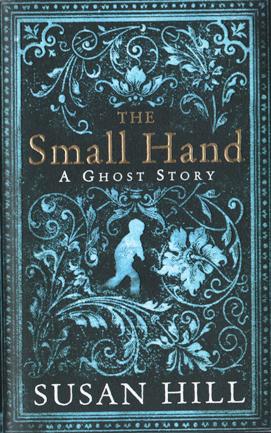 It seems only fitting that as Carl announces his RIP VII challenge (more of that in a future post) I finally get around to collecting my thoughts on one of two ghost stories I read during April’s Readathon.
The Small Hand by Susan Hill is the tale of Adam Snow who is a bookseller specialising in hunting down antiquarian volumes for a mostly wealthy clientele. On return from a visit to one of his clients he gets lost on a country road and finds himself confronted with a decaying mansion with which he becomes totally fascinated. He walks up to the entrance and as he stands there he feels a small hand slipping into his own, just as if a child was holding on to him.
He convinces himself that he has imagined the whole thing (as you do) but as he goes about his daily business he starts to experience panic attacks and nightmares, and on occasion the small hand returns, even when he thought himself to be safe on a trip abroad. Needless to say Adam decides that he needs to get to the bottom of this mystery and heads back to the house….
This was a lovely atmospherically ghostly read and benefitted (as all the Readathon books did) from being devoured in one sitting. For some reason once I’d finished it I kept on getting it confused in my mind with The Winter Ghost, which is absurd really as they share little in common apart from being set (partially in this case) in France and having an air of melancholy and unfinished business (which you always get with a ghost story, let’s face it).
The Small Hand is beautifully written and rather sad and I enjoyed it very much.
This was my fifth Readathon read.
 I can’t believe how long it’s been since I last sat down to update this blog, but that’s been a constant refrain this year due to a combination of not reading as much as I used to and other distractions (mostly work) leading to me only really thinking about this sort of ting at the weekend when there are competing priorities. But I am determined to catch up on my reviews before I go on holiday to Italy in the middle of September.
And where better to start than with a book I picked up purely on spec in our local branch of Waterstone’s.
I don’t know why it caught my eye – a combination of the cover and the fact that this is a new imprint designed to
showcase unjustly neglected works by great writers from the 1930s – the so-called golden age of crime writing – through to the 1970s
Francis Beeding is a pseudonym for two guys who wrote collaboratively over more than 20 years, and five of their novels have been made into films – haven’t gone looking for those yet – so clearly very successful but until now I hadn’t heard of them at all, and there works seem to have drifted into relative obscurity. Which is a real shame because this is an absolute cracker.
So we have a seaside resort in England, nothing special about it really, except that at least one of its residents has a pretty significant secret. And then the murders start.
This is a classic police procedural; we see the impact from the local angle as well as from the press (a reporter happens to be on holiday here and covers the story) and the detectives from London brought in to help solve the case. There is a real sense of unease as the community turns in on itself, wondering why this is happening to them. Perhaps unusually for this sort of story there is not only an arrest but a court case and a wonderful twist at the end which I will confess I didn’t really see coming and which has a really modern (to my mind) approach. Without giving anything away, I worked out the what but had no idea about the who.
Death Walks in Eastrepps was once apparently described as one of the ten greatest detective stories of all time, and its easy to see why. Highly recommended.
This was my fourth Readathon read.
 I am so, so far behind on my reviews that I seriously thought about skipping some (heresy) or having more than one (unrelated) book in a post (anathema). So I’ve decided to do the next best thing and crank out some mini-reviews. no disrespect intended to any of the books at all, of course.
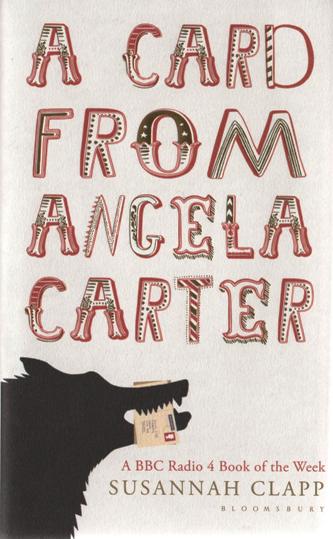
First up is a tiny wee (in size not substance) memoir by Susannah Clapp; she was a long-time friend of Angela Carter, and A Card From…. is her attempt to capture the personality, interests, passions and life of an intelligent and versatile author by using the postcards she sent through her lifetime as a jumping off point for anecdotes and remembrances. The postcards themselves are often odd but it makes sense that Angela Carter would not have taken a traditional approach to dropping a note to her friends, and they make an interesting gateway into aspects of her life.
I really enjoyed reading this for two reasons:
(1) I hugely admire Angela’s work; I read and adored The Bloody Chamber when I was a student and every time I read something about her it makes me regret that I haven’t read more. I have thirteen of her books as far as I can tell and seem to skew towards her non-fiction. I’m mildly astonished (and a bit appalled) that I haven’t read either Wise Children or *gasps* The Magic Toyshop.
(2) I am incredibly nosey about people, I love reading diaries and letters and reminiscences so this was right up my street. She sounds like she must have been a challenging friend but they are often the best kind.
Very enjoyable, though this is the second time this week I’ve felt that the English Lit police will be after me (I may have disrespected Falstaff in a Facebook status update). and this hasn’t turned out to be such a mini after all…
This was my third Readathon read.
 The Baskerville Legacy was not at all what I expected. When I saw it in the book shop I was immediately attracted by the cover and the subtitle “A Confession”. Ah ha, I thought, this is going to be a lovely Holmesian pastiche telling the true story of the Hound of the Baskervilles; not a straight retelling because Conan Doyle himself appears all the way through, so not a version of Holmes but a “how it came to be”. Which it was and wasn’t.
There isn’t actually a mystery here. It’s the story of how The Hound came to be written; the germ of an idea by a friend of Conan Doyle, a man called Bertram Fletcher Robinson, worked on jointly or so it would appear. But in many ways the tale being written is incidental, as this is a book about friendship, writing, collaboration, professional jealousy, talent or the lack of it and the impact of a dissolute lifestyle. Oh and of course there is spiritualism.
It’s a really enjoyable short book, and one of the most interesting things (apart from the portrait of Conan Doyle who isn’t always the jovial chap he was often portrayed as) is where the author has taken real events and changed or elaborated on them to produce his novel. because Robinson and Doyle were friends, holidayed together, and appeared to have collaborated though Doyle is the sole author on all published versions. there seems to have been a real controversy over this though as the author says none of the correspondence between the two men (if it still exists) has ever been made public. The author’s note at the end is a fascinating read all by itself.
I very much enjoyed this story, with its unsettling air of creepiness, of jealousy and strong feelings, and would recommend it as something a little bit different on the whole Holmesian thing. So not what I expected as I said, but a very happy accident.
This was my second Readathon read.


 Bride of the Book God