You are currently browsing the tag archive for the ‘Victoriana’ tag.
 So, this is another one of those books that’s been on Mount TBR for what seems like forever. It’s been on and off various challenge book lists from RIP to 24-Hour-Readathon and back again but poor thing never got read. And that’s despite a strong recommendation from the Book God to whom it actually belongs.
The Portrait of Mrs Charbuque by Jeffrey Ford has a tantalising premise. Imagine that you are a tremendously successful portrait painter at the end of the nineteenth century, do famous and feted that you have become a bit jaded. Imagine that you are accosted outside your home in New York and offered and enormous sum of money to paint the portrait of a woman known only as Mrs Charbuque. But of course there is a catch; you have to paint her portrait without ever seeing her, based only on the sound of her voice and the answers to the questions you put to her and the conversations you may have. Would you do it?
Our hero Piero Piambo decides that he has nothing to lose, and the that the additional money he will be given if the final portrait looks like her will allow him to step back from the world of high society and paint only for himself.
In the background are his relationships with friends and lovers, the world of turn-of-the-century New York and a growing obsession with finding out more about the mysterious Mrs C, all the while dodging her deranged and jealous husband while a series of rather nasty murders is being carried to. Are all these things connected?
Well, of course they are, don’t be silly.
I really liked this book, largely because I took a shine to Piero himself, rather a decent cove who gets dragged into something even stranger than it at first appeared. It has a lovely atmosphere and there is a nicely realistic love story in the mix, it’s creepy in a cosy way, and I don’t mean that as a criticism. It was one of those enjoyably comfortably satisfying books to read. For some reason it made me think a bit of Kings of Eternity though I have no idea why as they seem to have little in common; perhaps it was tone or something, not sure.
Saw the likely end coming before I got there but didn’t mind that at all as it was delivered in a nicely over the top manner.
But this is a good read for a rainy afternoon. I liked it so much I made Silvery Dude buy a copy.
 The Night Circus is one of those books that you just know you are going to adore from page one. I bought this when it first came out in hardback and it hung around on my TBR mountain for no real reason other than I just didn’t get to it. That was, of course, until Silvery Dude got the paperback and started harrying me to read it as he had totally fallen in love with it. So of course I had to pick it up because I (mostly) trust his judgement, not because we read competitively, not at all, whatever gave any of you that idea.
So, the Night Circus (or Cirque des Reves to give it its proper title but not its appropriate punctuation) is a touring sensation in the 1880s, with all the attractions of a normal circus but entirely in black and white and with some very particular elements – tents filled with clouds, an unusual clock and a dedicated group of followers identified by the wearing of red items amongst their black and white clothing. The story is not so much about the circus itself, although it is of course one of the main characters if I can put it that way, but is really about a duel (?) bet (?) wager (?), let’s say contest between two practitioners of magic which is played out through their protégés, Celia (the daughter of one) and Marco (the apprentice of the other). A contest that the participants have no real control over and only slowly come to understand who their opponent is. Opponents are. You know what I mean.
This is just glorious, I devoured it in a couple of sittings over a Bank Holiday and was totally immersed in the world that Erin Morgenstern creates. A remarkable set of characters, a narrative dipping backwards and forwards in time, with a really wonderful and believable love story slap bang in the middle and a very satisfying ending. One of those books that you just wish would keep going and that you miss as soon as you’ve finished it.
I know that I’m probably one of the last people in the universe to have read this, but on the off-chance that you haven’t and that you are someone who enjoys being beguiled, then please do read this. You won’t be sorry.
Another read for Once Upon a Time VII.
 Seeing Redd is the second volume in Frank Beddor’s Looking Glass Wars trilogy (my thoughts on volume one are here), and expands on Alyss Heart’s story now that she is (Spoiler Alert) back in charge of Wonderland having defeated her Aunt Redd and regained her Queendom.
Of course, things are not going smoothly as she tries to consolidate her rule, not only having to contend with those members of her kingdom who supported Redd during her rule but with the machinations of King Arch from a neighbouring kingdom (who doesn’t believe women should rule) and her growing attraction to her now-grown-up childhood friend Dodge.
This is very enjoyable but I didn’t find it quite as compelling as the first book, although it still has many things of interest: Redd’s wonderful dress made of living toothed roses, her assassin The Cat (yes, that cat), and the rather nasty sidekicks of Arch (especially Blister) and the whole concept of The Millinery. Redd’s appearances on Earth are also very spooky and disturbing.
I think it suffers a bit from being the middle volume of a trilogy; if builds on the outcome of the first but is clearly designed to set us up for the big finish in the third volume. Still enjoyable and I do want to know how it all works out.
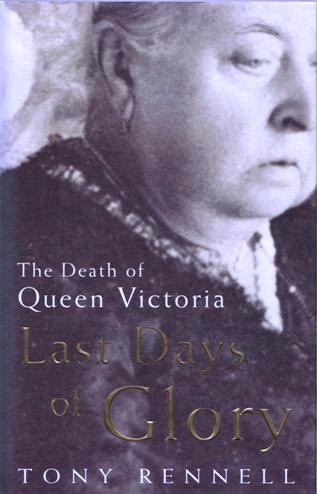 The Last Days of Glory by Tony Rennell gives us a detailed insight into events around the death of Queen Victoria, from Christmas 1900 until her magnificent funeral six weeks later.
It’s a book that’s been on my shelves for a long time; I spotted it in a bookshop just after it came out which is why I have this rather handsome little hardback copy. I’m slightly astonished (and also a bit ashamed) to say that means this has been in the stacks for close to twelve years. But it is one of those books which needs to be read at exactly the right time because of its level of detail. I can’t even remember why I picked it up when I did but I was soon absorbed and read it over a weekend.
I studied history at university and the past has always been of great interest to me, regardless of period, but I came late to the Victorians, probably being in my early thirties when I started to read up on the nineteenth century although the social history of her reign was very much a focus at school and so I knew enough to get by, I just wasn’t interested enough to become absorbed. I blame the Bloomsbury set a bit for that, probably unfairly, but it seems to make sense that I wasn’t interested in a period which some of my great literary heroes had written off. A number of books on social and cultural history and a bit of a passion for the Pre-Raphaelites had me wandering back, and the figure of Queen Victoria herself became increasingly fascinating to me.
So if you are at all interested in Victoria and her family and household then this is a really enjoyable book. Much of what is in it comes from the recollections of the doctor who attended her in her last weeks and months, and who assisted in preparing her body for burial. Rather than being slightly morbid as a topic, the whole issue around what she had instructed was to be placed in the coffin with her is a mini-drama in itself, and Rennell devotes a number of pages to it, giving a sense of how strong-willed and secretive the old Queen could be. There is a real insight into the complex relationships between her children and grandchildren and the figure of the Kaiser looms large. There is also a great deal about the planning of the funeral itself; she had been on the throne for so long that there was no-one alive who could remember the last time a monarch was buried and what the protocol should be, so much had to be reconstructed and quite a bit invented entirely.
It seems odd in some ways to consider the impact of her death, but for a great many of her subjects she was the only ruler they had ever known; it will be interesting to see if something similar happens when the present Queen dies (she came to the throne 10 years before I was born) although I’m not so sure in this day and age whether it will be seen in quite the same way as the end of an era.
This is a book full of rich anecdotal material and a really interesting and useful annex on the whole issue of the role of John Brown in Victoria’s life; it is well written and it gave me great pleasure to read. Recommended.
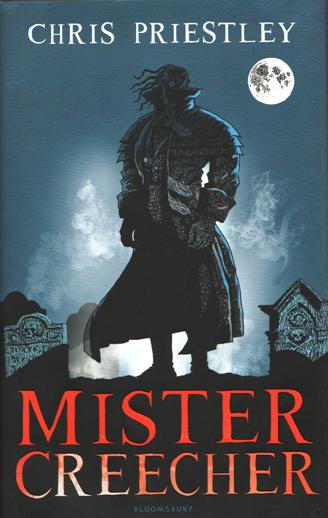 I am a huge fan of Christopher Priestley, having read all three volumes of his Tales of Terror Series, and as part of RIP VI his excellent ghost story Dead of Winter (reviewed here), a real gem. So as soon as I found out that Mister Creecher was being issued I had to get a copy and it hasn’t lingered long on the TBR pile.
So it is 1818, and we meet Billy, on the streets, ill, and turned into a pickpocket after running away from the chimney sweeper who treated him cruelly. He stumbles across an enormous man, apparently dead, lying in a side street, but as he is about to rob the body he is accosted by members of a street gang. But before they can beat him, the mysterious body rises from the ground and does them serious damage. And so we meet Mister Creecher, and his relationship with Billy begins.
Mr C looks after Billy during his illness and they form something of a bond, though Billy is very aware of the strangeness of his new companion and in exchange for food, shelter and some assistance in frightening potential robbery victims into parting with their valuables, Billy simply has to follow one man around London. But that man happens to be Victor Frankenstein.
This is a wonderfully different telling of part of the Frankenstein story. The creature is a compelling character, a mix of intelligence, brawn and childish desires, especially for the mate that Frankenstein has promised him. His recognition of his otherness is both touching and sad, and his desire to not be the only one of his kind, while filling Billy with horror, is the driver that moves him on.
But it is Billy who is really the heart of the story, as he works his way from street urchin to more sophisticated criminal before the events that will turn him into a character that some of us will know from another famous 19th century novel. There are clues to Billy’s identity for those that want to see them, but I’m not going to give it away here as it is part of the impact of the novel.
There are some lovely literary references and in-jokes which I found really enjoyable, and some real historical figures popping up here and there, most notably the Shelleys. Priestley paints a really effective picture of London at the time and what it was like to be an outcast child with no hope other than the workhouse or the type of hard manual labour which we would consider abuse today.
I have to confess that I haven’t read either of the novels from which the main characters are drawn, a bit surprising in relation to Frankenstein given my love of things gothic but I tried once when I was a teenager, and found it really hard going in comparison to Dracula.
But this is an excellent, creepy, atmospheric story which has made me consider giving Frankenstein another chance.
Heartily recommended.
 I think it’s fair to say that The Dead of Winter is one of the very best ghost stories that I have ever read, and I say that as someone who thoroughly enjoyed and was totally creeped out by Dark Matter earlier this year. And it’s not just that I am a huge Chris Priestley fan, having read his three books of Terrible Tales (see here, here and here), though of course I am. I just loved this well-written, perfect, little tale.
This is the tale of Michael Vyner, looking back as an adult at the Christmas he spent with his guardian in his isolated East Anglian house, Hawton Mere, and the terrible events that unfolded there. Michael is not there out of choice; his mother has just died, and Sir Stephen is someone he wants nothing to do with – he is bitter that his father was killed saving Sir Stephen while they served together in the army and Michael believes that the wrong man died. But he is a young boy with no other family and reluctantly accedes to his mother’s dying wish that he allow Sir Stephen to give him a new start in life. But Hawton Mere hides a dreadful secret…..
And that’s all I’m going to say because anything more would just spoil it.
This is just smashing, I read it virtually in one sitting and it was totally satisfying as a ghostly tale, very traditional and I mean that in a good way. It’s set in the Victorian period and has everything you might expect – friendly servants, an aloof but actually rather nice lawyer, the strange guardian and his devoted sister, and mysterious goings on some of which are pretty scary. I keep on wanting to compare it to both MR James and The Woman in Black, all for the very best reasons, but that’s a bit lazy of me.
All I will say that if you enjoy ghost stories you will love this.
It is my third read for RIP VI challenge. The shortest so far but already shaping up to be my favourite.
 This is part of the Treasury of Victorian Murder series, and was the one I was always going to get first simply because I have been fascinated by the Jack the Ripper, and indeed serial killers of all sorts, since I can remember, all the way from Gilles de Rais to Ted Bundy.
A bit morbid, I know, and the sort of admission that immediately gets you marked as the obvious suspect in any decent American crime series. Especially when coupled with the kind of books on the subject that I have in the stacks.
Can’t explain it, just once of those things, no need to be afraid, honest.
So Jack; well, iconic killer largely because his murders not only remained unsolved but have spawned the wildest of theories about his identity, from the Duke of Clarence to Walter Sickert to Sir William Gull, which in turn has led to some great books, both fiction and non fiction. And of course the movies; my particular favourite being Murder by Decree with the great Christopher Plummer.
But I digress.
This is a great little book, which tells the basics of the story as it happened as if through the diary of a contemporary who had access to the police. I loved the artwork which managed to give a real sense of place and conveyed the gruesomeness without dwelling on it, probably helped by being in black and white.
A very nice addition to my true crime library.
 So if I was a lazy blogger I would probably just link to Raych’s post here and sit back because everything she says is absolutely right. But I do have stuff to say about this book and so will ignore my laziness and do the blogging thing.
Alexia Tarabotti has no soul (hence the title), which only a few select people know (and that doesn’t include anyone in her family). This lack of soul makes her unusual even in a Victorian society which accepts the existence of vampires, werewolves and ghosts. It also means that she can neutralise the supernatural abilities of others simply by touching them, which comes in pretty handy (pun unintentional).
The great fun of this book is its tone, which is very arch (to use an old-fashioned phrase). Actually, I could go further than that and say quite honestly that the novel is basically hugely enjoyable tosh. It has all the necessary elements:
- feisty heroine who knows more than everyone suspects but whose talents aren’t recognised;
- the handsome hero with whom she spends the whole story fighting but you just know she’s going to end up with him in huge romantic moment at some point;
- sidekicks with varying levels of acceptability;
- a nefarious plot which could represent the end of civilisation as it is known; and of course
- the obligatory evil, twisted genius who must be stopped at all costs.
Oh, and because of the period in which this is set, an appearance by Queen Victoria herself.
I just loved it; not great art by any means but an indulgent, steampunkish romp which passes the time very pleasantly. I already have (and fully intend to read) the sequels.
 Despite a TBR list that is in danger of constituting a library in its own right I haven’t stopped buying books, although I’m about to enter the pre-Christmas moratorium where the Book God and I swap our wish lists and sit on our hands until Santa has been.
And in advance of that looming date I really have been unbelievably bad on the purchasing front:
- The Winter Ghosts by Kate Mosse – “It’s 1928. Freddie Watson is still giving for his brother, lost in the Great War. Driving through the foothills of the French Pyrenees, his car spins off the road in a snowstorm. Freddie takes refuge in an isolated village and there…..” I have her two previous books but haven’t read them yet, and this looks like it might be fun (and is far less chunky than the others)
- Nancy Mitford: The Biography by Harold Acton – “This intimate biography draws a witty, real-life portrait of Nancy, based on the letters she intended to use for her autobiography…….” Sparkling and irresistible, apparently, and totally part of my current obsession with all things Mitford.
- Changeless and Blameless by Gail Carriger – novels of vampires, werewolves, dirigibles and afternoon tea…… Again I have the first one in this series about Alexia Tarabotti but haven’t read it, so this is a bit of a chance, I suppose (what if I hate it??).
- Blue Eyed Boy by Joanne Harris – “Once there was a widow with three sons, and their names were Black, Brown and Blue. Black was the eldest; moody and aggressive. Brown was the middle child; timid and dull. But Blue was his mother’s favourite. And he was a murderer.” Couldn’t resist it.
- Sourland by Joyce Carol Oates – it’s a new book of short stories by the great JCO so of course I was going to get it.
- Dreadnought by Cherie Priest – the sequel to Boneshaker which I got for Christmas (I think, may have been my birthday, too close to call) and still haven’t read. But I feel that I’m going to enjoy it when I get there.
- Plain Kate by Erin Bow – I saw this on another blog but can’t remember whose (sorry); loved the cover and bought on impulse when in Forbidden Planet with Silvery Dude just after Hallowe’en (I bought The Unwritten 2 at the same time)
- Decca edited by Peter Y Sussman – see Nancy above. I’m sure I’ll grow out of this at some point….
- Coco Chanel by Justine Picardie – there was absolutely no way that once I’d got my hands on a copy I would be able to walk out of the bookshop without it. It’s important to recognise one’s limitations….
- Tamara de Lempicka by Laura Claridge – “Born in 1899 to Russian aristocrats, Tamara de Lempicka escaped the Bolsheviks by exchanging her body for freedom, dramatically beginning a sexual career that included most of the influential men and women she painted.” Irresistible.
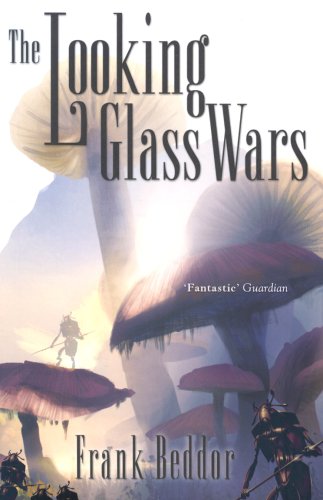 Well, I have always had rather a soft spot for good old Alice, and having watched and enjoyed the re-imagining that was Tim Burton’s movie earlier this year, I was really up for having a punt at Frank Beddor’s The Looking Glass Wars.
So Alyss is being trained to become Queen of Wonderland after a period of horrendous civil war which saw her parents defeat her wicked Aunt Redd. Things go totally pear-shaped on her birthday and she is forced to flee to our world in order to save herself. There she becomes Alice and tells her story to Charles Dodgson who uses it as the basis for the books we know and love.
But can Alice really find happiness in the arms of Prince Leopold or will her destiny reclaim her?
Well, we all know what’s going to happen here.
I thought I would probably like this but wasn’t prepared for how much I would love it and how quickly I would read it. I loved playing spot the character: some of them pretty straightforward correlations to our Alice (Hatter M being the most wonderful to my mind) but others a little more difficult to fathom.
I liked the conceit of Alice being a foundling brought into the Liddell’s home and how no-one believes her fantastic tales, so much so that she begins to doubt them herself as she grows older. I loved the idea of her becoming Queen Victoria’s daughter-in-law. I loved how she got here and how she gets back. And I adored the monstrous figure that is Redd and the havoc that she unleashes.
And then, of course, there is the violence…..
I enjoyed it so much that I now have the two sequels and the first of the Hatter M graphic novels, and will indulge myself at a suitable point.
Really very clever indeed.


 Bride of the Book God