
You are currently browsing the tag archive for the ‘London’ tag.
 What year are we in? 1933
What’s Maisie’s case?
In Leaving Everything Most Loved, Maisie is called in by Scotland Yard when the brother of a young Indian woman (who has been shot in London), appalled at the lack of progress being made but the police, wants to know why she was killed. For various reasons this becomes connected with an unfinished case and Usha’s death is not the first.
What did I learn that I didn’t know before?
Lots of interesting stuff about the Indian community in London between the wars, mixed marriages and so on, stuff I had never really thought about before and saw as a post-WWII issue (and shame on me for that).
What’s happening in Maisie’s personal life?
Big changes to her family, her business and her love life.
Did I enjoy it?
Really good story, one of the few times in the books where we see Maisie really speak her mind when previously she would have been more circumspect and I cheered when she did it (well, inward cheering anyway). The plight of women brought over from India as servants when they lost their positions for whatever reason was very sad. This is very much a game-changer in the series and I could see it being a finale, but understand the author plans to start a new series with Maisie still at the centre sometime in 2015. So hurrah for that.
I really enjoyed immersing myself in Maisie’s world through reading in such quick succession books that would normally have been available a year apart.
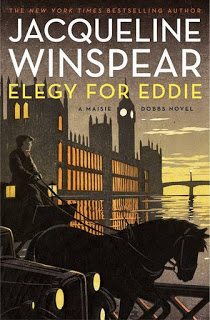 What year are we in? 1933
What’s Maisie’s case?
In Elegy for Eddie Maisie is approached by a group of men from her childhood who want her to look into the death of Eddie, a gentle but educationally challenged man with a real talent for working with horses, who has been killed in an apparent accident at a local paper factory. But he wasn’t himself in the weeks up to his death and his friends are convinced there is more to his death than appears.
What did I learn that I didn’t know before?
This is less about the impact of the war than most of the other novels in the series so not much knew to learn, but there is quite a bit about the inter-war period and politics and the shadow of coming war.
What’s happening in Maisie’s personal life?
She is still getting used to her change in circumstances, but worries about her love life are lurking in the background.
Did I enjoy it?
I came to enjoy this once the story really got going, but was worried at first because it smacked a little of those episodes of crime stories on TV where the murder of the week directly involves one or more members of the resident cast in a way that I almost always find entirely implausible. But here it makes sense that the men would seek out someone they knew and trusted to look into things and it does develop into something rather more interesting. I also like the fact that matters don’t work out entirely to Maisie’s satisfaction, which also seems realistic. A transitional novel for reasons that will become clear if and when you read it.
 What year are we in? 1932
What’s Maisie’s case?
In A Lesson in Secrets, Maisie goes undercover in an independent college in Cambridge on behalf of Special Branch and the Secret Service to observe the goings-on of students and staff in the light of potential un-British activities (though I’m not sure such a thing actually exists). It’s all about the politics. there is of course a death and there is also much about identity and passing off.
What did I learn that I didn’t know before?
I didn’t know how badly some conscientious observers were treated when they ended up in prison rather than driving ambulances or working on the land. Horrible.
What’s happening in Maisie’s personal life?
She is getting used to her change in circumstances, and love continues to develop. Oh and it’s clear she is really good at teaching (and enjoys it).
Did I enjoy it?
I think this is my favourite of the four I read in a row, simply because I’m an absolute sucker for tales set in college or university and the whole administration of it all. I worked out quite early on what the reason behind the murder was but dithered backwards and forwards on the who dunnit part. And this is the first of the books where the rise of the Nazis has an impact.
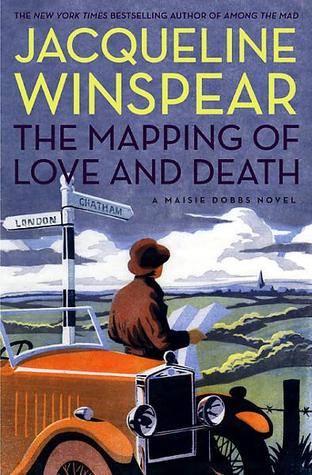 I’ve talked about my binge-reading of the Maisie Dobbs mysteries here so won’t go into the details again, but I will say that I have read and enjoyed all of the novels in the series (and we are now on volume 10 and a little gap in the story) and they are just lovely books to read. I love Maisie as a character and one of the most enjoyable things is the development of her story over time informed by the cases she’s investigating, all harking back to her experiences in WWI. So when you read this and next three mini-reviews please keep this in mind as I want to avoid repeating myself. 🙂
And Lee Child is a massive fan apparently, so there you go.
What year are we in? 1932
What’s Maisie’s case?
In The Mapping of Love and Death, the remains of an American of English heritage who joined the British Army as a cartographer have been found and there are questions about how he actually died. Maisie is asked by his parents to look into the matter, and in particular to find the young English nurse with whom he fell in love.
What did I learn that I didn’t know before?
All the stuff about the work of cartographers in WWI was fascinating, and I also learned a little bit about the early days of documentary film-making.
What’s happening in Maisie’s personal life?
A key figure is coming to the end of his life, but love is on the horizon.
Did I enjoy it?
Absolutely, the story of the young soldier far from home and finding love and how the consequences of that all spilled over into the present was very affecting, and I was glad the ending didn’t tie everything up into a neat bow.
 What’s it all about?
The Atrocity Archives is all about The Laundry, a secret part of the British security services which deals with the supernatural and the occult and unmentionable things in other dimensions and that sort of stuff. It is most particularly the story of Bob Howard and how he moves from being the tech guy (albeit the tech guy with some very particular knowledge and skills) to an operative in the field. Other than that I shall say nothing about the events that transpire in the two connected stories that make up the novel.
Why did I want to read it?
This is actually a re-read, picked up again because I bought the most recent Laundry Files novel by Charles Stross (The Rhesus Chart) and realised that it would be a good thing to read the lot in sequence and then appalled myself by realising I only had the first one so decided to start from the top and ease myself back into the Laundry world.
What did I think of it?
Re-reads are often a bit dangerous especially after some time has passed because what you may have loved way back then you may not still love now. However, I was really pleased that I found this equally as enjoyable as the first time I read it and it sets me up nicely for the rest of the sequence. Bob is a very engaging character and his origin story (for it kind of is that thing) is cleverer than most because he’s already in the secret organisation, so knows loads of stuff, it’s just the change in his status because of the particular case he gets involved in that by necessity leads him into learning loads of additional cool stuff; and he is good at what he does without being totally smug.
I particularly love this because having been a civil servant for *gulp* 28 years – I was very, very young when I started 🙂 – I recognise the bureaucracy and the obsession with the small things at the risk of missing the bigger picture and the office politics and petty rivalries and the jockeying for position which made this all so believable. Well, recognisable when you put aside the liberal use of the adjective squamous, the zombie doorman, the deployment of Hands of Glory and the general Lovecraftian-ness of it all.
Though now I come to think of it…..
The staff disciplinary measures are a bit extreme!
Great fun and looking forward to working my way steadily through the remaining four novels and three (I think) short stories.
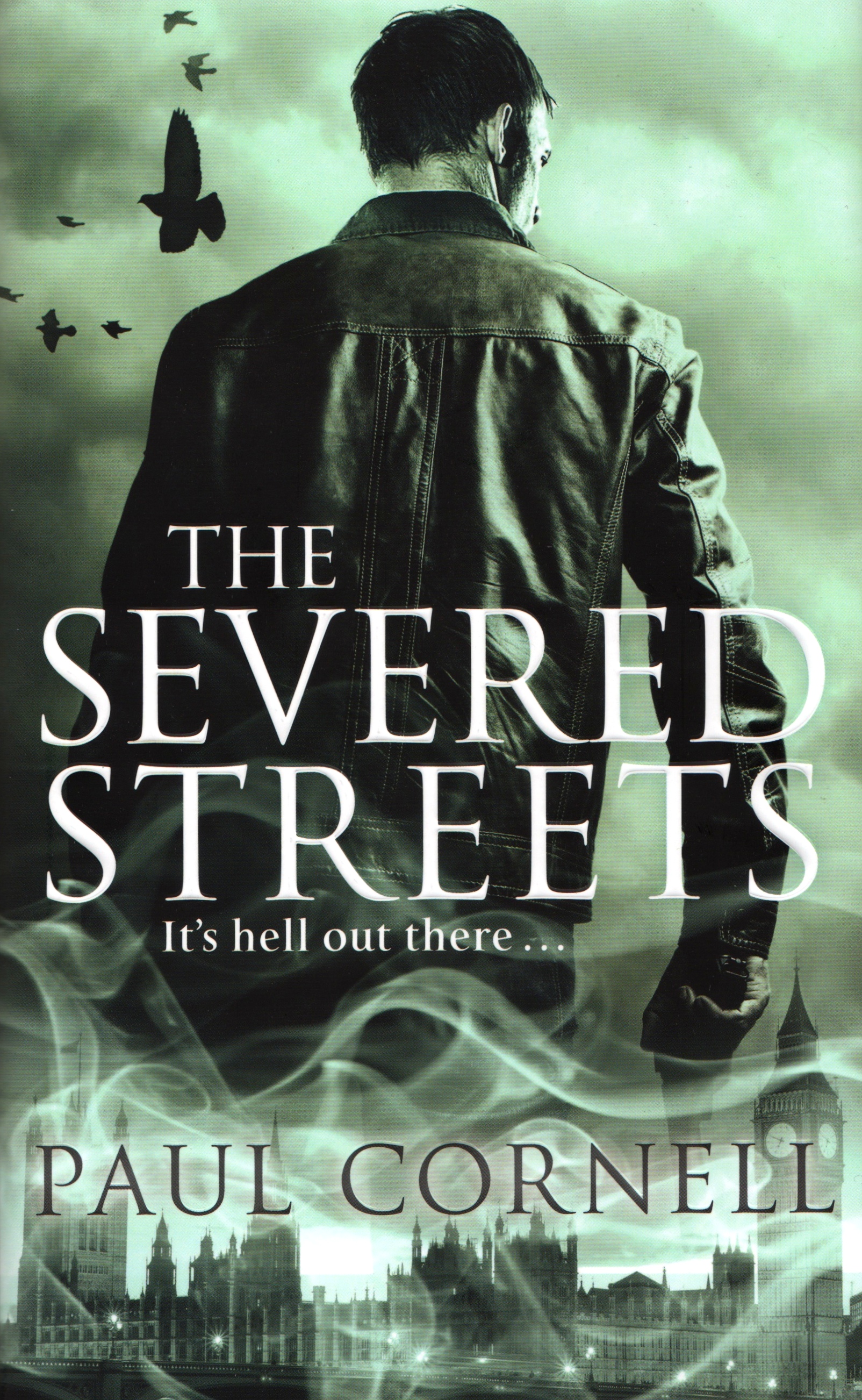 What’s the book about?
So, The Severed Streets is a sequel to London Falling which I read and enjoyed last year (you can find my thoughts about it here), though it’s a sequel in the sense of using the same characters and advancing their story arc with a standalone story.
It’s London, it’s summer and there are protests and riots with masked mobs blocking the streets and causing chaos. An MP is being driven in his official car when he is surrounded by one of these mobs and as a result is brutally murdered. But there is something odd; how did the killer get in (and out of ) the car without being spotted. And is what the driver saw really believable?
Enter Quill and his team who are still feeling their way around their new ability of second sight, and who are clear that something out of this world is involved in the death. And the others that follow. So they go into the underground community to find out what they can alongside good old-fashioned policing methods.
Why did I want to read it?
I really enjoy the whole urban fantasy genre (which I think this fits into but I’m sure someone will correct me if I’m wrong) and this series sits nicely alongside Fowler and Aaronovitch, and regular readers will know how much I love them. I really wanted to see how the team would develop and deal with the personal issues arising from the first book.
What did I think?
I read the final two-thirds of the novel during one of my many recent bouts of insomnia and it is meant as a real compliment when I say that I was so engrossed I actually forgot I was tired. I liked the way the characters developed, still the people we met in the first book but obviously changed by their experiences and trying to find a way to use their new abilities without any help or guidance. I though the story itself was very enjoyable and timely given recent events on which I won’t elaborate as I don’t want to get into the plot too much.
I particularly enjoyed the Neil Gaiman cameo; in other hands it might not have worked but he is properly integrated into the story (a bit more than I expected actually and in a very interesting and unexpected way). I liked the resolution and the introduction of new elements and characters which I hope will continue into future volumes. Quill is a great protagonist and it’s really nice to see a detective with what appears to be a happy home life.
New readers could start here but I would recommend reading them in order. I really enjoyed this and I’m looking forward to the next one.
 What’s The Bleeding Heart all about?
The resolution of the Peculiar Crime Unit’s relationship with Oscar Kasavian which took place in the previous volume (reviewed here) means a new home for the team (now under the auspices of the City of London police) and a super duper new liaison person who has a great line in management-speak, the sort of thing that has you banging your head on the desk (or is that just me).
While they all try to work out exactly how (or even if) they’re going to get along under the new arrangements they have two cases to deal with; a man who may (or may not) have risen from his (recent) grave and the disappearance of the ravens from the Tower of London.
Why did I want to read it?
I’ve said it before but its worth repeating, this is one of the most consistently enjoyable series of books I’ve had the pleasure to read. Sadly it looks like this may be the penultimate Bryant & May story (at least in novel form) which will be a real shame.
What did I think of it?
As always I really enjoyed this. I read a chunk of it during a bout of insomnia and it was great fun to read about someone apparently climbing out of their grave while I was sitting in the relative dark in the wee small hours of the morning, quite creepy. The two story threads aren’t really connected apart from the involvement of Bryant but one of the great pleasures of these books is seeing the development of all of the characters and the new dynamic means that all of them are taking stock in one way or another.
And of course I learned fascinating stuff about London along the way. Bleeding Heart Yard is another one of those places that I walk past regularly on my way from my office on Kingsway to London Wall where Silvery Dude works and next time I’m heading that way I really will make a detour to have a look. St. George’s Gardens, where the rising takes place, is also close by and I’m sure is on my preferred route to St Pancras where I occasionally meet friends for drinks, and made me think a little bit of Postman’s Park which is a shortcut I often take and well worth a visit, though less extensive I think.
I was also interested to find out that the whole legend of the ravens and what may happen to the nation if they disappear is a relatively modern invention.
So, really enjoyable and what do I have to do to get you lot to read these if you haven’t started already?
Postscript: and the Book God reminded me that we have a copy of Andrew Taylor’s Bleeding Heart Square which is set in the same area so that’s now been pulled out of the stacks to be read shortly. I like making these connections!
And this is my 600th post on the blog which is very cool and mildly astonishing! Glad to be marking it with a favourite author.
 What’s it all about?
In The Executioner’s Heart we are dropped into an alternative steampunk Victorian world where Scotland Yard is called in to a series of murders The victims have had their chests cracked open and their hearts removed, and because there is a ritual element to the deaths the head of the investigation, Sir Charles Bainbridge, calls in Sir Maurice Newbury and his assistant Veronica Hobbes, who specialise in dealing with the supernatural in a scientific manner.
It quickly becomes clear that the legendary killer The Executioner is involved, but what’s the motive and why take the hearts?
Why did I want to read it?
I’m not sure where I came across this book but I know one of the attractions, besides the storyline (which let’s face it is quite cool) is the very lovely cover.
What did I think of it?
One chapter in I realised that this was not the first in the series of books about Newbury and Hobbes (it is in fact the fourth novel and there is also a book of short stories) but by then I was hooked and decided to continue (although pleasingly I realise that we have the first two on our shelves already – they belong to the Book God). I enjoyed it. It has a very nasty killer whose back story we come to learn as the plot unfolds, it has plotting and intrigue and spies and rituals and cults and action sequences and Queen Victoria is a totally monstrous figure, and of course it has a cliffhanger. Quite a big cliffhanger actually, will be interesting to see how it works out in the next novel which I think comes out this summer.
Great fun.
UPDATED due to appalling proofreading, dreadful spelling and the lack of closing bracket. Sloppy work if you ask me.
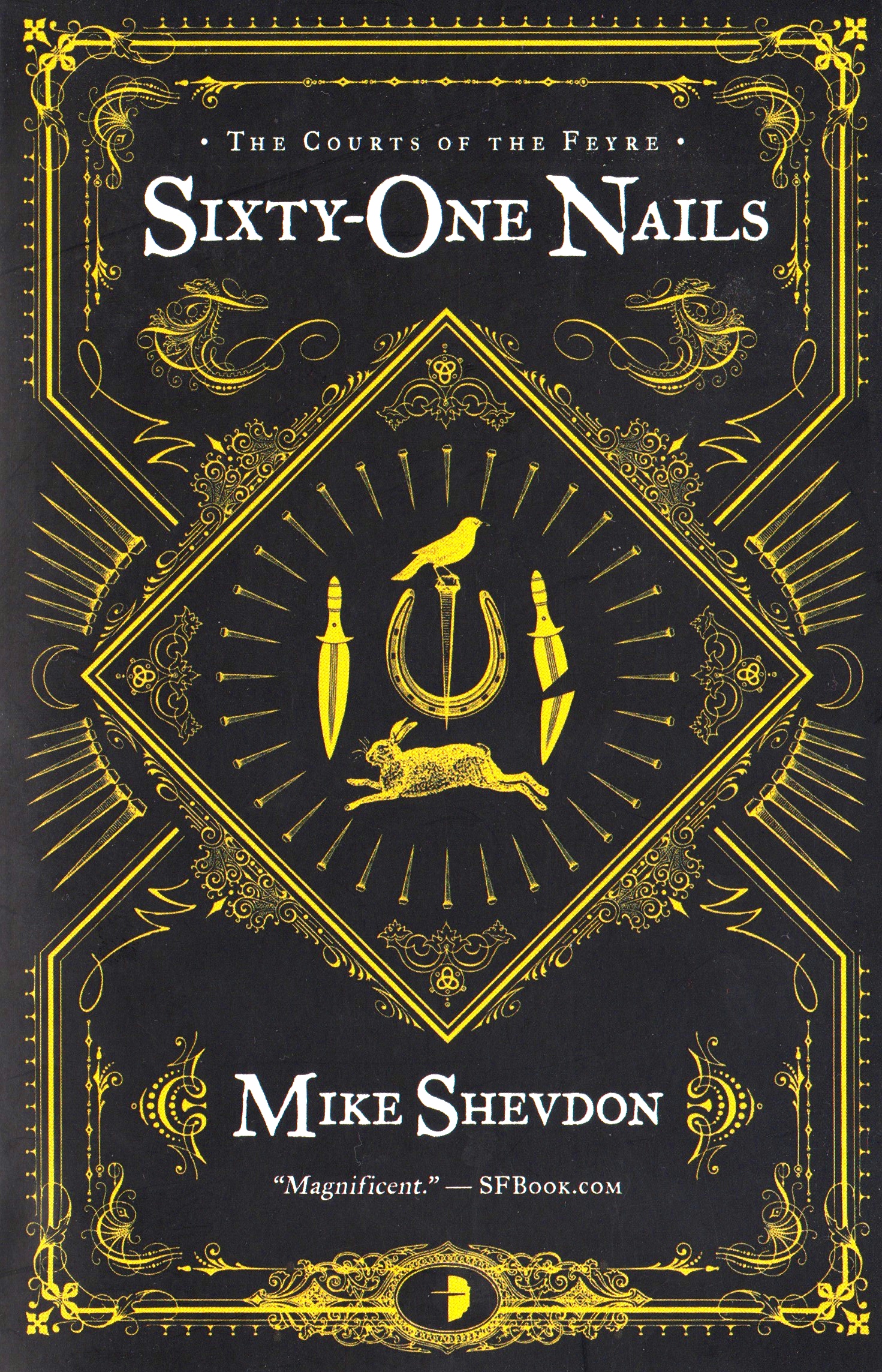 What’s it all about?
So, you’re on your way to work in the morning and you have what appears to be a heart-attack on the Tube but your life is saved by an oldish lady who turns out not to be an oldish lady but actually is part of the Feyre and you find out that you are too and nasties are after you and you have to work out an ancient ritual to save like everything.
Why did I want to read it?
Duh! All that stuff up there. Plus the Book God recommended it. Then Silvery Dude read it and said I had to. And it says on the rear of the paperback that this should be filed under Urban Fantasy [hidden war / secret history / deadly duel / ancient rites] division. So duh! once again.
What did I think of it?
Loved it. I liked Niall and Blackbird and the whole world of the Feyre and how it interacted with ours. It has a strong internal logic which helps to make it entirely believable. It has been compared to Neverwhere and I can understand why having read both (and currently listening to the repeated Gaiman dramatisation on Radio 4) but it is very much its own thing. Part of something that’s becoming a genre in itself, the London Fantastical Novel, and I can’t get enough of them.
Conclusion
Sixty-One Nails is the first book in a set of four and I have them all *cue maniacal laughter*
Recommended if you like urban fantasy. And who doesn’t, right?
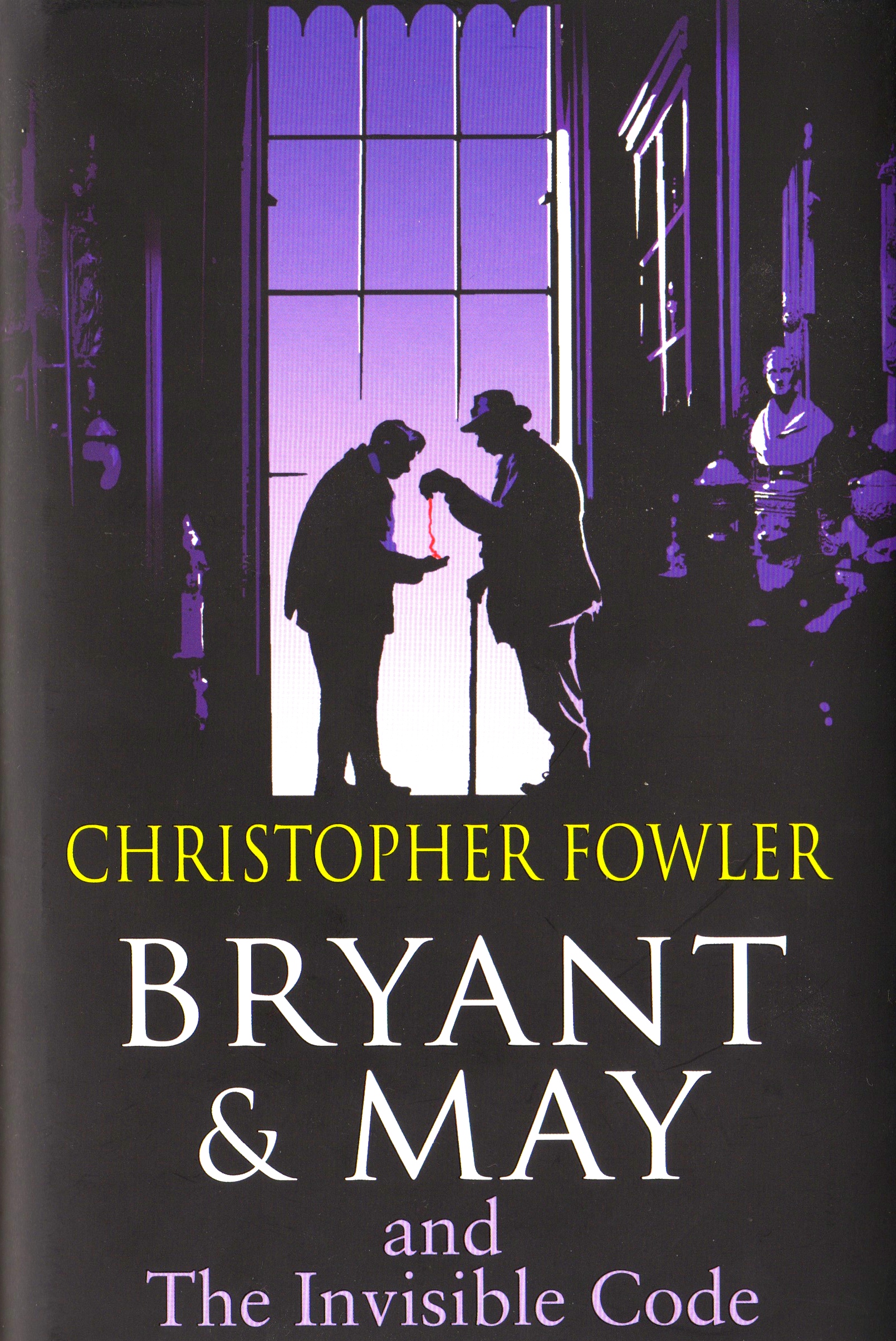 What it’s all about?
A mysterious death in a church. Children playing a game of witch-hunter. The world turned upside down as Bryant and May are asked by their arch-enemy Oscar Kasavian to find out what’s happening to his young eastern European wife Sabira – is someone trying to drive her mad in order to get at her husband or is she (as she believes) the victim of witchcraft? Secrets from the past. All brilliant stuff.
Why did I want to read it?
The answer is here. Love these books.
What did I think of it?
At the risk of sounding like a broken record, I loved The Invisible Code. I found this one particularly touching for some reason. I really felt for the plight of Sabira who loved her husband but just didn’t fit into his world and found herself struggling to make sense of it all. I liked Bryant keeping things to himself (which he often does to be fair) in order to protect his friends and colleagues. I felt anxious all the way through reading the novel (that’s a good thing by the way).
I also realised that I really have to visit Sir John Soane’s Museum, which should be an easy thing to do as I work on Kingsway and often walk past the building on my way to visit my friend who works on Fetter Lane but I have never been inside. You may not think this is a big thing but I have been working here for thirteen years and really have no excuse whatsoever.
Conclusion
This series just keeps on getting better and better. Which given that it started at a pretty high point is a remarkable thing. Two more already written I believe. Fabulous.


 Bride of the Book God