You are currently browsing the tag archive for the ‘Horror’ tag.
 What’s it all about?
This is a tiny wee bit spoilery but I’m not going to say anything that you can’t pick up from the inside flap of the hardback cover, and that will have to do. So at the end of The Last Werewolf we find ourselves with Talulla Demetriou not only being said last werewolf but also very pregnant. Talulla Rising opens with her about to give birth, which she does very messily and under unusually stressful circumstances even for a werewolf. It ends badly. Baby boy werewolf snatched from her arms and spirited away. Desire for revenge and getting the lad back fuels the rest of the book.
Why did I want to read it?
I bought this as soon as I finished The Last Werewolf (which I enjoyed immensely) as I really wanted to know what happened next, but as is often the case with me it had been sitting on the shelf ever since. Until Silvery Dude requested that I extract my digit and read so that I could explain the ending to him. I (almost) always do what the Silvery One tells me so off I went on a lupine adventure.
What did I think of it?
This is an absolute hoot, a real joyride full of violence and sex and blood and revenge and werewolves and vampires and mythology and weapons and secret societies and global conspiracies and did I mention the violence and the sex? I loved it so much I have pre-ordered the final volume even though it isn’t published for absolutely ages. AND I was able to explain the end to Silvery Dude’s satisfaction, so a good thing all round.
Conclusion
Clever and fun and highly recommended. Led me to say out loud in public that perhaps I just relate better to lady werewolves. It is definitely not Twilight.
 What’s it all about?
Alex is a teenager who has been badly affected by his parents’ divorce and after trouble at school goes on a business trip to Amsterdam with his father; he is left in the company of the much older daughter of his father’s publisher who takes him around the city and shares some of her historical research with him. He is drawn to a Japanese mask which seems to be haunted. Creepiness ensues.
Why did I want to read it?
I love Chris Priestley. I’ve read all his Tales of Terror and adored both The Dead of Winter and Mister Creecher. Always look forward to his books.
What did I think?
I really liked Through Dead Eyes. I sympathised with Alex a great deal, with his sulkiness and confused feelings and hating his Mum while missing her and resenting the bits of his Dad’s life that were going on as normal. The supernatural elements of the story work well, with enough tension between “is it real?” and “is it just his imagination?” to keep you hooked. I always associate Amsterdam with sunny days and bustling tourists but it comes across as dark and cold and sinister in this story.
Conclusion
Aimed at young adults like most of Priestley’s books yet this old girl enjoyed it very much. I had to read it over a couple of days but it could easily be gobbled up in one sitting (and would be all the more effective for that).
 At least I think that’s how you’re supposed to write it…..
What’s it all about?
Very nasty serial killer with supernatural car and obsession with Christmas seems to have come back to life and is going after the girl who got away in order to wreak his revenge.
Why did I want to read it?
It’s complicated.
What did I think of it?
That’s also complicated. N0S-4R2 had the same effect on me that Drood did only slightly more so. I have several Joe Hill books but until this had only read one (Heart-Shaped Box which I reviewed here). I should have loved this one; after all serial killer, nasty accomplice, heroine who has had her life ruined by early trauma having to face up to her fears, plucky small boy, flawed but loving husband. And then there are the supernatural elements, our heroine’s special ability, the whole Christmasland thing, and of course the car. I didn’t mind the violence; let’s face it I’ve read and enjoyed a lot of horror so violence isn’t something I’m overly bothered about. I came to like several of the characters. There was just something that didn’t click for me which left this being a good book rather than a great one. I think it was just too long and baggy for the story that was being told; I stopped reading it for a bit because a little voice in my head which kept asking why is this taking so long? And yet despite that the ending felt a bit rushed to me (while also setting up a possible sequel). What it comes down to is that I felt tense and anxious for the Vic and Lou and Wayne while I was reading it but I was never actually scared
Conclusion
A hard one. I really wanted to like this more. It’s by no means bad, has real flashes of inventiveness but *whispers* it outstayed its welcome. Hasn’t stopped me buying the comic though (Lord knows what that says about me).
 What’s it all about?
Doctor Sleep is the long-awaited sequel to Stephen King’s The Shining that I didn’t expect and didn’t know I needed until it was published when I of course decided that I absolutely had to have it. Danny Torrance is now an adult with a troubled past including the problems with alcohol which bedevilled his father. He also has a taken for helping people to pass over (for want of a better way of putting it). He finds out that a young girl with a similar but more powerful ability to shine is the target of a gang of (again for want if a better word) soul-stealing vampires and determines to save her no matter the cost to himself.
Why did I want to read it?
I’m not a total King completist but I have been a fan for over 35 years (I first read Carrie when I was 15 or so) and I always look out for his novels though I don’t always read them right away (Under the Dome, I’m looking at you). And a follow-up to one of his most famous stories was irresistible.
What did I think of it?
I liked it a lot. It has a lot to live up and I don’t think it was ever going to reach those heights for a lot of people. But I liked Danny as an adult, warts and all, and although the story was in many ways more gentle than his earlier work (‘Salem’s Lot still gives me the creeps, which is probably why it’s my all time favourite) and there were a couple of curveballs towards the end in relation to Danny’s personal history, it worked as a narrative. The bad guys were sufficiently bad and the outcome wasn’t (for me at least) a foregone conclusion and the subsidiary characters were well-rounded and believable.
Conclusion
Has all the elements I look for in a Stephen King novel so OK by me.
This was my final read for RIP VIII.
 What’s it all about?
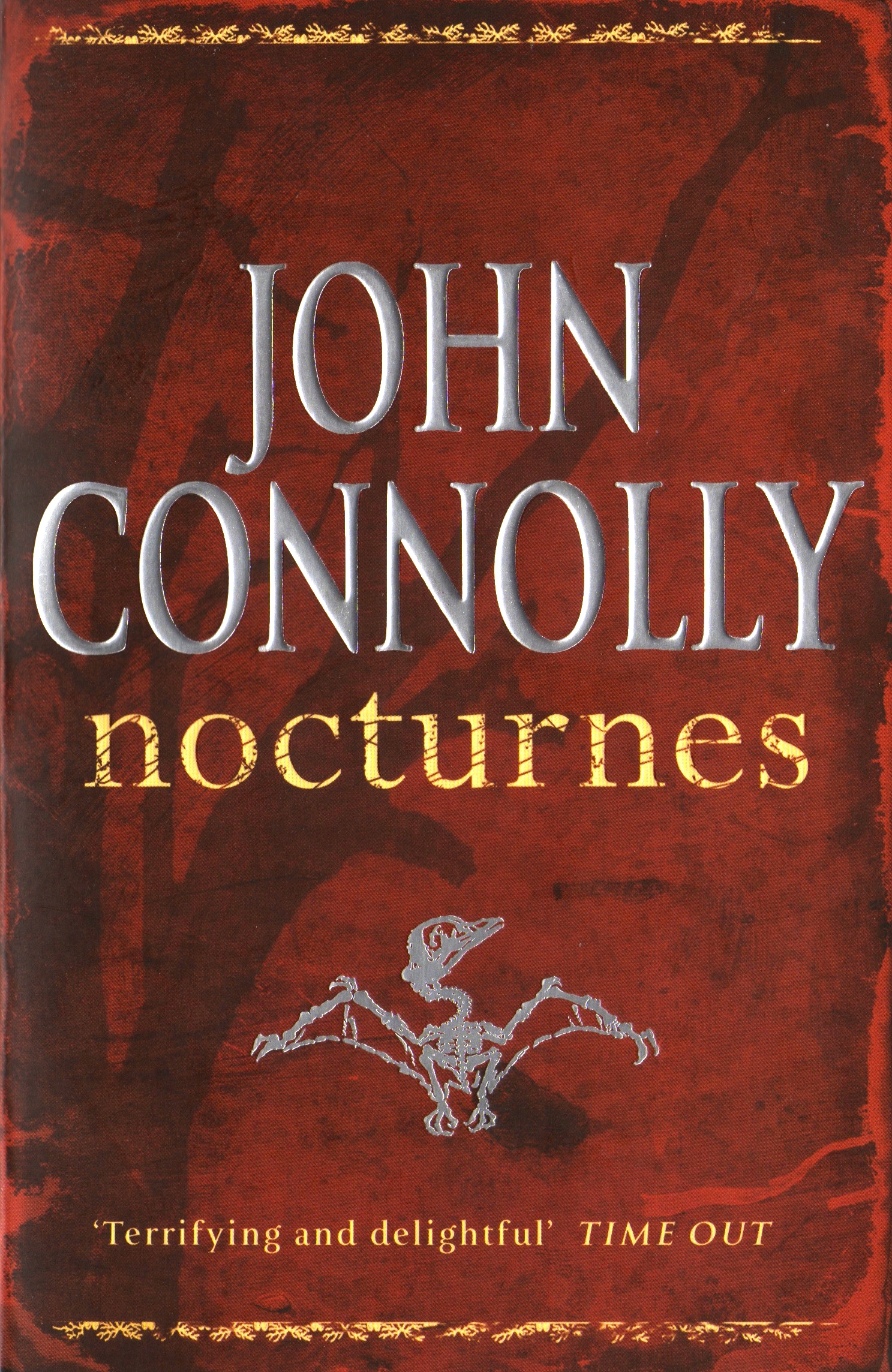
Nocturnes is a set of short stories book-ended by two chunky novellas, one featuring Connolly’s PI Charlie Parker. The blurb talks about “chilling tales of the supernatural” and “our darkest fears” and references MR James and Stephen King so I’m there.
Why did I want to read it?
As well as the stuff mentioned above I read The Book of Lost Things (reviewed here) and wanted to investigate more of his work.
What did I think of it?
I really enjoyed this collection and the comparisons to James were deserved. I particularly enjoyed Miss Froom Vampire and The Wakeford Abyss, but the standout for me was The Reflecting Eye, the Charlie Parker story which I found compelling and unsettling and moving all at once.
Conclusion
Glad that my gut feeling I would enjoy Connolly’s books proved sound and I’m looking forward to reading more of the Parker stories in particular.
This was a read for RIP VIII
 What’s it all about?
Mayhem is set in the height of the Jack the Ripper murders, but body parts found at New Scotland Yard are definitely the work of a different killer, no matter how much the authorities wish it wasn’t. Thomas Bond is the police surgeon working on both cases, and as he delves into the murders he begins to suspect that something more supernatural than a rampaging serial killer is at work in London.
Why did I want to read it?
Serial killers, Jack the Ripper, Victorian London, what’s not to like? Plus although I had a couple of her e-books I hadn’t read any of Sarah Pinborough’s books and wanted to give her a try, partly due to the subject matter and partly because she is great fun to follow on Twitter (there’s that word again).
What did I think of it?
I liked it a great deal. It was a very interesting experience reading it so soon after Drood (reviewed earlier) as there are some similarities in the use of the supernatural, the main character’s tendency to dabble in drugs, the mix of real and fictional characters and events. I thought this was much more successful; I liked Thomas Bond very much and found his struggle with opium and the effect it had on him much more sympathetic, as were the domestic elements in the story contrasting with the grimness of the crimes being investigated. But I don’t want to dwell too much on comparisons with someone else’s work, this is a really good novel.
Conclusion
Recommended. I’m going to be searching out more of Sarah Pinborough’s work, although disappointed that the next volume in this series won’t be published until 2015.
This was a read for RIP VIII
 What’s it all about?
Let’s use the words of the narrator, one Wilkie Collins, to describe what we’re talking about here:
This story shall be about my friend (or at least about the man who was once my friend) Charles Dickens and about the accident that took away his piece of mind, his health, and some might whisper, his sanity
The story kicks off with the Staplehurst railway accident that Dickens was involved in while travelling home from Paris with his mistress Ellen Ternan. While trying to assist those injured in the accident Dickens comes across a mysterious and rather ghoulish figure who becomes known to him as Drood. Dickens then drags Collins into his obsession, which leads them to investigate the underworld of London, with all the crime, squalor and danger that involved. And not a little madness. And quite a lot of death.
Why did I want to read it?
I’ve had mixed fortunes with the works of Dan Simmons. I read The Song of Kali in 2009 and really struggled with it, finding it a little too grim for my tastes. But I had also read The Terror the year before and absolutely loved it. The combination of real literary figures and a Gothic sensibility promised by Drood was very attractive.
What did I think of it?
Well. I finished reading this in the middle of September and I’m still not sure what I think. I was drawn in by the early part of the book and cracked on with the story which promised a great deal, but somewhere around the middle, when the focus shifts almost entirely to Collins and his problems I began to get a bit bogged down and actually stopped reading it for a bit. But I was determined to finish it and it did pick up again in the last third. It is completely mad. Although I have to say that it seems pretty authentic in its representation of both the central characters and all levels of society at that time.
Conclusion
There is a quote towards the end of the book where Collins says:
You never cared about my part of this memoir. It was always Dickens and Drood, or Drood and Dickens, which kept you reading
And maybe that is the problem for me, insufficient Drood. So fair to say that my response to the novel is ambivalent; glad I read it but not a favourite and *whispers* too long.
It has made me want to finally read Armadale though.
For a more positive review you should visit Roxploration who discusses the book here.
This was a read for RIP VIII.
 What’s it all about?
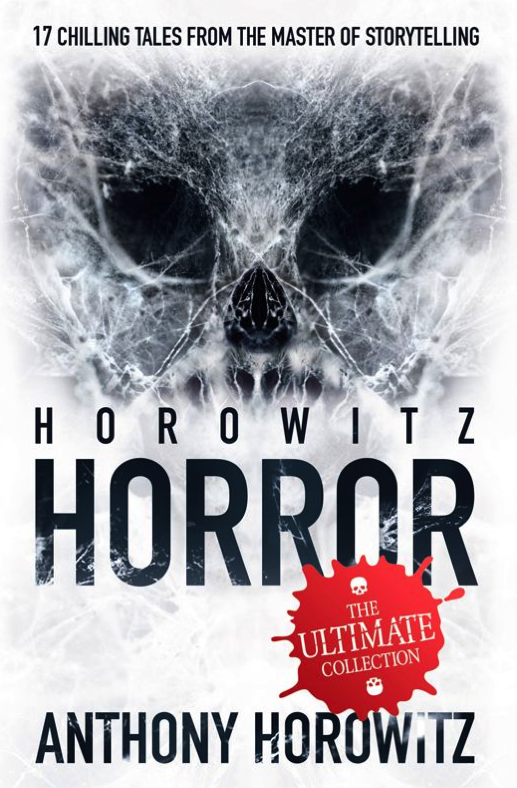
So Horowitz Horror is exactly what it says on the tin; a collection of horror stories for young adults by Anthony Horowitz, he of the Alex Rider books (amongst others).
Why did I want to read it?
I love a good horror story. As a teenager I religiously collected the Pan Book of Horror series (as edited by Herbert van Thal) with their gruesome stories and lurid pulpy covers (this one a particular joy). My parents were probably appalled but very much of the view that reading was reading was reading and let me get on with it as there was no evidence that I was turning into an axe-murderer. These stories are much less nasty, to be fair, but suitably creepy.
What did I think of it?
I’m not the target audience for this collection by a good 35 years but I enjoyed them all; particular favourites were The Hitchhiker and Bath Night. I liked the ordinariness of the situations the protagonists found themselves in, how unsettling everyday objects can become. Light touch in the story telling.
Conclusion
Really great fun.
This was a read for RIP VIII.
 So, the first of a flurry of mini-reviews to clear my backlog and leave me with a relatively clean slate for 2014. Apologies in advance for swamping timelines and feeds and whatnot but it has to be done!
What’s it all about?
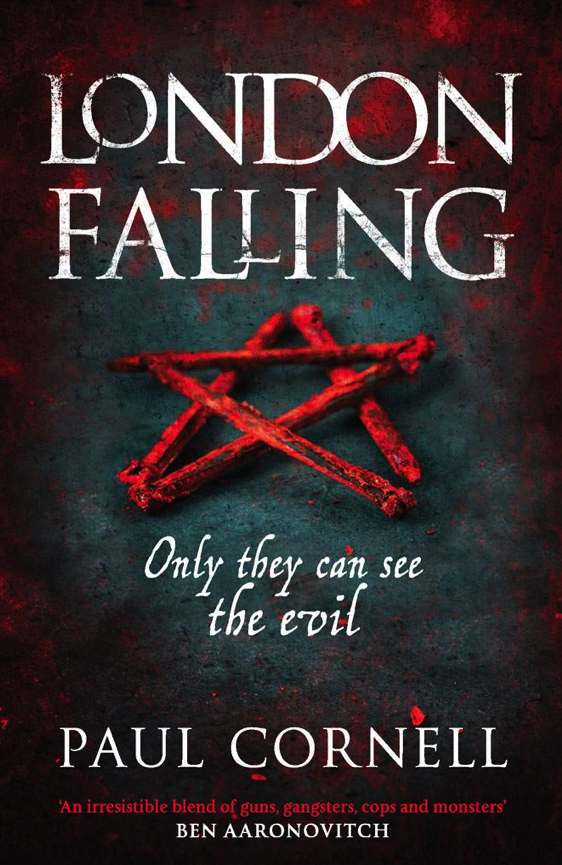
So London Falling is basically a police procedural which takes an unexpected turn. DI James Quill is managing an undercover op as part of an investigation into London’s organised crime when it all goes horribly wrong and his main target is killed in a gruesome and unusual manner, and it becomes clear that there is something evil lurking around London. Cue the creation of a team of misfits shunned by their colleagues and using unorthodox methods to get to the bottom of something very old. There’s a witch. There’s a talking cat. There’s a football connection. And there’s a lovely set up for what is clearly going to be a series.
Why did I want to read it?
I like Paul Cornell; I follow him on Twitter, I’ve got his Wolverine comics on my iPad and he’s written some cool stuff for Doctor Who. I liked the premise for the novel, especially as I’m a sucker for anything in which the history and mythology of London is as big a part of the story as the human characters.
What did I think of it?
Loved it. Read it over a couple of days, felt the story pulling me along, really wanted to know how it was all going to work out. It would be lazy to say that it’s similar to the Rivers of London series by Ben Aaronovitch and Christopher Fowler‘s Bryant & May books, both of which I love deeply. London Falling is grittier than the former and not quite as peculiar (peculiar is a positive word in this context) as the latter but they do all complement each other very nicely.
Conclusion
Enjoyed it a great deal and am looking forward to the next one (The Severed Streets, due out here in May)
This was a read for RIP VIII.
 Every so often a book comes along that everyone seems to be reading and talking about all at once, and because I can be a bit perverse I tend to avoid them until the puff dies down a bit, then I dive in when no-one else is looking and often fall in love with them quietly in a corner. I did that most recently with Gone Girl (which I thought was great as you can see here) and was going to do the same this time round with Lauren Beukes’ The Shining Girls which only came out in April. But something drew me in, possibly the tagline; after all who can resist the idea of “the girl who wouldn’t die hunting the killer who shouldn’t exist”? Certainly not me.
So the book opens in Chicago in the 1920s where we meet Harper Curtis who I think its fair to say is not a nice man at all. He’s in pretty dire straits when we first come across him, beaten and hunted, but he finds himself in possession of a key to a very particular House one that allows him access to other times (and for that reason really deserves to be capitalised). Harper is a killer, hunting down the shining girls, young women of promise and vitality whom he taunts and murders rather brutally. But he meets his match in Kirby Mazrachi who astonishingly survives his horrendous attack and when the police cannot (understandably) find her would-be murderer begins to investigate and comes across evidence which points to a situation which cannot possibly be true. But of course is. And she goes after him.
The Shining Girls is absolutely brilliant, a fabulously clever idea and a wonderfully constructed book which twists and loops through time as we follow both Harper and Kirby. The structure of the novel is complex but never confusing though it must have required a phenomenal amount of organisation to keep the various stories straight over 80 years of events. The young women whom Harper kills are all proper characters; we learn quite a bit about each of them and that makes what happens to them so awful. Kirby is a wonderful character, trying to make sense of the terrible thing that was done to her but still flawed and damaged as you would expect. Harper is just a dreadful human being; it isn’t clear whether the House “makes” him do these awful things or whether he would have done something like this anyway, it’s just the spread of his attacks over time which keeps him hidden. But totally totally odious.
I really loved the mix of time-travel and serial killer and I appreciated that not all of the answers are handed to you as a reader. The situation is just as it is and I found that was good enough for me. Definitely a book worthy of re-reading.


 Bride of the Book God