
You are currently browsing the tag archive for the ‘Horror’ tag.
 What’s it all about?
Triss wakes up after an accident which resulted in her being pulled half-drowned from a river near the cottage where she is staying with her parents and her younger sister Pen. But something isn’t right, Triss has changed in ways she doesn’t understand, and she needs to travel to some dark places to find out what’s going on and, more importantly perhaps, who she is.
Why did I want to read it?
I’ve had Cuckoo Song on my eTBR for a while but it was only when it was nominated for the first James Herbert award that I pulled it forward to read. I was intrigued about what could be in an ostensibly children’s book that got it onto that nominee list.
What did I think of it?
This is definitely a slow burner of a read, but incredibly atmospheric and once the world that Triss finds herself in has been established the plot really kicks off and builds to a very satisfying climax. Without being too spoilery, it’s clear from very early on that our Triss isn’t the real Triss but some form of changeling, and the question is how and why that has happened and to what ultimate purpose. So we get into some complicated family dynamics, parents who have become overprotective of their children because of the death of their only son in WWI, resentment between siblings, frustration at being hemmed in and the bargains people will make to get what they think they want without any real thought for the consequences.
It’s set in a version on 1920s England that has a steampunk aesthetic (at least that’s how I thought of it) but also a sense of there being another world of strange creatures sitting just to the side of the real world that our characters inhabit. There’s cruelty and kindness of all kinds, but the main impetus of the story is not-Triss trying to establish some form of identity for herself while trying to put right the things that have been done with her as an unwitting participant. And it has a really cool bad guy.
It took a little while for me to get into the story, and I actually set it aside for a bit until I was in the right frame of mind for this dark and unsettling fairy tale, but I’m glad I went back to it because it is a really well-written and effective story with some genuine horror at its heart.
I am counting this towards both Once Upon a Time IX (for the fairy tale and fantasy elements though it wasn’t on my planned reading list), and 2015 Horror Reading Challenge (because of the James Herbert nomination).
I have at least two more (possibly three) of Hardinge’s books and I will be sure to read them given how much I came to like Cuckoo Song.
 What did I say I was going to do?
As I said in my sign up post, I am aiming to be a Brave Reader, which means reading 6-10 books during the course of the year.
How am I doing?
Really well actually! I have read and reviewed the following (assisted by signing up for the King’s March challenge so this is a bit heavy on Mr K’s work):
Short stories (individual and collections)
- The Wide Carnivorous Sky by John Langan – which includes Mother of Stone, one of my favourite satires of the year (and possibly ever)
- North American Lake Monsters by Nathan Balingrud – which I didn’t enjoy quite so much
- a couple of short stories by Stephen King & Joe Hill
Novels
- The Death House by Sarah Pinborough – some might not call this horror but I thought it dealt with some very dark issues and it had huge impact on me
- Revival by Stephen King – King meets Lovecraft
- Carrie by Stephen King – where it all began, an important re-read for me
- Cell by Stephen King – King meets (sort-of) zombies
Series
I have been reading the Laundry Files novels by Charles Stross for several years and have now (almost) caught up. Many people consider these sci-fi but all the Lovecraftian stuff puts them firmly in horror for me.
So not bad at all. I really didn’t expect to do so well so early but that King challenge came along at the right time 🙂
 What’s it all about?
The event became known as The Pulse. The virus was carried by every cellular phone operating in the world. Within hours, those receiving calls would become insane – or die.
Indeed, that is the basic premise of Cell. But let’s not beat about the bush – this is basically a zombie novel 🙂
Why did I want to read it?
Well, have been taking part in the King’s March challenge and had done quite well (two short stories, one new novel and one re-read) and hadn’t really thought to pick up any others even though there was a chunk of the month still to go. But when looking for something else I came across this 2006 novel which I had completely forgotten about, and as I was looking for something light (if insane phone-call triggered zombies can be called light) to read, here we are.
What did I think of it?
While far from being his best novel I thought Cell was a cool idea that was pretty well executed. Like a lot of King’s novels it stands or falls on what you think of the main protagonist and Clay Riddell, the comic book artist whose world is turned upside down in seconds, is a likeable character driven to do some very brave things through a desire to get back to the family from whom he has been separated. So as well as being about zombies it is also a classic quest – Clay is joined by a small band of people with whom he has been thrown together by circumstances outside of his control and they head out of burning Boston so he can try to find his son.
The development of the zombies is very interesting and unusual (to me at least) and without giving anything away they become much more than the standard mindless brain-eating hordes that you might have expected. I like the fact that we never know what caused The Pulse, and I also like the way the novel ends. But it’s the characters that make this successful – human and flawed and trying their best in a terrible situation but not always getting it right.
I liked it.
 About Carrie
Carrie White was no ordinary girl. Carrie White had a gift – the gift of telekinesis. And when, one horrifying and endless night, she exercised that terrible gift on the town that mocked and loathed her, the result was stunning and macabre.
When did I first read this? Late 1975, in one sitting; I remember it vividly 🙂
What age was I? An impressionable 13
How many times since then? Apparently this is only the third time that I have read Carrie, which seems astonishing to me as I feel I know the story so well, but there you go, stats don’t lie. Probably.
Thoughts about the book:
This was the first Stephen King book that I read and I was totally blown away by it in the way that is only possible when you are a young teenager. Unlike people coming to King for the first time today there was of course no back catalogue of work to dive into to feed the obsession, and although I read ‘Salem’s Lot later that year (and you can find out what I thought about re-reading that in this post) from then on it was all about having to wait for his new books to be published.
But why did Carrie resonate so much? It seems obvious to say that a teenage girl would find a lot to empathise with in the story of another teenage girl but I think that’s too easy; after all we had very little in common – Us vs UK, fundamentalist religion vs (relatively) free thinking, unpopular and downtrodden vs ordinary middle-of-the-roadness. And of course the small matter of my not having any telekinetic abilities whatsoever. Or at least none that have manifested themselves so far and at the age of 53 (and unless the menopause unleashes that sort of thing in the same way puberty does) it isn’t likely to happen now!
I think looking back it was the idea of raw power and what might be possible if you had an untapped ability and what could be done if you learned to control it. Of course the whole point of Carrie (and I don’t think I’m giving anything away here as it’s made pretty clear from the start of the book) is that although she learns to control it in part, the Unfortunate Incident at the Prom tips her over the edge and she lets it all out. Of course, there are Consequences of a devastating nature.
I also think this may very well have been the first novel I read that had this kind of structure, a mix of traditional third person story telling with newspaper reports and eye-witness testimony and book and letter extracts from after the fact. And I’m still a sucker for that sort of thing (I’m currently reading Vanessa and her Sister which is constructed from diary entries interspersed with letters and postcards and which I am thoroughly enjoying, although it is obviously a very different sort of thing).
It was an interesting experience reading Carrie again. For a start I had forgotten how short it is, less than 250 pages so really more like a novella. It’s much clearer to me now that the real villain is Billy, and that Chris may not have gone through with it in the end if he hadn’t forced her. And I feel sorry for Carrie herself but more so for Sue, who has to deal with surviving the whole thing.
So, although it’s clearly an early work and his later stuff became much more polished I still find this a very effective and affecting story and was pleased that it hadn’t lost its punch
Though really, what is it with King and the name Christine for baddies? First Chris Hargerson here, then the eponymous killer car, it’s just not right….
Additional thoughts about the film versions:
I also remember going to the cinema with my then boyfriend to see Brian de Palma’s version of Carrie, nice and bloody and with a couple of great performances from Sissy Spacek and Piper Laurie, and of course that unexpected ending which made me jump and scream out loud. I haven’t been able to bring myself to watch the recent re-make yet.
If you want to read more about the films then I really recommend Anne Billson’s thoughts on the matter on her blog, an excellent assessment I think.
I re-read Carrie because I’ve been looking for an excuse to do so and that came in the form of the King’s March challenge.
A couple of short stories by Stephen King read for the King’s March challenge
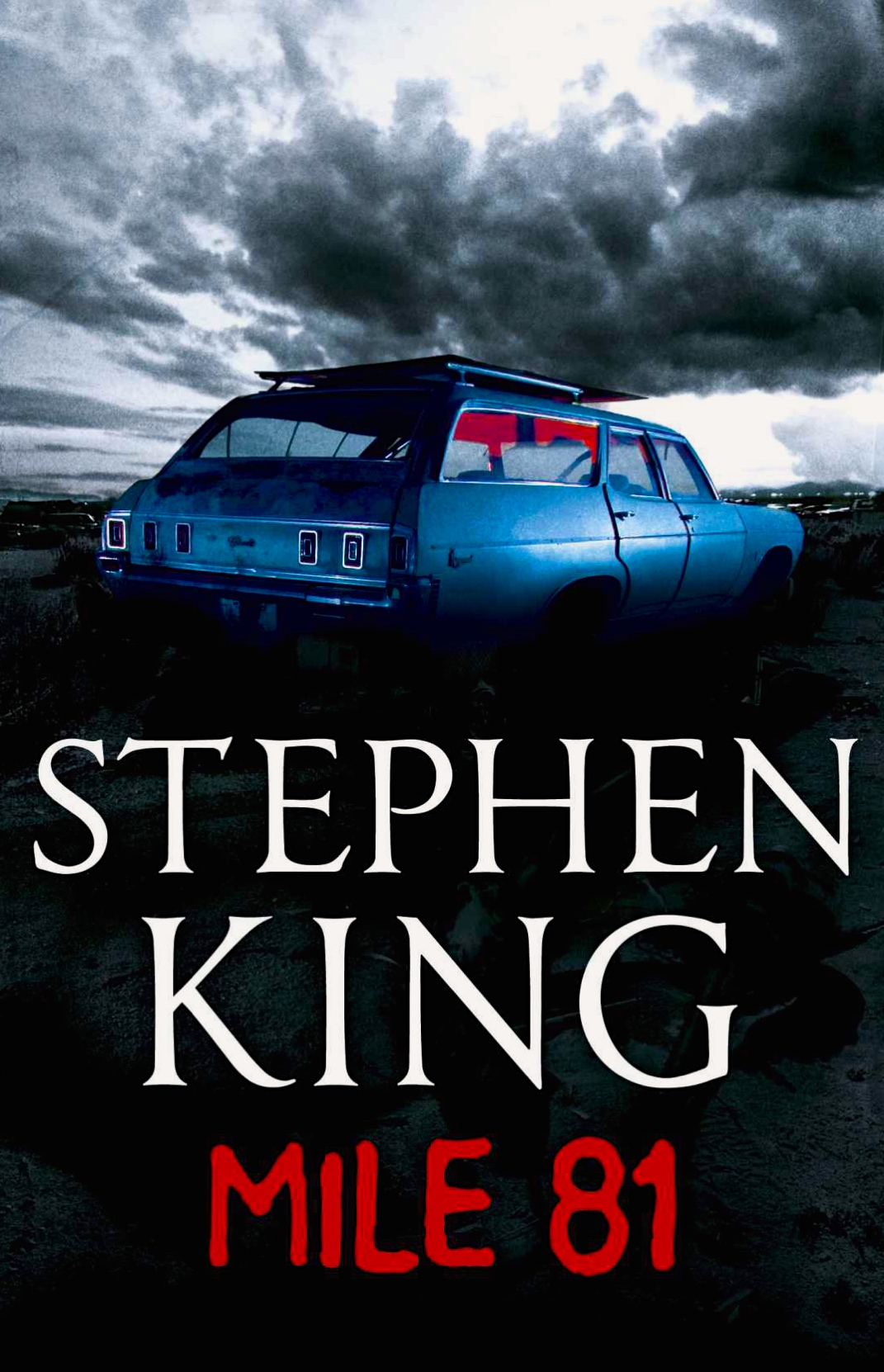 Abandoned service station on major stretch of highway (I have never entirely understood what a turnpike is so forgive me US friends if I’ve got that wrong), boarded up, magnet for youngsters up to no good. Small boy mildly misbehaving through boredom. Particularly suspicious looking abandoned car. Tiny (but smart) children in peril. Very clever use of magnifying glass. Moral of the story – don’t approach strange cars, keep on driving, it will only end in tears. One of King’s specialities is this type of story where extreme weirdness happens in a very ordinary setting with no rhyme or reason. Liked it.
In the Tall Grass (written with Joe Hill)
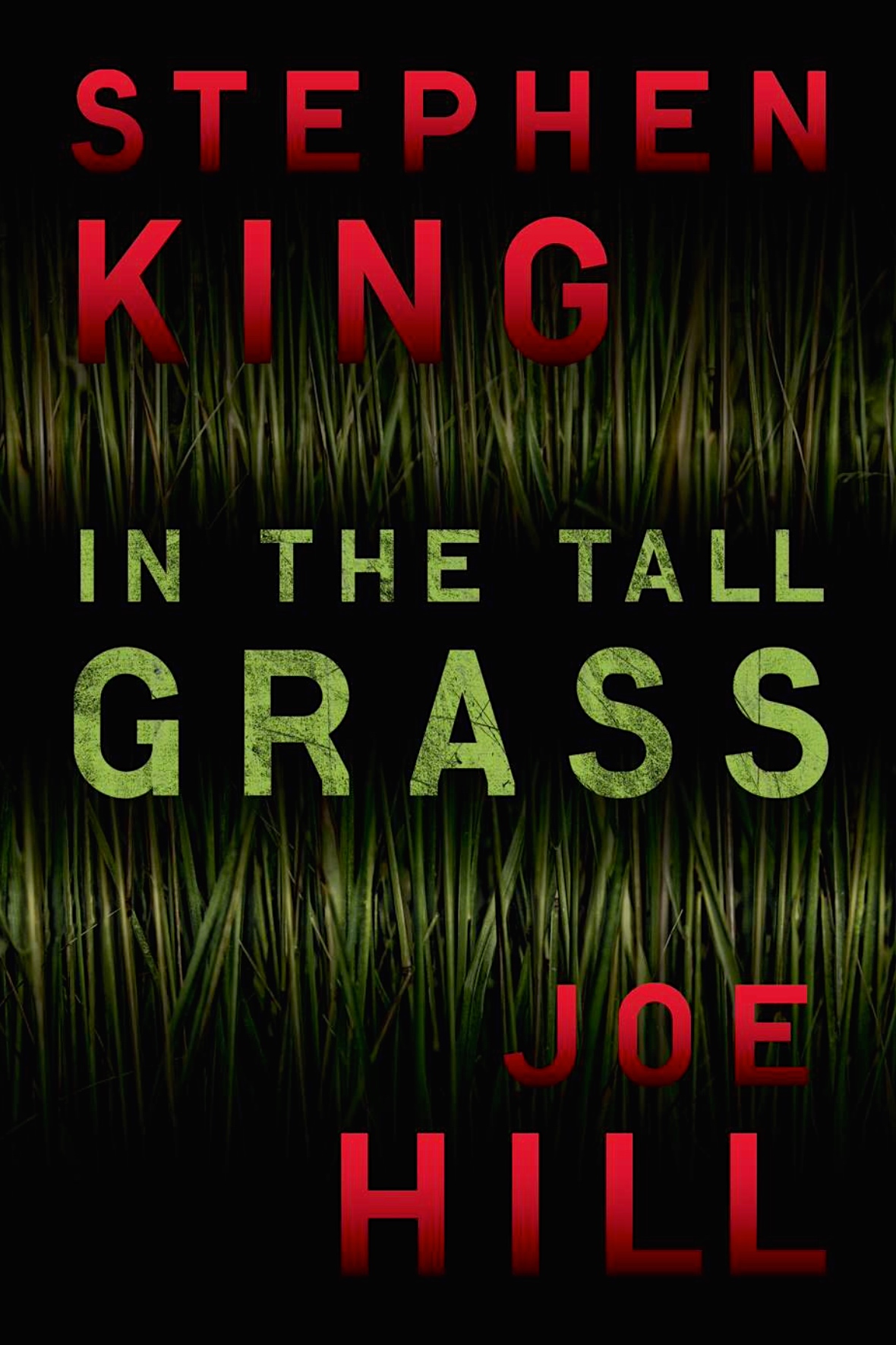
Abandoned (sort-of) church along a relatively lonely stretch of highway. Brother and (pregnant) sister on road trip before she has baby. Pull off the road after hearing cries from the tall grass that seems to stretch for miles. Small child in peril. Getting lost. Disorientation. Ancient evil (probably). Moral of the story – don’t stop for strange cries, keep on driving, it will only end in tears (sound familiar?). An accidental companion piece to Mile 81, totally unplanned in that I didn’t really investigate the plot of either story before I started to read them. Very very dark and ultimately depressing.
Interesting to compare standalone King to a story written in collaboration with his son, whose work I have also read but have found problematic in the past (see N0S4R2 for a start). King can be very nasty on occasion but I find him to have greater humanity in his stories than Hill. Without giving anything away, In the Tall Grass seems to offer no hope at all, whereas Mile 81 gives us the possibilities of human ingenuity in fighting off the bad stuff.
 What’s it all about?
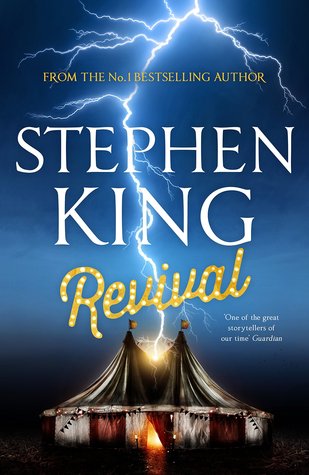
Well, according to King’s own official website, Revival is
a dark and electrifying novel about addiction, fanaticism and what might exist on the other side
Jamie Morton is a small boy in New England when he meets the Rev Charles Jacobs who, with his wife Patsy and little boy Morrie, becomes an influence for good in the town. Well, at least until the dreadful accident that robs him of his family and possibly his faith. After the day of the Terrible Sermon he is driven out of town and when he and Jamie meet again the former is using his deep interest on electricity to earn a living on the carny circuit and the latter is a musician and heroin addict. Jacobs uses his knowledge to cure Jamie and from that point on the two are intertwined, right to the very end when Jacobs’ obsession takes it’s final form.
Why did I want to read it?
I’ve been reading and enjoying King’s works for *gulp* nearly 40 years. I haven’t read everything he’s written (not yet at least) but I always look forward to anything he publishes and he has never really let me down (not even with The Tommyknockers or Dreamcatcher, both flawed but still interesting). And the hints before publication and in early reviews that there was a Lovecraftian element to this book was just an added bonus. Two of my earliest horror influences coming together sounded just the ticket.
What did I think of it?
This was exactly what I needed to read during a stressful week where I was working flat-out, running an almost constant headache and not sleeping terribly well. For a couple of days as soon as work was over I was able to lose myself in the life of Jamie Morton, a flawed but basically decent person who has gone through some tough times and his interest in the man whom he has admired since he was a small boy and who was instrumental in helping him both kick his addiction and find a career. But Jamie always knew things weren’t quite right (‘Something Happened’) and over time he realises that he will have to confront Jacobs. And of course that’s when the nature of the older man’s obsession becomes clear and things get very weird indeed.
I thought this was great. I really liked Jamie which is essential if you are going to enjoy this book as it is told entirely in the first person. And it really doesn’t read like a horror novel until the last section, though there is a growing sense of foreboding and not-rightness (which isn’t a word but the best way to describe it I think). The Lovecraftian elements are pretty subtle until the end, and of course there are Repercussions; one of the things I’ve always liked about King is that there are always consequences and sometimes (most times) the good guys don’t get away unscathed.
King himself mentions that The Great God Pan by Arthur Machen (which I haven’t read for years) was a major influence on Revival.
It’s not King’s scariest novel by any means but it’s a strong story with disturbing elements. I really liked it and definitely recommend it.
 So as if there wasn’t enough going on at the moment, I’ve decided to take part in the challenge/event, hosted by Wensend and Fourth Street Review, with the aim of reading as much Stephen King related stuff as possible during the month of March.
As the hosts say:
All you have to do to participate in this event is to post about at least one thing King-related. You are free to read as many King books or watch as many King movies as you want, but you can also stick with just one book (some of the books are real chunksters).
I am a huge King fan, and have been since I read Carrie when I was 15 (just as it came in paperback over here in the mid 1970s). So, given everything else on my horizon I’m going to commit to reading as many of the following as I can before the end of the month:
- a Carrie re-read – this is long overdue
- one of his most recent novels, Revival, which I gather has more than a little Lovecraft about it
- Mile 81 – an original eBook
- In the Tall Grass, another eBook, written with his son Joe Hill
That should be doable, I think 🙂
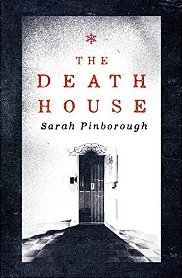 What’s it all about?
Toby is one of a group of young people who have been sent to The Death House because blood tests have identified them as being Defective. They are watched over by a team of nurses headed the disturbingly efficient Matron, looking for the signs of sickness that will lead to removal to the Sanitorium from where no-one ever returns. Toby is doing what he can to cope, mostly withdrawing from everyone else, but then some new youngsters arrive, and one in particular changes everything.
Why did I want to read it?
I really like Sarah Pinborough’s work and look out for anything new that she publishes. I have a little virtual stack of her eBooks (if such a thing can be said to exist) and really enjoyed her Jack the Ripper inspired (terrible shorthand but you know what I mean) novels Mayhem and Murder (reviewed here and here).
 Also (full disclosure) she personally handed me an uncorrected bound proof of the novel at a book event a few weeks ago in this lovely packaging, and now that I’ve read it I’m going to carefully wrap it up again as I have already pre-ordered for my Kindle app and will get it on publication day (26 February – go and buy it!)
But enough of that because I suspect you want an answer to this question:
What did I think of it?
I normally try not to write blog posts immediately after reading a book because I like to let things percolate and settle before I try to articulate what I thought, but I knew I was going to have to write about The Death House soon because it was just so extraordinary and had such an impact that I didn’t want to forget how it made me feel.
And boy were there feelings.
So. To me this is a book about love and life and grief and coping and doing the best you can under awful circumstances. It’s about having to grow up too quickly. It’s about fear and dread and getting through the day. And ultimately it’s about love and connections and friendship.
All of the youngsters are distinct individuals and totally believable but of course Toby and Clara in particular stand out, though I loved Louis and Will as well. The adults are not so well drawn but that’s deliberate and make sense as under the circumstances I would think they would be very wary of giving anything away to their charges (and when that does occasionally happen there are consequences) and so we see them as the children see them.
One of the strengths of the novel for me was that not everything was spelled out. We aren’t told what the condition the children have actually is, though we know it’s been around for a long time, only strikes the young and presents itself in different ways with each individual. We don’t know where the Death House actually is, except that it’s clearly isolated, and most importantly we don’t know what happens in the Sanitorium (except that no-one comes back). I thought this was all very effective because it’s the relationships that matter.
I had started to read the book soon after I was given it but realised that this was something that I wanted to take care with, so I stopped for a bit because life and work were clearly going to get in the way, and when I sat down to read it I finished it in a single sitting. It’s totally compelling and then it kicks you in the stomach with an event that is so sad that I couldn’t stop myself from crying (luckily I was at home and didn’t repeat the embarrassing experience of reading the end of The Time Traveller’s Wife on a bus and having to stop because I was making a fool of myself) and when I sort of recovered I went through it all over again with what I think was a perfect ending to the novel. It reminded me a little of Never Let Me Go (but only a little, it is very much its Own Thing).
I really do urge you to read this. It’s just wonderful. I will be reading it again soon, but envy anyone who is coming to it for the first time.
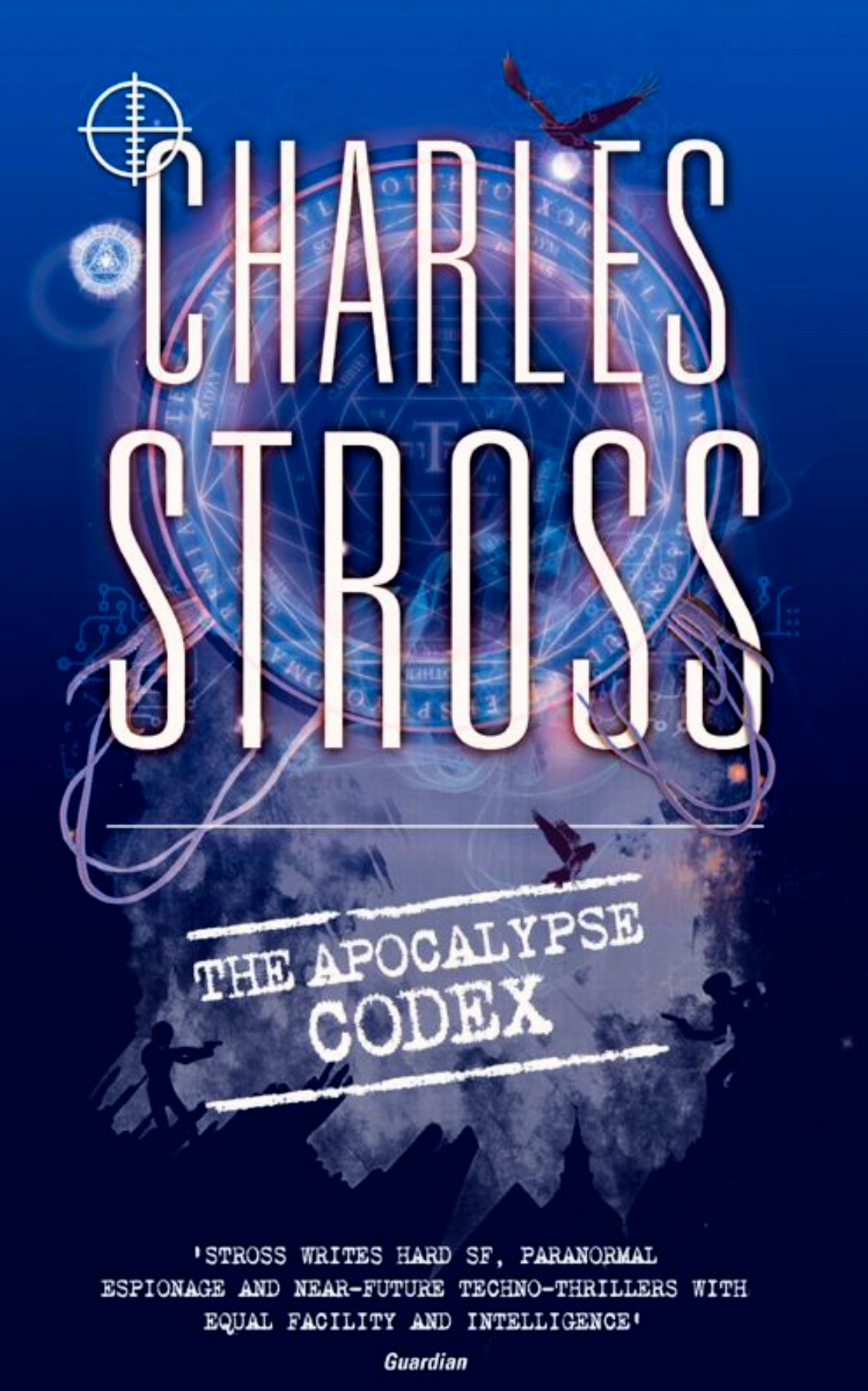 What’s it all about?
The Apocalypse Codex is the fourth in the series of novels set in The Laundry, the really really secret bit of the British Civil Service that deals with nasties from other dimensions, the Old Ones and their ilk.
This time Bob Howard, our hero, is contending with, well, the impending Apocalypse. Specifically, an attempt to awaken Something from Another Dimension (capitals always seem necessary here) which Bob has come across before, mostly in his dreams nightmares.
This time round he has the “help” of two external assets – Persephone Hazard (who is basically a witch) and Jonny McTavish (who has form with the kind of cultish religion involved here).
Oh and they are in Colorado dodging the local equivalent of the Laundry (amongst other things).
Why did I want to read it?
As I’ve said before I’m working my way through the series in order (as is only right and proper). Thoughts on The Atrocity Archives, The Jennifer Morgue and The Fuller Memorandum have already been shared as linked.
What did I think of it?
I don’t know whether it’s because I read this so close to finishing the previous volume (and that’s why I usually take longish breaks between elements of a series) but it took me a bit longer to get into The Apocalypse Codex than normal, and the use of a greater amount of third person narrative (as opposed to us mostly seeing the action through Bob’s perspective) might not have helped. But once the Big Bad was identified and the action got under way then I was sucked in as per usual. The main new characters this time round were Jonny and Persephone (as mentioned above) and Gordon Lockhart, a senior manager in the Laundry who looks after External Assets. So lots of new people and consequently not enough Mo or Angleton for my taste but once we are in the USA dealing with a completely bonkers evangelical church with a charismatic leader and a plan to bring forward the end of the world and save us all whether we want to be saved or not then those reservations all passed.
Of course the bad guys are (partially) unwitting dupes of something other than they expect, and of course the new guys underestimate Bob’s talents and skills because he looks like a boring civil servant, and of course it all goes a bit pear-shaped and they have to make it up as they go along, but the end of the world is diverted once again, we learn a lot more about the internal workings of the Laundry and things change for Bob, probably in a good way but we’ll wait and see.
I am still really enjoying this series and have one novel and three short stories to go to catch up, but may give myself a break for a bitto keep it all fresh. But as always, recommended if Lovecraftian-related administrative shenanigans are your bag.
 What’s it all about?
The Fuller Memorandum is the third in the series of novels set in The Laundry, the really really secret bit of the British Civil Service that deals with nasties from other dimensions, the Old Ones and their ilk.
This time Bob Howard, our hero, is contending with secret dossiers, the odder-than-usual behaviour of his scary boss Angleton, zombie killers, Russian counterparts, apocalyptic death cults and the end of the world being a bit more imminent than originally thought. But at least he has an understanding manager.
Why did I want to read it?
I’m working my way through the series in order (as is only right and proper). Thoughts on The Atrocity Archives and The Jennifer Morgue have already been shared as linked. And it’s paranormal-civil-servanty-espionage after all.
What did I think of it?
I think this is probably my favourite of the Laundry Files so far. Bob has a bit of a problem at the beginning of the book which means that he isn’t working as normal when all the oddness starts happening, so that adds a slightly different perspective as he has to do quite a bit of sneaking around.
But what makes this a particularly fine entry into the series is that we lean more about Mo, Bob’s wife, who also works at the Laundry, and the toll that her duties take on her (she sees some really really nasty stuff as part of her day job) as well as finding out quite a bit about Angleton (one of my favourite characters), information that serves to explain a lot about his position int he organisation.
Chuck in some authentic Russian history with an occult twist, a very unpleasant cult who are actually dying (in more ways than one) to get those other-dimensional through to our side to wreak havoc on the world, season with really black humour and some proper horror and you have a gripping story that I couldn’t put down. Made all the better for an old civil servant like me because of all the bureaucratic nonsense, which is not that far from the truth (except for the zombies of course). Looking forward to continuing with the series.


 Bride of the Book God