Scan 42What’s it all about?

Alex is a teenager who has been badly affected by his parents’ divorce and after trouble at school goes on a business trip to Amsterdam with his father; he is left in the company of the much older daughter of his father’s publisher who takes him around the city and shares some of her historical research with him. He is drawn to a Japanese mask which seems to be haunted. Creepiness ensues.

Why did I want to read it?

I love Chris Priestley. I’ve read all his Tales of Terror and adored both The Dead of Winter and Mister Creecher. Always look forward to his books.

What did I think?

I really liked Through Dead Eyes. I sympathised with Alex a great deal, with his sulkiness and confused feelings and hating his Mum while missing her and resenting the bits of his Dad’s life that were going on as normal. The supernatural elements of the story work well, with enough tension between “is it real?” and “is it just his imagination?” to keep you hooked. I always associate Amsterdam with sunny days and bustling tourists but it comes across as dark and cold and sinister in this story.

Conclusion

Aimed at young adults like most of Priestley’s books yet this old girl enjoyed it very much. I had to read it over a couple of days but it could easily be gobbled up in one sitting (and would be all the more effective for that).

comics-nos-4r2-cover-artworkAt least I think that’s how you’re supposed to write it…..

What’s it all about?

Very nasty serial killer with supernatural car and obsession with Christmas seems to have come back to life and is going after the girl who got away in order to wreak his revenge.

Why did I want to read it?

It’s complicated.

What did I think of it?

That’s also complicated. N0S-4R2 had the same effect on me that Drood did only slightly more so. I have several Joe Hill books but until this had only read one (Heart-Shaped Box which I reviewed here). I should have loved this one; after all serial killer, nasty accomplice, heroine who has had her life ruined by early trauma having to face up to her fears, plucky small boy, flawed but loving husband. And then there are the supernatural elements, our heroine’s special ability, the whole Christmasland thing, and of course the car. I didn’t mind the violence; let’s face it I’ve read and enjoyed a lot of horror so violence isn’t something I’m overly bothered about. I came to like several of the characters. There was just something that didn’t click for me which left this being a good book rather than a great one. I think it was just too long and baggy for the story that was being told; I stopped reading it for a bit because a little voice in my head which kept asking why is this taking so long? And yet despite that the ending felt a bit rushed to me (while also setting up a possible sequel). What it comes down to is that I felt tense and anxious for the Vic and Lou and Wayne while I was reading it but I was never actually scared

Conclusion

A hard one. I really wanted to like this more. It’s by no means bad, has real flashes of inventiveness but *whispers* it outstayed its welcome. Hasn’t stopped me buying the comic though (Lord knows what that says about me).

Scan 41What it’s all about?

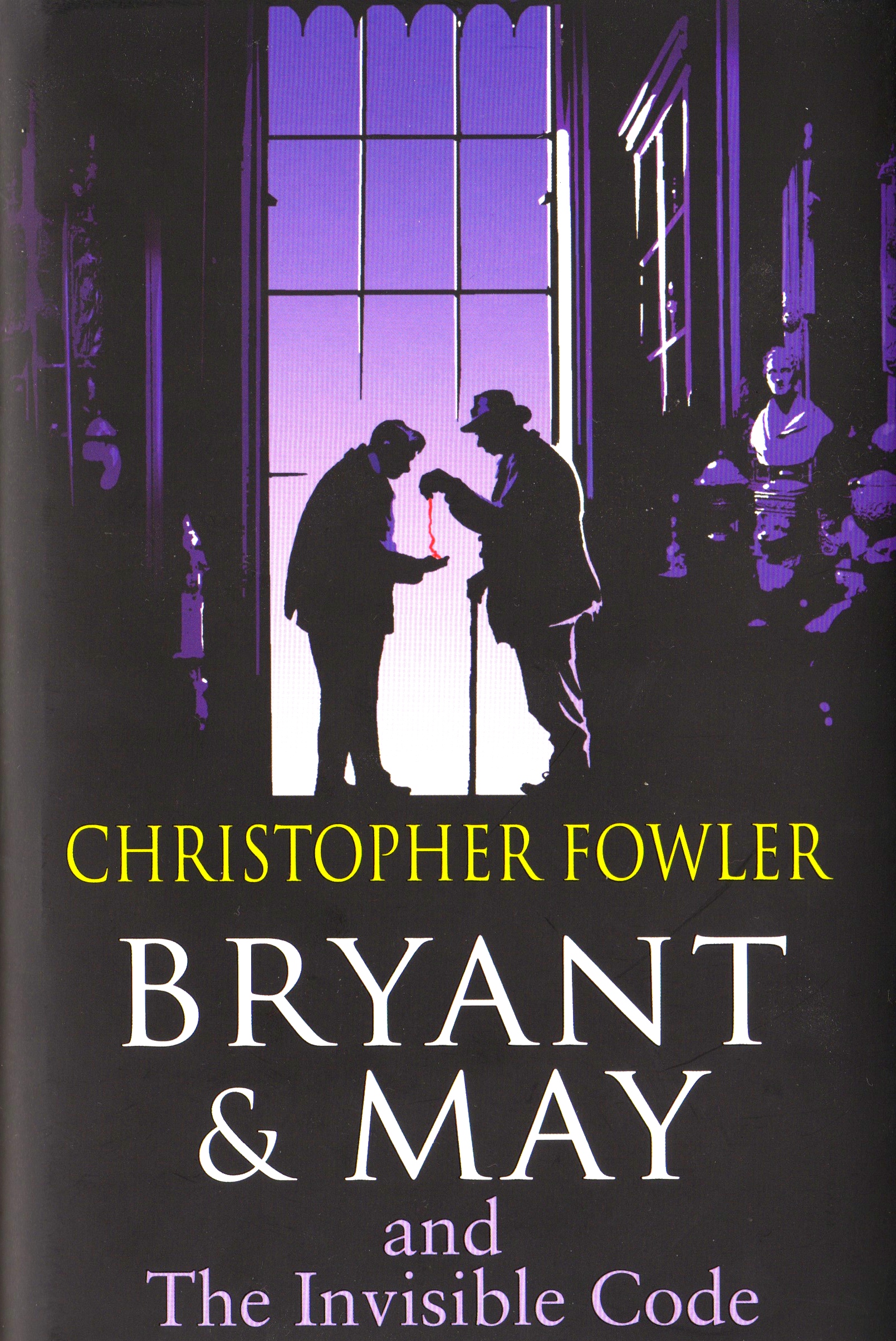
A mysterious death in a church. Children playing a game of witch-hunter. The world turned upside down as Bryant and May are asked by their arch-enemy Oscar Kasavian to find out what’s happening to his young eastern European wife Sabira – is someone trying to drive her mad in order to get at her husband or is she (as she believes) the victim of witchcraft? Secrets from the past. All brilliant stuff.

Why did I want to read it?

The answer is here. Love these books.

What did I think of it?

At the risk of sounding like a broken record, I loved The Invisible Code. I found this one particularly touching for some reason. I really felt for the plight of Sabira who loved her husband but just didn’t fit into his world and found herself struggling to make sense of it all. I liked Bryant keeping things to himself (which he often does to be fair) in order to protect his friends and colleagues. I felt anxious all the way through reading the novel (that’s a good thing by the way).

I also realised that I really have to visit Sir John Soane’s Museum, which should be an easy thing to do as I work on Kingsway and often walk past the building on my way to visit my friend who works on Fetter Lane but I have never been inside. You may not think this is a big thing but I have been working here for thirteen years and really have no excuse whatsoever.

Conclusion

This series just keeps on getting better and better. Which given that it started at a pretty high point is a remarkable thing. Two more already written I believe. Fabulous.

UnknownWhat’s it all about?

Who survives when disaster strikes and why. A journalistic investigation into man-made and natural disasters with first-person narratives and discussions with researchers about what makes some people more likely to survive than others

Why did I want to read it?

The Book God and I watched a couple of episodes of a series whose name I have now forgotten (Perfect something or other) on one of the satellite channels tucked away somewhere far down the TV listings (I want to say the Hitler History Channel but that may not be right) which gave dramatic reconstructions of disasters through the ages, e.g. the Lisbon earthquake, the hurricane that flattened Galveston and so on. The acting was pretty awful and the narration overly portentous but the one bright spot in each programme we watched was Amanda Ripley, author of The Unthinkablewho was able to give some insight into how people behave in these situations. So I got the book for my Kindle app.

What did I think about it?

Very easy to read, quite fascinating in places, written int hat breezy American journalistic style that I quite enjoy, assertions supported by proper evidence and a solid set of footnotes. Good author’s note where she goes through her methodology in detail so you can have some  confidence in her work. She also gives some practical tips on how to improve your chances. Really interesting.

IMG_0123What’s it all about?

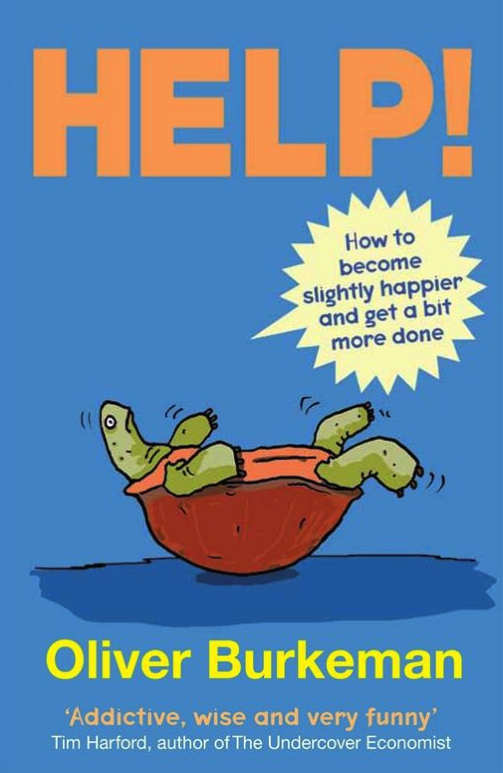
The subtitle of Oliver Burkeman’s book gives us a clue: How to Become Slightly Happier and Get a Bit More Done. It’s basically a collection of newspaper columns that he wrote for the Guardian about the problem of human happiness (his words) where he began to delve into

self-help, happiness studies, life hacking, and other ideas with an emphasis on practical implementation by a mass audience

Why did I want to read it?

I heard Burkeman being interviewed on the Guardian books podcast a couple of years ago and he sounded so interesting and non-judgemental that I thought this was worth a look. And there’s also a tiny part of me (which I try to disown) that thinks there might actually just possibly be a simple answer to life, the universe and everything and that this could possibly just be found within the pages of a self-help book.

What did I think of it?

It is a really fascinating book, very funny in places and extremely quotable.  For example:

  • he talks about journalling, and the fact that though focussed writing can be very positive, people who journal a lot to tend to wallow a bit and tell the same story over and over again (I am ashamed to say that I recognise this in myself which is why my diary is not something sensational to read on the train as Gwendolen Fairfax would have it but a fairly boring repetition of the same whinges – though I may be being a little hard on myself there);
  • in talking about stress, he asks whether rather than doing things that avoid triggering our stress response we should try working on our response instead;
  • that the best thing to do when you get an unwanted invitation is just to say no and not try to come up with a justification or elaborate excuse (he suggests Emily Post’s “I’m afraid that won’t be possible” can’t be beaten);
  • that meetings should be abolished;
  • that you won’t transform your life in seven days, but you won’t do that by reading books called Transform Your Life in Seven Days either.

Conclusion

Well worth a read if you are at all interested in any aspect of the self-help industry.  I enjoyed it very much.

Scan 40What’s it all about?

Doctor Sleep is the long-awaited sequel to Stephen King’s The Shining that I didn’t expect and didn’t know I needed until it was published when I of course decided that I absolutely had to have it. Danny Torrance is now an adult with a troubled past including the problems with alcohol which bedevilled his father. He also has a taken for helping people to pass over (for want of a better way of putting it). He finds out that a young girl with a similar but more powerful ability to shine is the target of a gang of (again for want if a better word) soul-stealing vampires and determines to save her no matter the cost to himself.

Why did I want to read it?

I’m not a total King completist but I have been a fan for over 35 years (I first read Carrie when I was 15 or so) and I always look out for his novels though I don’t always read them right away (Under the Dome, I’m looking at you). And a follow-up  to one of his most famous stories was irresistible.

What did I think of it?

I liked it a lot. It has a lot to live up and I don’t think it was ever going to reach those heights for a lot of people. But I liked Danny as an adult, warts and all, and although the story was in many ways more gentle than his earlier work (‘Salem’s Lot still gives me the creeps, which is probably why it’s my all time favourite) and there were a couple of curveballs towards the end in relation to Danny’s personal history, it worked as a narrative. The bad guys were sufficiently bad and the outcome wasn’t (for me at least) a foregone conclusion and the subsidiary characters were well-rounded and believable.

Conclusion

Has all the elements I look for in a Stephen King novel so OK by me.

This was my final read for RIP VIII.

Scan 39What’s it all about?

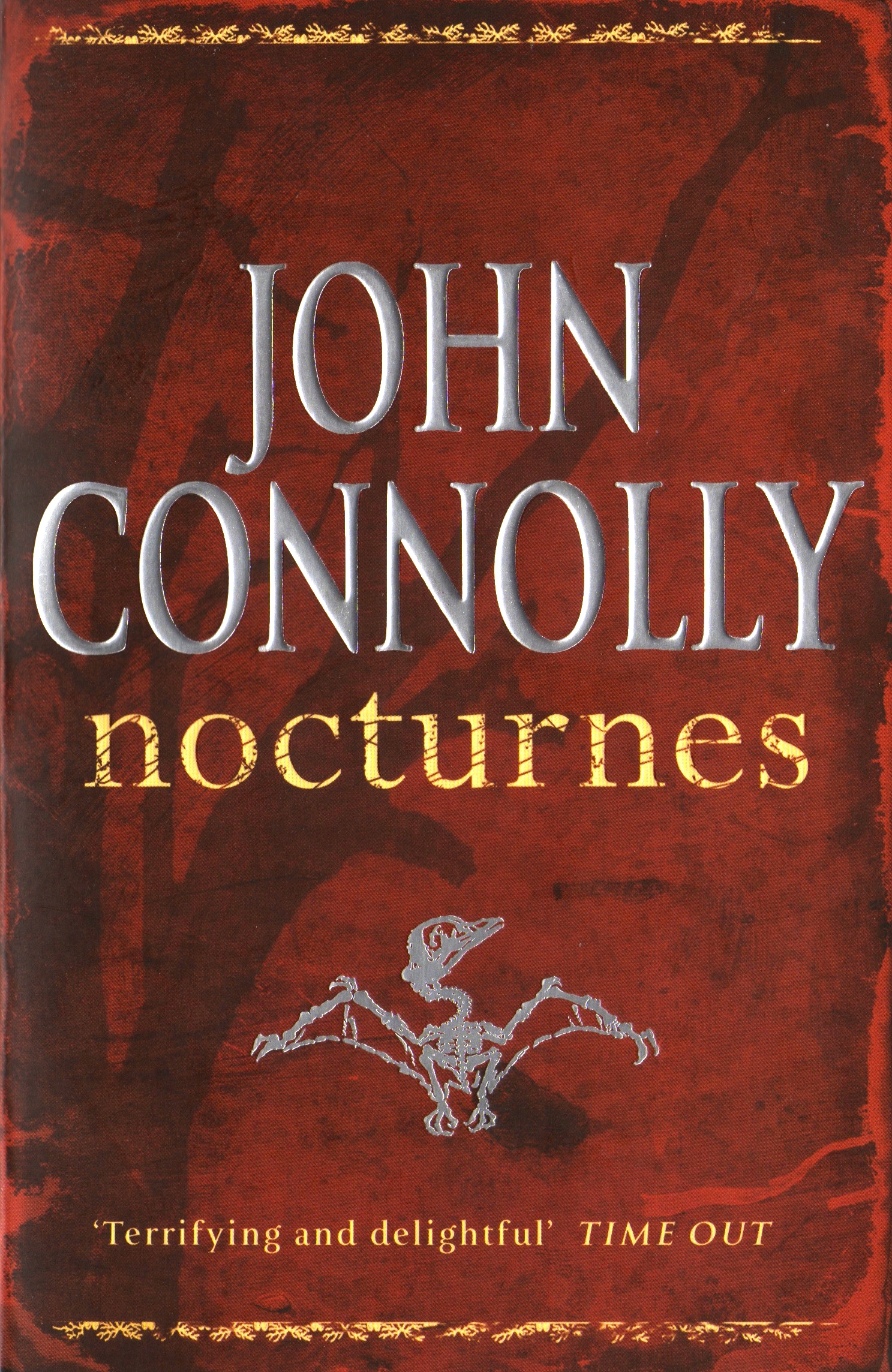
Nocturnes is a set of short stories book-ended by two chunky novellas, one featuring Connolly’s PI Charlie Parker. The blurb talks about “chilling tales of the supernatural” and “our darkest fears” and references MR James and Stephen King so I’m there.

Why did I want to read it?

As well as the stuff mentioned above I read The Book of Lost Things (reviewed here) and wanted to investigate more of his work.

What did I think of it?

I really enjoyed this collection and the comparisons to James were deserved. I particularly enjoyed Miss Froom Vampire and The Wakeford Abyss, but the standout for me was The Reflecting Eye, the Charlie Parker story which I found compelling and unsettling and moving all at once.

Conclusion

Glad that my gut feeling I would enjoy Connolly’s books proved sound and I’m looking forward to reading more of the Parker stories in particular.

This was a read for RIP VIII

Scan 38What’s it all about?

Mayhem is set in the height of the Jack the Ripper murders, but body parts found at New Scotland Yard are definitely the work of a different killer, no matter how much the authorities wish it wasn’t. Thomas Bond is the police surgeon working on both cases, and as he delves into the murders he begins to suspect that something more supernatural than a rampaging serial killer is at work in London.

Why did I want to read it?

Serial killers, Jack the Ripper, Victorian London, what’s not to like? Plus although I had a couple of her e-books I hadn’t read any of Sarah Pinborough’s books and wanted to give her a try, partly due to the subject matter and partly because she is great fun to follow on Twitter (there’s that word again).

What did I think of it?

I liked it a great deal. It was a very interesting experience reading it so soon after Drood (reviewed earlier) as there are some similarities in the use of the supernatural, the main character’s tendency to dabble in drugs, the mix of real and fictional characters and events. I thought this was much more successful; I liked Thomas Bond very much and found his struggle with opium and the effect it had on him much more sympathetic, as were the domestic elements in the story contrasting with the grimness of the crimes being investigated. But I don’t want to dwell too much on comparisons with someone else’s work, this is a really good novel.

Conclusion

Recommended. I’m going to be searching out more of Sarah Pinborough’s work, although disappointed that the next volume in this series won’t be published until 2015.

This was a read for RIP VIII

ScanWhat’s it all about?

In The Memory of Blood the Peculiar Crimes Unit get called in to deal with the death of a child thrown from his bedroom window while elsewhere in the apartment his parents hold a party for the cast and crew of a play being performed in the theatre owned by the child’s father. It’s a PCU case because the door was locked, there seems to be no forensic evidence, and, well, there’s a life-size puppet of Mr Punch on the floor. Supernatural activity or human agency? Oooh.

Why did I want to read it?

My love for the Bryant & May series is well-documented on this blog. I’ve read the lot in order and wasn’t going to miss this one.

What did I think?

Loved it. I am a sucker for stories about the theatrical world and this one is chock full of  corruption, venality and oddness amongst the suspects, plus a nice political back story for the assistant stage manager and the spectre of Home Office disapproval hanging over the case. As always I learned loads – about London, the theatre, Punch and Judy and much more. Didn’t work out who the murderer was which was nicely satisfying in a strange way. The series just gets better and better.

Conclusion

If you haven’t read any of the Bryant & May books, why ever not? Get on with it. You won’t be disappointed.

This was a read for RIP VIII

Scan 37What’s it all about?

Let’s use the words of the narrator, one Wilkie Collins, to describe what we’re talking about here:

This story shall be about my friend (or at least about the man who was once my friend) Charles Dickens and about the accident that took away his piece of mind, his health, and some might whisper, his sanity

The story kicks off with the Staplehurst railway accident that Dickens was involved in while travelling home from Paris with his mistress Ellen Ternan. While trying to assist those injured in the accident Dickens comes across a mysterious and rather ghoulish figure who becomes known to him as Drood. Dickens then drags Collins into his obsession, which leads them to investigate the underworld of London, with all the crime, squalor and danger that involved. And not a little madness. And quite a lot of death.

Why did I want to read it?

I’ve had mixed fortunes with the works of Dan Simmons. I read The Song of Kali in 2009 and really struggled with it, finding it a little too grim for my tastes. But I had also read The Terror the year before and absolutely loved it. The combination of real literary figures and a Gothic sensibility promised by Drood was very attractive.

What did I think of it?

Well. I finished reading this in the middle of September and I’m still not sure what I think. I was drawn in by the early part of the book and cracked on with the story which promised a great deal, but somewhere around the middle, when the focus shifts almost entirely to Collins and his problems I began to get a bit bogged down and actually stopped reading it for a bit. But I was determined to finish it and it did pick up again in the last third. It is completely mad. Although I have to say that it seems pretty authentic in its representation of both the central characters and all levels of society at that time.

Conclusion

There is a quote towards the end of the book where Collins says:

You never cared about my part of this memoir. It was always Dickens and Drood, or Drood and Dickens, which kept you reading

And maybe that is the problem for me, insufficient Drood. So fair to say that my response to the novel is ambivalent; glad I read it but not a favourite and *whispers* too long.

It has made me want to finally read Armadale though.

For a more positive review you should visit Roxploration who discusses the book here.

This was a read for RIP VIII.

Bride of the Book God

Follow brideofthebook on Twitter

Scottish, in my fifties, love books but not always able to find the time to read them as much as I would like. I’m based in London and happily married to the Book God.

I also blog at Bride of the Screen God (all about movies and TV) and The Dowager Bride, if you are interested in ramblings about stuff of little consequence

If you would like to get in touch you can contact me at brideofthebookgod (at) btinternet (dot) com.

The Sunday Salon.com

Goodreads

Blog Stats

  • 48,479 hits
March 2026
M T W T F S S
 1
2345678
9101112131415
16171819202122
23242526272829
3031  

Categories

Archives