
Spring-Cleaning-785x1024So, I’ve not been hitting the books quite as much lately. This isn’t a reading slump as such (or at least I don’t think so) but is partly due to the fact that there are just so many books in the house, leading to a TBR pile the size of Ben Nevis and too much choice. And that’s before I even get to the Kindle app.

I’ve always been someone who reads more than one book at a time because I like to ring the changes but I think things have got a tiny wee bit out of control.

Time for some bookish spring cleaning.

I’m going to go through the pile of stuff I’ve started and try to work out whether I’m just resting from that particular story or I really need to take the decision to *gulp* abandon the book.

So, Part 1 – the stuff I’m really seriously trying to read at the moment:

  1. The Invention of Everything Else by Samantha Hunt – the last days of Nikola Tesla alongside the story of Louise, a chambermaid in the hotel in which he is a resident. 166 pages in. Lovely story, just need to get on with it
  2. Bryant & May: The Bleeding Heart by Christopher Fowler – the 11th and almost certainly penultimate adventures of the Peculiar Crime Unit; bought this on the day it came out, expected to read it in a couple of sittings, not sure what happened. Likely to try to finish this one first. 86 pages in.
  3. Kraken by China Mieville – galloping ahead with this one and then stalled for some reason. 198 pages in, really want to know how this works out

Those are all physical books. On the Kindle app:

  1. LA Noir by John Buntin – picked up because the Book God and I thoroughly enjoyed the Frank Darabont mini-series Mob City which took its main plot from this non-fiction work. 21% read.
  2. The King in Yellow by Robert W Chambers – like lots of other people I picked this up because of the references to it in True Detective (to which I am fairly addicted and looking forward to the final episode next Saturday….), though I think I’ve actually had it for ages. Only 3% in (which basically means I’ve read the introduction)
  3. The Medea Complex by Rachel Florence Roberts – an e-book supplied by the author for an honest review, all I’ve got to do is sit down and make a proper start. 5% in, really want to read this as hearing good things.

So, not that embarrassing in the end. Oh, but just you wait……

onceup8200It’s that time of year again. The daffodils are out, the sun is (occasionally) shining and Carl’s Once Upon a Time challenge is with us again for the eighth (blimey) time, running from 21st March t0 21st June.

This year I’m going to attempt Quest the First, described thusly:

Read at least 5 books that fit somewhere within the Once Upon a Time categories. They might all be fantasy, or folklore, or fairy tales, or mythology…or your five books might be a combination from the four genres.

I looked back at my previous attempts at this challenge and am mildly appalled at the number of books on previous lists that I have come nowhere near to starting (let alone finishing) and have come up with a mixed list of new titles and old selections and one re-read:

  • The Boy with the Cuckoo Clock Heart by Mathias Malzieu – “a dark and tender fairytale spliced with devilish humour”
  • On Becoming a Fairy Godmother by Sara Maitland – “breathes new life into old legends and brings the magic of myth back into modern women’s lives”
  • Voice of our Shadow by Jonathan Carroll – “blending fairy tale, drama, magic realism and occult horror”
  • Fairest of All by Serena Valentino – a tale of the wicked queen
  • The Broken Sword by Poul Anderson – “Thor has broken the sword Tyrfing so that it cannot strike at the toots of Yggdrasil etc. – elves, trolls, ice-giants, changelings and so on

I also plan to re-read The Songs of Earth and Power by Greg Bear which I remember as hugely impressive and have always wanted to revisit.

Will be great fun.

once8jquest1

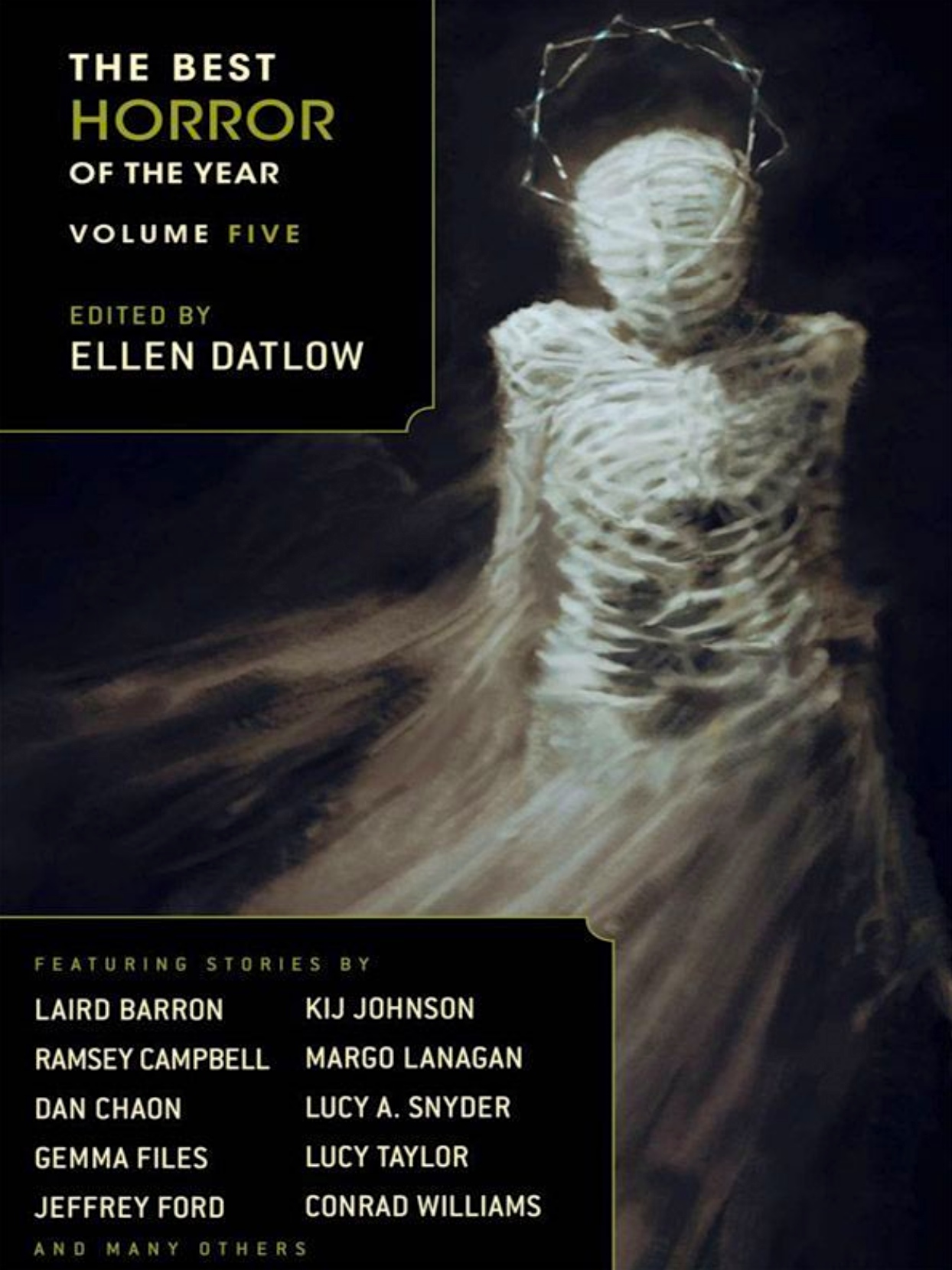
IMG_0023All as before, this is the fifth volume of the best horror stories as selected by Ellen Datlow for the year 2012; my review of the previous volume is here.

I found this collection a little more difficult to get into than volume 4 (my thoughts on that are here), and really questioned whether some of the stories were actually horror but I may just have a very traditional, some would say old-fashioned) view of the genre.

For me the stories that stuck with me were:

  • Frontier Death Song by Laird Barron – a modern twist on the ancient tales of The Hunt
  • Magdala Amygdala by Lucy A Snyder – looks like it’s going to be zombies (again) oh, but what’s this?
  • Final Exam by Megan Arkenberg – really liked the structure of this one
  • Some Pictures in an Album by Gary McMahon – very dark
  • The House on Ashley Avenue – nice twist on a haunted house story

So not quite as satisfying as the previous volume but still worth a read.

A contribution to the 2014 Horror Reading Challenge.horrorbutton2014

IMG_0061What’s it all about?

The world has been overrun by zombies (again) but at least one of them, known to us only as R because he has no memory of his name  or age or anything including how he came to be a zombie, is not quite what he seems. And one day when hunting he sees Julie, a live human, and instead of eating her he decides to save her, triggering a whole set of events that could change the world.

Why did I want to read this?

Warm Bodies received a strong recommendation from Silvery Dude who apparently read it in one sitting and is hardly ever wrong when it comes to suggesting things that I might enjoy. Plus I’m coming around to the whole zombie thing (though so far nothing touches World War Z which I loved).

What did I think?

A different take on the whole zombie thing. Yes, in some ways its the same old same old (Zombie plague overrunning the world? Breakdown of civilisation as we know it? Rise of the military?) but it’s interesting to see it from the non-human side for a change, what it might feel like to be a zombie, all that jazz.

I liked R and his friend M and of course the lovely Julie very much, the love story was sweet and convincing but at one point I became so anxious about their situation and how it was going to work out for them that I had to stop reading for a bit. I don’t think I have ever wanted a happy ending quite so much. Very enjoyable indeed.

Now for the movie.

AnnihilationWhat’s it about?

The first in a trilogy, all three to be published this year, Annihilation tells the story of an expedition into the mysterious Area X, the twelfth such to be sent in the thirty years since a supposed environmental disaster cut the area off. The story is told from the viewpoint of the biologist, one of four women making up this most recent attempt to investigate.

As the blurb says, their mission is:

to chart the land, take samples and expand the Southern Reach’s understanding of Area X.

But of course it’s not as simple as that.

Why did I want to read it?

I’m not sure where I first saw this book mentioned, but it seemed to pop up all over the place with what seemed like uniformly positive reviews. I’m not one who normally follows what everyone else is reading (I think I’ve actually said before that I actively avoid those books until the fuss dies down) but something about this intrigued me and onto the Kindle app it was summoned. I’ve also never read any VanderMeer before though he has been on my radar for ages.

What did I think of it?

This is a really strange book, but I mean that in a good way. For a start we never know the names of the four women who make up the twelfth expedition, they are only ever referred to by their job titles (as well as the biologist we have an anthropologist, a psychologist and a surveyor). We learn early on that there was a fifth woman, a linguist, but we don’t know what happened to her. We also know that previous expeditions have spectacularly failed and its’ clear that things are going to go wrong with this bunch too, and fairly quickly.

There is a tower (or is it a tunnel?) with strange writing that appears to be alive. There is a lighthouse which is somehow significant. There is clear evidence that the team is being manipulated in some way by Southern Reach, the organisation that has sent them in. The psychologist knows more than she is letting on and is using hypnotic suggestion to control her team mates. And of course the biologist has a secret, a reason of her own for having volunteered for this mission.

This is  short book, some 200 pages or so, and I read most of it in one sitting. It’s really very strange and I’m not entirely sure what I think of it, other than that it was compelling and communicated a real sense of mystery and dread and weirdness. Things moving in the dark, things that are unnatural, a feeling that nothing is what it seems, foreboding and otherness. A bit Lovecraftian in places (a good thing IMHO). Unsettling.

I’m not articulating my thoughts terribly well because it’s still percolating. But I’ve already pre-ordered the second in the trilogy which comes out in May and I can’t wait to see what more we will find out.

Scan 11By Blood We Live is the third volume in Glen Duncan’s very successful Last Werewolf trilogy; so new readers really should not start here  – read this and this first otherwise the current volume will make very little sense.

On that note – what’s it all about?

*Spoilers* for the earlier books, maybe, though can they be spoilers if they’re on the back cover for all to see?

Remshi is the oldest vampire in existence. He is searching for the werewolf named Talulla, whom he believes is the reincarnation of his long lost – and only – love. But he is not the only one seeking Talulla. Hunted by the Militi Christi, a religious order hell-bent on wiping out werewolves and vampires alike, Remshi and Talulla must join forces to protect their families, fulfil an ancient prophesy and save both their lives.

Nicely put, though I won’t comment on how accurate and /or misleading the blurb actually is.

Why did I want to read it?

I really enjoyed the first two books in the series and wanted to see how the story played out. It’s also a series that I was reading in parallel with my good friend Silvery Dude and when he got his copy (which may just have been a belated birthday present from me) we started an uncoordinated readalong which rapidly turned into a competition to see who could get to the end first. We even had our own hashtag on Twitter, though actually that was mostly me as the Dudester rarely tweets (#iwillprevail if you’re interested, probably only a couple of tweets but).

I of course won, but only because I have no children and therefore unlimited time to slump on the sofa and read my way solidly through 400 pages of sex and violence and horror and equal opportunity religious fanatics.

What did I think?

I absolutely loved it, couldn’t put it down. I thought Remshi was going to be incredibly annoying after the first few pages but hey, he’s 20,000 years old or thereabouts, he’s earned the right to be a bit pretentious having, you know, basically seen it all. But I came to really like him, possibly even more than Talulla who is quite an astonishing character.

The story is fast-moving without sacrificing any of the character development stuff. There were a couple of “oh no not captured again” moments which served largely to move the plot forward but they were offset by the sheer inventive violence involved in rescuing/freeing those who were caught.

There is a lot of sex and a lot of gore and a lot of philosophical musing and world-weariness and an awful lot of violence but if you’ve read the first two you will be expecting that. Not to everyone’s taste I guess, but not something that has ever really bothered me. Vampires and werewolves are monsters after all, and do what they have to do to survive, often involving monstrous behaviour; what can you do?.

I liked the ending a great deal; finishes off the trilogy nicely but not so that future books couldn’t be produced although I hope there aren’t any more as this reached a satisfying conclusion (to my mind anyway).

I’m sure he won’t mind me saying, but Silvery Dude really enjoyed it too, so a double endorsement there.

Another read for the 2014 Horror Reading Challenge horrorbutton2014

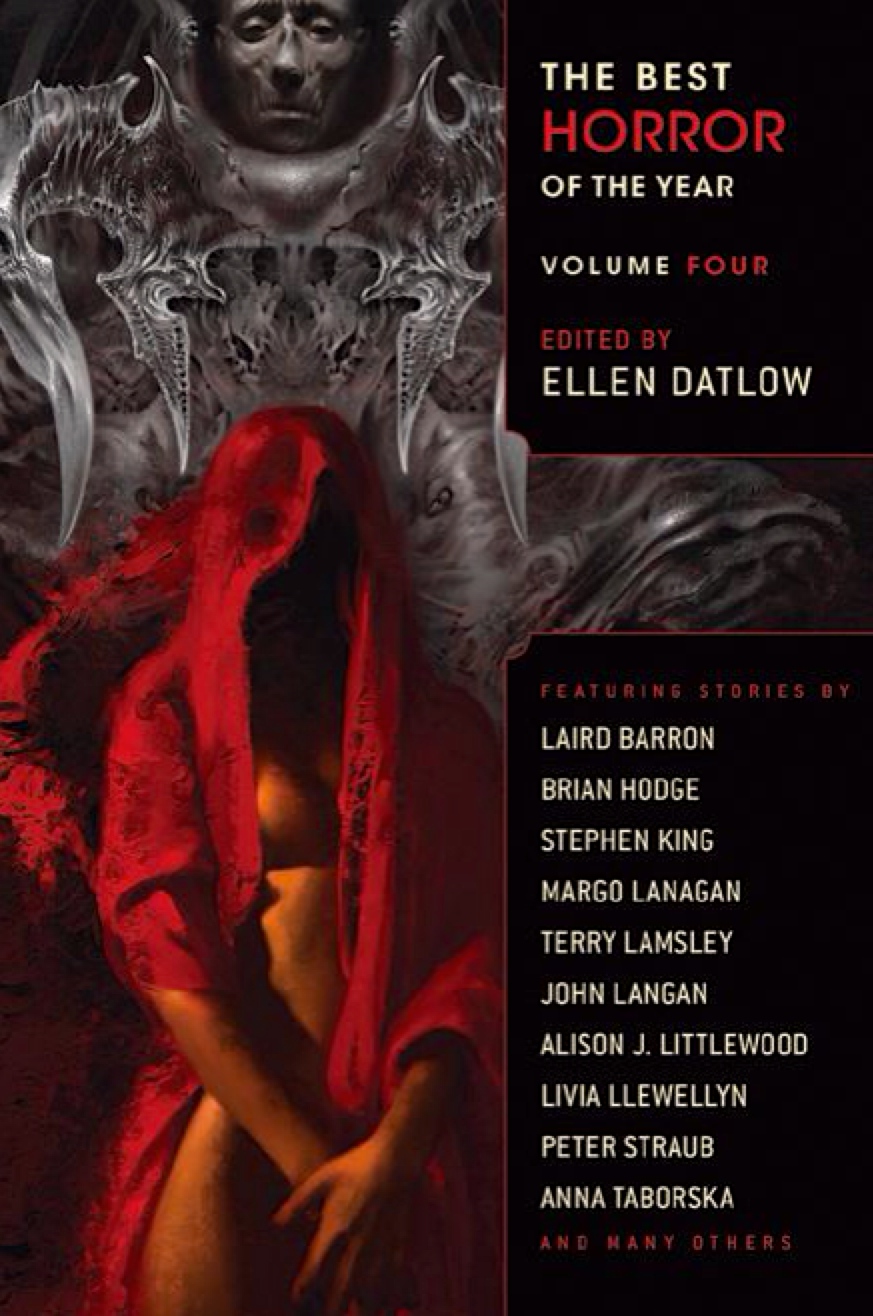
IMG_0012As it says on the tin, this is the fourth volume of the best horror stories as selected by Ellen Datlow for the year 2011, and an interesting mix it is too.

As always the book starts with an overview of the year, the award winners, major authors and new writers, anthologies and magazines all of which just goes to show that although I am a lover of horror I am clearly not keeping up with anything like the volume of material that’s out there and am in fact a rank amateur only dipping into the most popular stuff. Which is why of course anthologies like this one are just so valuable and I found my self taking notes of authors and books to look out for.

In terms of this collection, like any anthology there are stories that appeal more than others and some that don’t really appeal at all which is what makes it all so interesting.

For me the stand-out stories were:

  • The Moraine by Simon Bestwick – I’m hoping to visit the Lake District properly for the first time later this year; on the strength of this it’s fair to say we will not be hill walking….
  • Blackwood’s Baby by Laird Barron – early 20th century manly stuff with a hint of Machen
  • Dermot by (again) Simon Bestwick – really quite nasty police procedural
  • Final Verse by Chet Williamson – country music meets horror, what does that song really mean?

The rest were absolutely fine, worth mentioning a solid Stephen King I hadn’t read before, a really quite weird Peter Straub which I didn’t entirely understand and left me a bit unsatisfied and a very short piece by Anna Taborska which was in many ways a terrible story but was it actually horror.

Great fun to dip in and out of, and I already have volume five downloaded and ready to read.

A contribution to the 2014 Horror Reading Challenge.horrorbutton2014

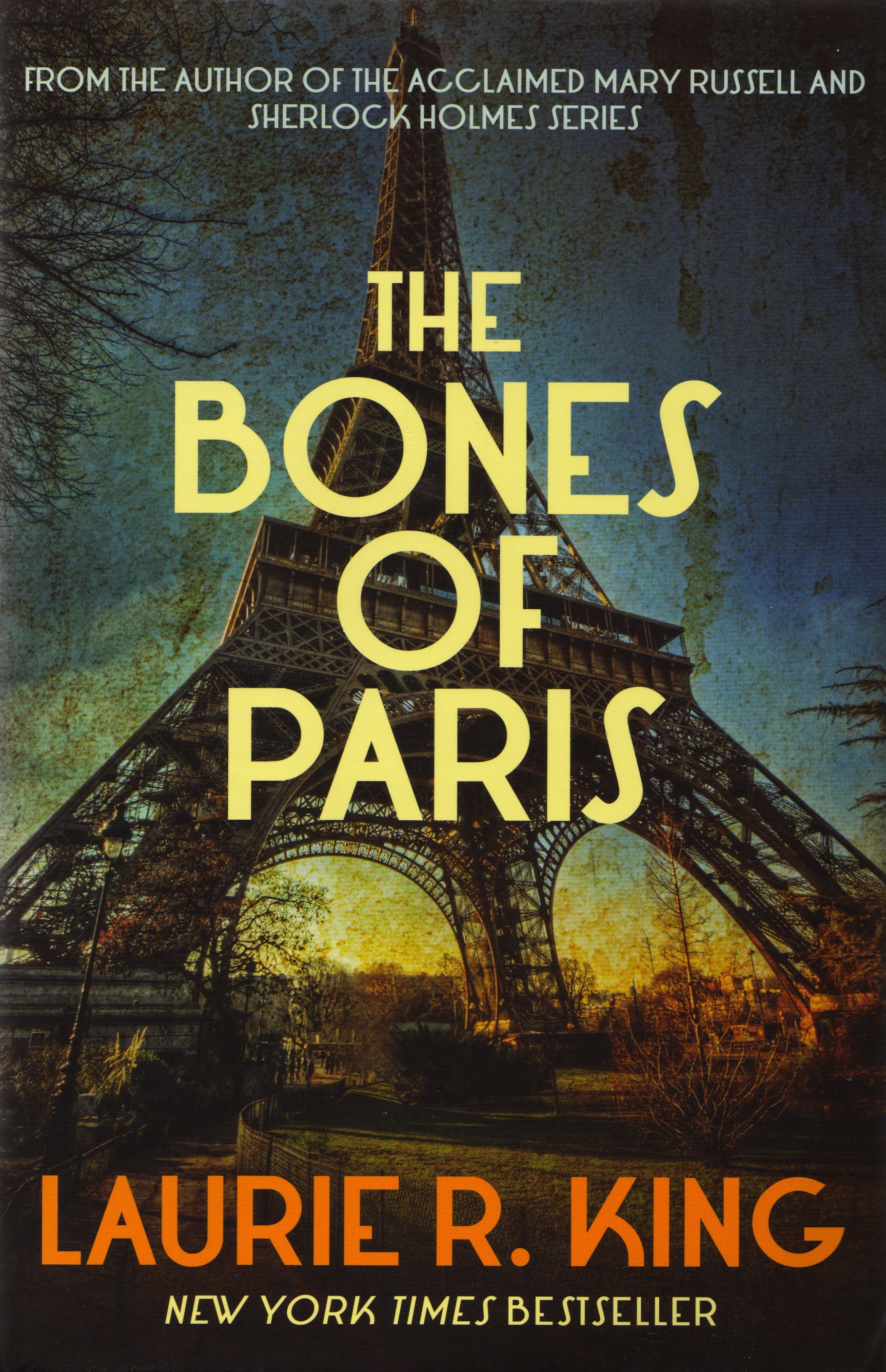
Scan 4What’s the book about?

Directly from the blurb:

Paris. 1929. For Harris Stuyvesant, his current assignment is a private investigator’s dream – he’s getting paid to trawl the cafes and bars of Montparnasse , looking for a pretty young woman.

This is the background to Laurie King’s second novel involving Stuyvesant and his friend Bennett Grey, following on from the events of Touchstone (which I reviewed here); although I don’t think you need to have read that first it makes the relationships between the three main characters easier to understand. Stuyvesant is being paid to look Philippa Crosby who just seems to have vanished without trace, and in doing so he begins to realise the unpleasantness that lies underneath 1920s Paris and the fact that there may be a serial killer on the loose.

Why did I want to read it.

I think I’ve read every single one of Laurie King’s novels and there seemed no reason to stop now. And I liked the idea of revisiting the Paris of that time following my unsatisfactory visit there through the medium of film (namely Midnight in Paris – you can find out what I thought about that here).

What did I think of it?

I think I found this the hardest of King’s books to get going, partly because the main attraction for me is not Stuyvesant but Grey, and although we begin with him in a very tantalising way, we then leave him and leap back to Paris in one of those “48 hours earlier” type things that you often get in US crime series and which I’ve learned to spot within about 3 seconds of the opening sequence. And that was a bit unsatisfying.

I also found Stuyvesant harder to like this time round, he seemed more boorish that I remember although he does feel mildly guilty (he knew the missing girl slightly if intimately – not a spoiler, we find that our pretty early on) and of course he is suffering from lost love in the form of Grey’s sister Sarah, who of course pops up as everyone who was everyone was in Paris at that time (or so it seems).

But the book really picks up when it becomes clear that there is a pretty nasty murderer with a fiendish plot and some rather unusual friends kicking around, and of course at least one character gets kidnapped, and of course the local police are suspicious of our hero(es), and of course (not quite) every famous artist/writer/character appears or gets mentioned by someone else. Which sounds like I’m criticising but I’m really not; once all the grand guignol stuff starts it becomes a great read and I enjoyed it very much. Must have done; I stayed up until 1.30 in the morning to finish it off.

I will be very interested to see where the characters go from here.

IMG_0013What’s the book about?

A Possible Life is a novel made up of five separate stories over five different time periods. The blurb on Amazon (which I’m using because I read this as an e-book and the one thing I miss about those is the blurb stuff on inside flaps or back covers, but of course now that I look at the beginning on my Kindle app it says the same thing so that shows what I know) says:

Soldiers and lovers, parents and children, scientists and musicians risk their bodies and hearts in search of connection – some key to understanding what makes us the people we become.

Provocative and profound, Sebastian Faulks’s dazzling novel journeys across continents and time to explore the chaos created by love, separation and missed opportunities. From the pain and drama of these highly particular lives emerges a mysterious consolation: the chance to feel your heart beat in someone else’s life.

Which doesn’t really tell you very much I think. And is also a bit pretentious to my mind which is a real shame and would certainly have put me off if I hadn’t been seduced by the cover, intrigued by the structure and caught up in the first story before I really started paying attention.

Why did I want to read it?

See above. Plus I like Sebastian Faulks and as far as I am concerned he gets away with a lot on the strength of Birdsong. I have quite a few of his books but I think this is only the second I’ve read, which is interesting (to me at least).

I was also fascinated to see how this would stack up against A Visit from the Goon Squad which is also a book of linked stories creating a novel and which I absolutely adored and have to thank Silvery Dude for recommending to me (he actually went on about it a lot to anyone within hearing distance but is forgiven because he was right).

What did I think about it?

Well. The first thing to say is that it didn’t work as a novel for me. I think the links between the stories were too tenuous for me to easily pick up (and I like to think I’m the kind of reader who does the whole “wait a minute, is that a connection?” thing more often than not). I spotted a couple of them but not enough to pull it together in a coherent whole.

But, I actually really enjoyed all of the stories, in particular the first one “A Different Man” which starts in 1938 and takes in WWII and its aftermath, and (funnily enough, a bit of bookending) the last one “You Next Time” which starts in 1971 and tells a tale set in the music industry of the time, and which I found lovely and very moving and rather sad and made me want to listen to early Joni Mitchell.

So very much worth spending time with but for this reader a collection of accomplished short stories, not a novel.

And I really need to re-read Goon Squad……

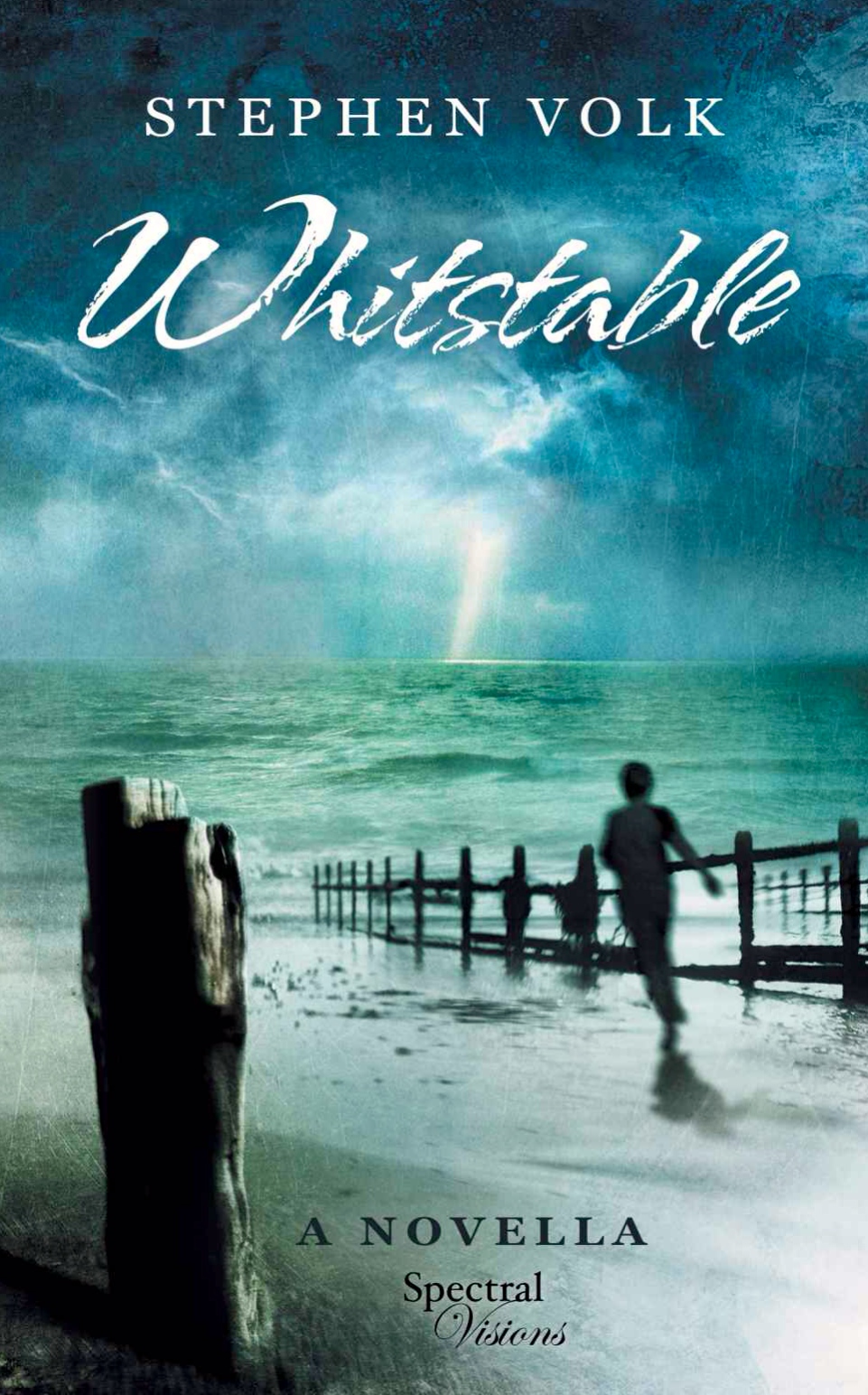
IMG_0011Whitstable is a wonderful novella steeped in the atmosphere of the 1970s, telling a story centring around the actor Peter Cushing in the days after the loss of his beloved wife Helen, when he seems totally lost and with no reason to continue living.

He forces himself out of his house in Whitstable and while sitting near the beach is approached by a young boy, Carl, who recognises him as (and clearly believes him to be) Van Helsing from the Hammer Dracula films and wants him to help destroy a real monster, his mother’s boyfriend who is (and this is not a spoiler) clearly abusing him.

The subject matter is incredibly grim, but what makes this novella so special is how vividly Peter Cushing is brought to life as a man of integrity and honour and dignity, who even in his deepest despair believes that he has to do the right thing by a vulnerable boy.

It’s a touching and memorable story written to mark Peter Cushing’s centenary in 2013 and brings to life the man who I will always picture wearing carpet slippers while filming the part of Grand Moff Tarkin in Star Wars and about whom I have never heard a single bad thing. And I cried a little bit at the end.

Beautifully written and very, very moving.

Bride of the Book God

Follow brideofthebook on Twitter

Scottish, in my fifties, love books but not always able to find the time to read them as much as I would like. I’m based in London and happily married to the Book God.

I also blog at Bride of the Screen God (all about movies and TV) and The Dowager Bride, if you are interested in ramblings about stuff of little consequence

If you would like to get in touch you can contact me at brideofthebookgod (at) btinternet (dot) com.

The Sunday Salon.com

Goodreads

Blog Stats

  • 48,473 hits
March 2026
M T W T F S S
 1
2345678
9101112131415
16171819202122
23242526272829
3031  

Categories

Archives