
You are currently browsing the category archive for the ‘Reviews’ category.
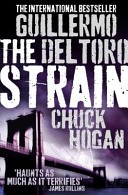 Well, The Strain – where to start?
OK, so a plane lands in New York and kind of just sits on the runway, totally blacked out, no sound, no nothing. Quite creepy. The CDC are called when the plane is opened and everyone on it is found to be dead and nobody knows why or how. Except of course there are one or two who have survived but things don’t look good for them for long. Or indeed for the ones that are already dead.
Then there’s the really big box with the strange carvings and filled with smelly earth which disappears behind everyone’s backs.
Is there a new kind of virus rampaging through New York or is this a more insidious and ancient evil making itself felt?
What do you reckon? Yes, its “Dracula on a Plane”!
Which does seem a bit unfair given I read the second half of this in one sitting on the first Saturday of my holiday and enjoyed it sufficiently to know that I will almost certainly get the sequel when it comes out in paperback next year. You can see the Great Guillermo’s paws all over the plot and the biology (which is lovely and gruesome), and it’s all incredibly easy to visualise.
But it isn’t as original as it thinks it is. Though to be fair maybe it doesn’t think it’s original and is just happily getting on with re-telling an old story in a modern setting with a thriller twist.
And all the thriller elements are definitely here:
- the troubled hero with family problems (divorce, custody battle, on the wagon after manful struggle with alcoholism) tasked with finding out just what we are dealing with here;
- the attractive co-worker who has been/almost certainly wants to continue being more than a friend;
- the old man who is more than he appears, with esoteric knowledge they need, a haunted past and a plan that just might work if only someone would listen to him;
- an ancient evil from the Old Country who is more powerful than you could ever imagine (some great puny mortal moments);
- a man with far too much money and a debilitating illness who will do anything to live forever;
- the friend that isn’t totally on their side and no one finds out until it’s just too late, dammit;
- oh and a range of bureaucrats who do the whole “I can’t believe what you’re telling me, will you listen to yourself” schtick and not much else until it’s all beyond our control.
I can see the mini-series galloping towards me, probably on SyFy. It will be gross if done properly. It will be silly if not. I have already started casting this in my head.
If I was participating in RIP V, then this would have been my first read.
 I have been a huge fan of Posy Simmonds for many a long year; used to read her strips in The Guardian on the women’s page when I was a student, and have a number of her children’s books because I love her drawing style so much.
Tamara Drewe also appeared in The Guardian as a serial but it has been reworked for publication as a graphic novel, and is a very enjoyable look at the lives of the chattering classes in a countryside setting, where the members of a writer’s retreat are affected by the reappearance of Tamara after her nose job and with a successful career as a newspaper columnist. Tragedy strikes, as it inevitably must.
I’m not sure I really liked any of the characters much, and I’m not sure whether I was supposed to or not. The writer’s retreat lot were very middle class, pretty smug and deserved most of what they got. The locals, especially two teenagers, Jody and Casey, are also caught up in all the stuff around Tamara, and what happens to them is not so deserved. But it’s enjoyable as a black comedy, well written and looks fabulous.
If I was still taking part in the Graphic Novel Challenge 2010 then this would have been a read for that, but to be honest the reason I picked this out of the stacks where it has been languishing for a while is that Silvery Dude and his Good Lady saw the film version (fluff, forgettable but not awful was I think what he said), and thought I’d prefer the source to the movie.
And I’m probably right.
 I finished reading this memoir a few weeks ago and have been mulling it over in my mind since then, trying to decide what I want to say about it.
The problem is the one I always have when trying to discuss a book that is all about a real person by themselves. It’s almost impossible, unless you are going to be extraordinarily cautious, to talk about this sort of memoir without seeming to be reviewing the their life rather than how they have written about it.
So this might be a bit disjointed (why change the habit of a lifetime, I hear you ask).
First things first, Candia McWilliam is the author of three (I think) novels and a book of short stories. I have these in my possession and have read them all apart from (I think) the short stories. I really like her work, it’s difficult to describe in terms of style but the best way to put it I suppose is that it isn’t simple; she was often picked on by Private Eye for being pretentious, for example. So its been a real shame that she hasn’t published anything since the 1990s.
But What to Look for in Winter is really about the blindness which she developed from 2006, a condition called blepharospasm where vision isn’t impaired in terms of the eyes themselves, but you cannot open them. It’s about dealing with a condition that prevents her from indulging in the one thing that keeps her going – reading. It’s also about her life, her marriages, her children, her alcoholism, the things that influence her and what she goes through to find a way of seeing again, and the operations that are designed to allow her to open her eyes.
I found it incredibly moving and at times almost impossible to read because of her pain over her failed relationships and how she views herself, but it was also difficult to put down. It’s not what I would call a misery memoir, it’s hard going in places but it is also really worth persevering with, although the thing that stuck with me is how connected she still is with the past. She shares a bond with the fathers of her children which I understand but they are so heavily involved in her daily life, even before her blindness, in a way that I found very strange. I’m not sure I could keep such a close connection with people whom I had hurt or who had hurt me in the ways that she describes. But as I said at the beginning, not for me to judge, though i did get a bit impatient with her occasionally.
So rewarding, but not a light or easy read.
Postscript: an interesting review by Andrew Motion in The Guardian can be found here.
 So this is the third of my planned re-reads for the summer. I’ve enjoyed revisiting these books so much that this is likely to trickle on into the autumn in an unstructured way as befits what I said in this post.
Espedair Street is a great novel about a rock band. I have to put my hand up to say that I would love to have called this one of the great rock novels but to be honest I haven’t read many (actually, I can’t think of another one) so the statement would have been based on no evidence whatsoever. It’s still brilliant, but.
So, the background to this re-read is a random thought that popped into my head on the train into work one morning that Silvery Dude, who shares some of my musical taste, might actually enjoy reading about the rise and fall and possible rise again of Daniel Weir and Frozen Gold because (a) it’s rock’n’roll and (b) more importantly, it’s Scottish rock’n’roll.
So I bought him a copy. I happen to know (because I check regularly in a not-nagging-honestly big sister kind of way, just out of interest, have you got round to it yet?) that he still hasn’t read it (I’m sure he’s saving it for a rainy day or something). Anyway having forced this on him I thought that it would be nice to read along; however, as explained a sentence ago, that very quickly turned into reading it by myself, not necessarily a bad thing.
The surprise for me was that when I went to check my stats (for yes, I keep stats on what I read, have done since June 1980, thirty years and quite a lot of books ago) I had only read this once, back in July 1992. I’m sure this is a mistake because chunks of the book have stuck in my head, but perhaps that just goes to show how powerful a story I found it to be, and besides, the stats never lie.
So, why is this so brilliant?
- a large chunk of it is set in my home town of Paisley, so the setting is entirely recognisable (and in fact when I was a toddler we used to live near the actual Espedair Street, plus my Mum grew up in Ferguslie Park) and when I was a student we would occasionally go to the student’s union at Paisley Tech where Daniel meets his future band mates
- it’s seems to be about the kind of prog rock band that I actually followed (and if I’m honest still do – hello Rush, Genesis, Pink Floyd et al); there are concept albums and drum solos for goodness sake
- I can quite happily visualise Fish from Marillion (another favourite band) as the lead character (although not now that he doesn’t have the hair)
- it has the full panoply of rock and roll excess – the drink, the drugs, the fast cars, the paranoia, the more-money-than-you-know-what-to-do-with – but at it’s heart is just about a bloke trying to come to terms with himself and his past
- Frozen Gold is a great name for a band
I thoroughly enjoyed revisiting this, intend not to leave it for another 18 years before I pick it up again.
And at least now when Silvery Dude finally gets round to reading it I can talk to him about with greater clarity than I would have done otherwise.
 So. How to describe this book? Well, in his introduction to this collection of William Roughead’s writings on true crime, Luc Sante suggests that the author might just be the Henry James of the genre, which is a fascinating thought, and given Roughead’s prose style (which I loved, by the way) I can see why he came to that conclusion.
Roughead was a Scot, born in 1870, who trained as a lawyer but found his calling in writing about famous crimes, mostly but not entirely Scottish, and mostly, but not entirely murders. He is notable for the fact that he attended every significant murder trial held in Edinburgh between 1889 and 1949, a remarkable feat. And he turned most of them into articles or books written in his own inimitable style which would, as has been said by others, make you think that he came from a much earlier age. I found myself reading out whole paragraphs to the Book God because they were too much fun not to be shared.
This is hugely enjoyable if you are at all interested in true crime. Roughead covers some of the very obvious ones like Deacon Brodie, Burke & Hare and Madeleine Smith, but also others that I wasn’t familiar with at all, such as the Arran and Ardlamont cases.
The one that particularly caught my interest was his revisiting of the infamous Oscar Slater case which was taken up by Sir Arthur Conan Doyle as one of the greatest miscarriages of justice of the early twentieth century. It made me angry to read how Slater was imprisoned for many years for a crime he didn’t commit, the ineptitude of the legal system that couldn’t or wouldn’t recognise that the police had got it wrong, even to the extent of persecuting one of their own officers. Slater was never pardoned and no-one else was prosecuted for the crime, and the case has had an impact in modern times, expecially around the conduct of identity parades.
But setting aside crossness at the lack of justice meted out in some of these cases, there is a huge amount of pleasure to be gained in Roughead’s prose style. It’s a chunky read but rewarding.
 This is going to be a tiny wee review of Scott Pilgrim’s Precious Little Life which I read because (a) I heard it was really good and (b) I was going to see the movie this weekend based solely on a mixture of stuff I’d picked up from the internet and stuff I’d seen in movie magazines and had a sudden panic that I should probably try to find out a little bit more before I parted with my hard-earned cash.
So loving comic books, all things Canadian and pretending that I am at least 25 years younger than I actually am, this was just up my street being a comic book set in Toronto about a 22 year-old who has to fight the evil exes of the girl he’s fallen in love with.
And it’s really good, and even though I have now seen the movie I expect I will get the rest of the comic book series because I can be a bit of a completist if I don’t watch myself. Not that that’s a bad thing.
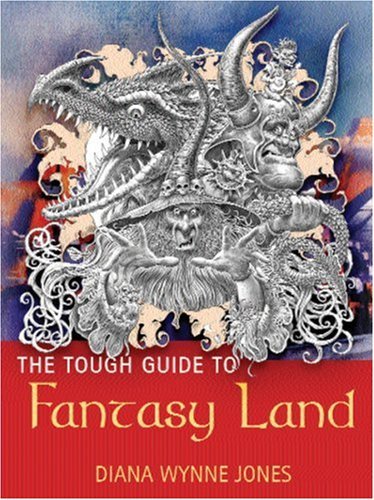 So I really did mean to take part properly in Jenny’s Diana Wynne Jones Week, but due to work and other personal (not nice) stuff I didn’t really get the chance, although reading The Tough Guide to Fantasyland certainly cheered me up no end during what turned out to be not a great couple of days
So, to the book, and it does what it says on the cover: provides budding participants in the Tour through Fantasyland with everything they will need to know to navigate their way through the whole Quest thing.
Because on a quest is what they will surely be (and that is so ungrammatical, but I don’t care).
It is also extremely funny. You can probably enjoy this if you’ve read little fantasy, but it is so much more fun if you’ve read a lot, and gosh I seem to have done that over the years.
So all the familiar stuff is here – there is a Map (wouldn’t be fantasy without a Map), the details about your companions on the quest, whole chunks explaining magic, and the important topic of catering, which basically comes down to eating a lot of stew.
 And also why there are no longer many vampires in fantasy; they’ve been enticed away to the Horror Tour where they get better pay and conditions.
One of my favourite entries was the description of a fairly regular companion-type, the Female Mercenary, who has been inspired by her unpleasant past to become a mercenary and is good in a fight. She conforms to a certain physical type (tall, thin, wiry, silent) and is neurotic. And for the detail:
You can rely on her absolutely in a fight. She can usually kill two people at once while guarding your back in between. The rest of the time she will irritate you with lots of punctilious weapons cleaning and a perpetual insistence that a proper watch be kept. […] You will end up grudgingly admiring her.
Made me laugh out loud anyway. And the rest of the book is just like this.
I may never be able to read fantasy in the same way again, and that’s not necessarily a bad thing.
 The God of the Hive is the long-awaited (by me at least) sequel to The Language of Bees which I reviewed here last year. Having to wait 12 months to find out what happens next has been a tiny wee bit frustrating. But it has been worth the wait.
Again it’s difficult to talk about the plot of this novel because it runs on immediately from the events of its predecessor, and by that I mean within minutes of the end rather than weeks or months afterwards. And I don’t want to give anything away. Suffice to say that Sherlock and Russell are separated for much of the book, on the run, hiding from the powerful and menacing group who have killed several people already, trying to get to the bottom of what was going on.
So all I can say is that it’s pacy and exciting and all the great characters appear and some new ones are introduced and all the disguises and skulking about and action is all included, so thoroughly enjoyable and devoured in a couple of days. The only downside was that the Book God had read this first and kept on offering to give me pointers to the way the plot would develop in an annoying fashion which has been noted in the future. He won’t get the chance to do that to me next time.
So if you are already a fan of the Russell novels you will find a lot to enjoy here, but you really need to read The Language of Bees first as otherwise it just won’t make sense.
 Laurie Colwin’s Family Happiness is the second book in my planned summer of re-reading.
First read in November 1985 (which is incredibly scary) this is my fourth time of reading it and the second of the two copies I have. It’s another firm favourite and has been a great pleasure to revisit. Why so good? Well….
Polly Demarest is a happily married mother of two from what in anyone’s book would be a very privileged and wealthy Jewish family in New York. Her father is a lawyer, as is one of her brothers and her husband. She is the only daughter and there are expectations on her to be sensible, practical, reliable and basically the rock of her family. But Polly has something missing from her life that she didn’t realise until she met, fell in love and embarked on a relationship with an artist, Lincoln Bennett. If the novel is about anything then it’s Polly’s self-growth.
And writing that down I wonder why I ever picked this up as superficially it’s not something that would attract me (although I suppose I do have bit of a thing for family sagas). But pick it up I did and I fell in love with it, because:
- it’s just so beautifully written – there is a real lightness of touch which makes it a joy to read
- I adore Polly, I think she’s a wonderfully complex character, trying to be a good person and slowly realising that her family just takes advantage of her without really seeing her as an individual
- her relationships with her husband, Henry, and with Lincoln are believable and complicated; she clearly loves them both but in different ways
- her family are gloriously eccentric but not monsters – I enjoyed Paul and Beate particularly (but would definitely not want to be related to them)
- it shows that nice people can get in a pickle too
I don’t normally quote from the books I read, especially novels, but there are a couple of passages that I love:
Family life is deflective: it gives everybody something to do. It absorbs sadness and sops up loneliness. It provides work, company, and entertainment. It makes tasks for idle hands and allows an anxious spirit to hide in its capacious bosom.
and
It was surely not right to feel this happy, but it was also undeniable. the air outside was smoky with spring rain. The street was gray. The warehouses across the street were wet. Polly put down her cup. The pure feelings one had in adult life were complicated and mitigated, and they were dearly paid for, but worth everything they cost.
This was the first Laurie Colwin novel that I read, and I quickly sought out the others as well as her short story collections and the two books she wrote on cooking. Sadly she died in 1992 so there are no new works to discover, but what she did produce in her career is in my mind absolutely wonderful, and worth seeking out.
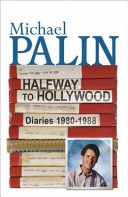 The second volume of Michael Palin’s diaries to be published (see what I thought about volume 1 here) Halfway to Hollywood covers the bulk of the 1980s, when Monty Python made their last film together as a group, when Palin himself made several films of note (including one of my favourites, Brazil) and ends with him embarking on the series which would see him become a household name in a very different way from before, when he started the trip that would become Around the World in Eighty Days.
I’m a sucker for reading other people’s diaries and letters not just for the insight it gives into their careers (and there’s a lot here for anyone interested in Python history and in the UK and US film industries at the time) but also to wonder what’s been left out. Because clearly there has to inevitably have been some heavy editing, and though he is quite candid about his feelings over his sister’s suicide in some of the entries you wonder what wasn’t said, or was recorded but not included. And no matter how hard any diarist tries to be honest, anyone who keeps a journal knows that it’s all about how you feel at the time you write a particular entry, that sometimes you don’t record some of the difficult stuff at all (unless you are very disciplined) and that you can’t help but try to present yourself at your best, because someone is going to read it after you’re gone, even if it’s only your very nearest and dearest.
But perhaps that’s just me.
Anyway, Michael Palin has always been one of my absolute favourites so I enjoyed reading his thoughts very much, and look forward to a third volume at some point (fingers crossed).


 Bride of the Book God