You are currently browsing the category archive for the ‘Reviews’ category.
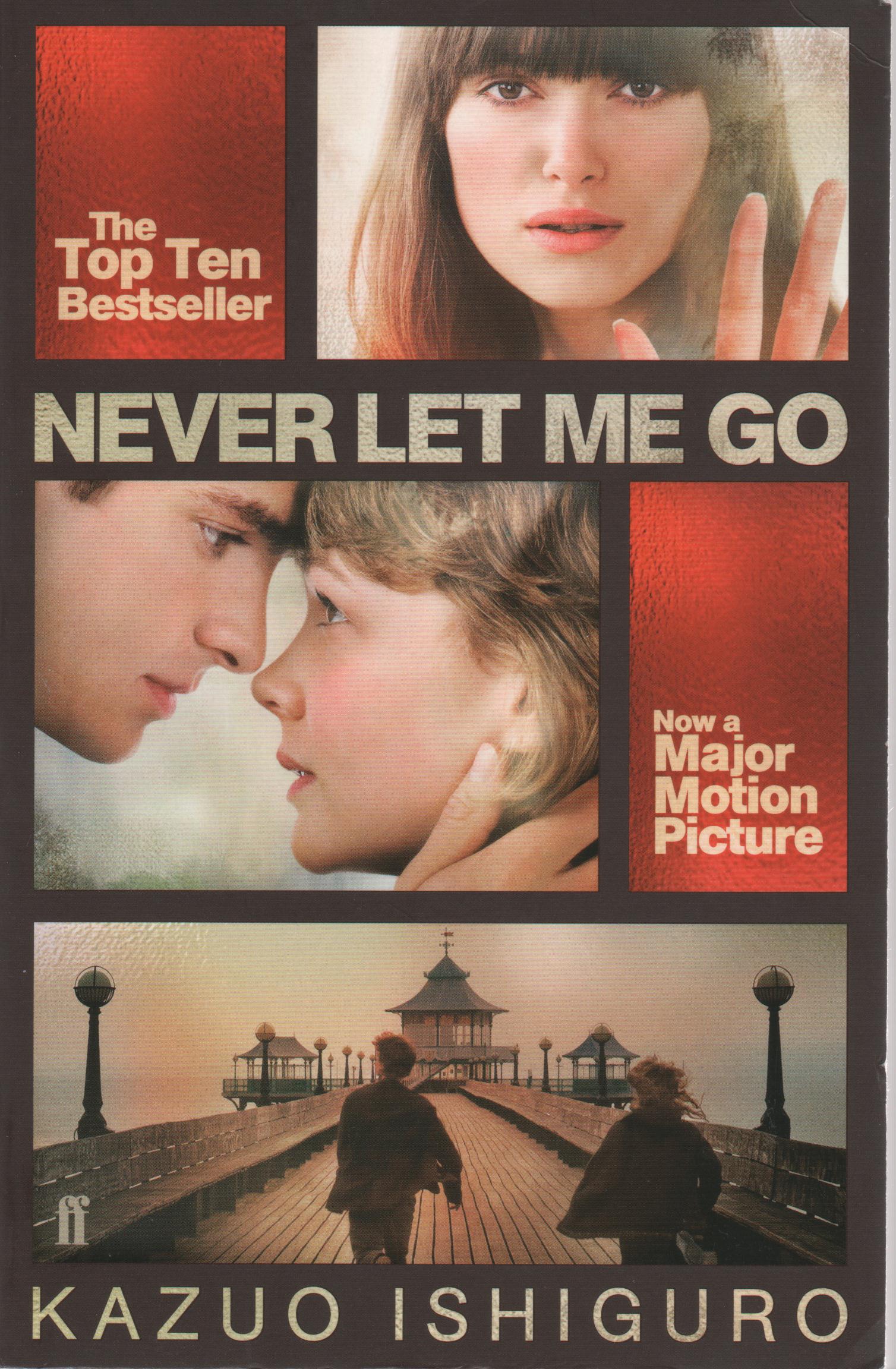 So I am clearly the last person in the universe to have read this novel but I don’t care, sometimes it’s good to come at these things when everyone else has had their say and the initial fuss has died down, though I guess the film version had interest flaring up a bit and I must admit that it was the movie adaptation that got me thinking that I should probably have a go at this.
And breathe.
So this is the story of Kathy, Ruth and Tommy and their special upbringing at Hailsham and how they find out what that really means. The story is told looking back by Kathy, who can probably be argued is an unreliable narrator but I’m not so sure that is the case here; we all look at the past from our own perspective and try as hard as we might we can’t help make others look worse and ourselves look better even while we think we don’t. I won’t say much more about the plot (such as it is) because you are either one of the few people still not to have read it in which case I don’t want to spoil it, or you have read it so you already know.
I rather like Ishiguro, though I’ve probably only read his first three novels, Remains of the Day being a special favourite. I know that he isn’t everyone’s cup of tea; the Book God hasn’t had a go, and Silvery Dude found The Unconsoled so frustrating that he claims to have thrown it across the room. I’m not sure I can say that I enjoyed this one as the subject matter is such that enjoyment might not actually be possible, but it was a real reading experience and I did want to find out how things would work out for them all.
I found it terribly sad, I have to say, and it’s a sadness that has lingered with me several days after I finished the book. Thinking about what it must be like to effectively have no past and no real future except the one that is created for you, and no control over your destiny, just unbearable.
I always find it interesting when a mainstream author wanders into sci-fi, though I get the impression that Ishiguro wasn’t really interested in the detail of the world he created, seeing it presumably as just a useful backdrop against which to examine his themes. And that’s my only quibble with the book; as a lover of sci-fi I had loads and loads of things I wanted to know about this world, about donations and completion and how it all worked and what actually happened, which in the novel is unsatisfyingly vague.
But I’m glad I read it and as I said, it really stuck with me
(still thinking about it now…)
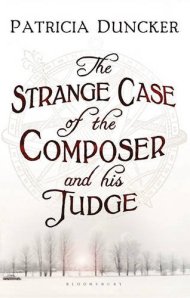 The Strange Case of the Composer and his Judge is the first Patricia Duncker book I have read, though I do have another novel and a book of short stories somewhere in the stacks, and I got a hold of this one via the good offices of the very nice people at Bloomsbury ages ago. So something I meant to read and review a while back but the Curse of the Slump took hold, and here we are months and months later finally getting around to reading it.
So, it’s New Year’s Day 2000 and hunters in the Jura region of France find bodies lying in the snow, the result of what appears to be a mass suicide by a cult, not the first time this particular group, The Faith, has done something like this. The investigating judge, Dominique Carpentier, a specialist in religious sects both real and fake, is determined to get to the bottom of this though in some ways, apart from the tragic deaths of the children, it isn’t clear whether any crime has been committed. In pursuing this, Dominique comes across the composer Friedrich Grosz who knows more than he at first lets on. And a battle of wills gets underway.
I absolutely fell in love with Dominique, a woman of intellect and strong convictions, and at first it seems strange when she falls under the spell of Grosz, but he is also a fascinating and powerful character and I could absolutely see why she might be drawn to him.
This is a hugely enjoyable and clever (in the right way) novel which I found difficult to put down. The sense of place is very strong, especially when we are on Dominique’s home turf, and the mixture of religious belief, astronomy and music is very seductive. I wished the ending had been different but it absolutely made sense.
Beautifully written and very enjoyable, I’ve been recommending it to the Book God and Silvery Dude and frankly anyone else who will listen to see what they might think of it. No takers as yet, though.
For another perspective on this book you should visit Paul Magr’s blog where he talks through his reaction.
 So Moon Over Soho is the second in a series of books which began with Rivers of London which I reviewed here earlier this year, and is more of the same; but fear not because that is a very, very good thing indeed.
Peter Grant is still in training as a wizard in a very special police unit in London. The repercussions on his friends and colleagues from the first story are still being felt, and because his rather wonderful boss, Thomas Nightingale, is still recovering, Peter is left a little more to his own devices.
The story kicks off when he is called to view a body which seems to be giving off a faint whiff of music, specifically jazz, which is one of Peter’s specialities because his Dad was a well-known jazz musician who hasn’t played for a while because of drugs and other things. So we are off on a trail of musicians meeting violent ends after gigs, “jazz vampires”, horrible experiments and a faceless wizard of some power. Along the way we also finds out a little more of the background to wizards in England and a tiny bit more about what exactly happened at Etterberg during the war.
Silvery Dude and I talked about doing a read-a-long as we had both enjoyed the first novel so much but a combination of my reading slump and him taking the book on holiday with him meant that he read it first (curses) but was good enough not to spoil it, just looking on indulgently when I said how much I had enjoyed it. Which I did, of course.
I’m really looking forward to the third volume to see how the wee surprise at the end develops, and had hoped that it would be out later this year but Amazon seems to be indicating that the next tale won’t be published until next spring so I’m just going to have to wait.
Was never very good at that.
But this comes highly recommended, though better to have read Rivers first.
 I think my reading slump might just be over, and this is the book that sorted it all out. All it took was a fast-paced sci-fi thriller with zombies which I couldn’t put down to remind me how much fun books actually are and get me out of my rut.
So, this is the story of Georgia Mason and her brother Shaun, bloggers in a world where zombies are very real. Twenty years before (the book is set in 2034, so a near future thriller) the release of two viral based cures for cancer and the common cold combined to create something new and horrible which leads to the dead becoming undead in that zombie way. This infection has changed the whole world; for example, any animal weighing more than about 40lbs will convert so people don’t really have pets, livestock is very carefully controlled (although for some not controlled enough), there are no-go areas and travel is a dangerous business unless you are properly equipped.
The way the media reacted (or rather didn’t react) to the initial outbreak has led to suspicion and distrust, so new ways of getting stories out to people through accredited blogs have sprung up. And that’s where Georgia, Shaun and their colleague Buffy come in; their big break is to be selected to cover the presidential campaign of Senator Peter Ryman.
And that’s what makes this a bit different from your run-of-the-mill zombie horror story. Because the zombies and the infection and the changes to everyone’s way of life are in the background, and this is really a thriller about political campaigning, dirty tricks, conspiracy theories and the fight for the country’s direction. It just so happens that because of the zombie thing the stakes are much higher and more (un)deadly.
I loved this; just couldn’t put it down. It helps that I could visualise this as a sort of West Wing with ghouls and I did play “cast the movie” while I was reading it but it is genuinely gripping and I really wanted to know who was behind the awful things that were happening. And it also helped that I really, really liked Georgia.
The structure of the book really helps things move along too; punchy chapters interspersed with extracts from the various blog reports being posted by Georgia and her team. And in places it is genuinely moving.
So don’t let the zombies put you off, this might give you nightmares but they’re likely to be more about what politicians are willing to do to get power rather than how best to despatch the not-dead.
Looking forward to reading the sequel as soon as I can get my hands on it.
 This really is a mini-review because I actually finished this book back in June and meant to write my review nearer the time when I believed I would remember what bits I wanted to quote and what anecdotes I wanted to use but here we are, last week in July and all such useful information has been knocked out of my head by stuff.
This is a memoir of sorts by a British comedian about the year he turned 40 and how he goes a bit off the rails; a sort of diary of how it worked all out. I think Richard Herring is a very funny man, and this book just reinforces that view. He’s not to everyone’s taste (who is?) but this made me laugh out loud several times and that’s worth the cover price in my book. And it has a happy ending!
 Many of you will know that my admiration for Joyce Carol Oates is deeply held and long-standing; I buy (almost) everything she publishes and particularly look out for anything non-fictional which might give an insight into one of the most remarkable authors in terms of quality and productivity. I know I’m gushing a bit but I really do think she’s fabulous. Which is why I was really looking forward (if that’s the word) to her memoir of widowhood. I knew that her husband of many years had died suddenly and was intrigued that she had decided to write about something so personal so soon after the event.
Now, widowhood is one of those things that flutters about in the back of my mind from time to time; the Book God is eleven years older than me and statistically more likely to die before I do so I have occasionally had thoughts about what being a widow would be like (not pleasant), something that has happened more frequently recently as the Book God gets ready to retire at the beginning of June. So reading A Widow’s Story was a mixture of wanting to know something about one of my heroes plus trying to get an idea of what might be in store for me in what I hope will be the far distant future.
This book is not for everyone. JCO’s grief and pain is raw and immediate, and although the writing is as wonderful and vivid as always the content is so upsetting that I found myself only able to read in small chunks (and I can say without any doubt that this is not a book for bedtime reading), so it took me a long time to finish it and even longer to feel that I was able to write about it.
I learned that no matter how prepared you think you might be for the worst that can happen, you never actually are. I learned that even the most outwardly competent of people can fall apart inside while still keeping the show on the road. And of course, I learned that although the support of friends and family are important, the only person who can get you through something like this is yourself.
You might say that none of this is new and you are probably right, but these are things worth repeating.
So a book that is to be experienced and in my case admired rather than enjoyed, but a worthwhile reading experience.
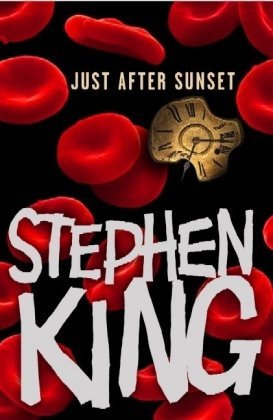 So, Just After Sunset is the second volume in my Stephen King short-stories-to-shock-you-out-of-illness mini-readathon.
This is a classic collection of thirteen or so short stories, and like all such collections a mixed bunch. The usual King themes are here – fighting back against violence, creepy cats, ghosts and revenge.
Not going to go into each story but I can tell you that my favourites were:
The Things They Left Behind – a 9/11 story
N – in the the tradition of Arthur Machen and MR James but modern day creepiness
The New York Times at Special Bargain Rates – sad
Another good collection.
 I know that I’ve said this before, but it bears repeating: I am a huge fan of Stephen King and have been for over thirty years which in one way is depressing (how can I possibly be old enough?) but is also comforting (the Bride’s brand loyalty is second to none). What I have found, though, is that despite buying his books as soon as they come out (timing is good for the Christmas list) I tend to read him in spurts. I have a bit of a backlog at the moment, but my recent illness (and I promise I will stop talking about that soon) had me heading towards two of his collections of short stories so that I could read in small chunks.
But of course I ended up devouring both of them as if they were novels (or boxes of chocolates….)
So Full Dark, No Stars is his most recent book and is a set of four novellas or at least longer short stories. They are:
1922 – domestic strife and stress leading to unforeseen and far-reaching consequences (really liked this one)
Big Driver – a revenge story following an act of dreadful violence
Fair Extension – what would you do if you were given an extension? Would you be prepared to pay the price?
A Good Marriage – you think you know the person you’re married to (to whom you are married) and then you go rummaging in the garage….
Well, I know that King isn’t to everyone’s taste because of the fact that a lot (if not most) of the violence is directed against women, but much of horror fiction is and I think his stuff works because most of his female characters are find strength and fight back. Some of the details in these stories did make me wince, but they are well written and full of suspense. And on occasion quite frightening, which is after all the point.
And as always the afterword is well-worth reading.
A good collection.
 Well, lots of things have been happening chez Bride, including preparing for an interview and getting myself properly promoted into the job that I’ve been doing for just over a year. Massively exciting and not a little stressful which is why I haven’t been reading, blogging or commenting but hopefully things will settle down now that I’ve been successful, especially now that another big decision has been made, which is that the Book God will be retiring from the wonderful world of work in the early summer.
I don’t know about you guys but when I’m going through periods of change I find it difficult to settle to read. But I have a plan; I am hoping to carve out proper time for reading every day from now on and set myself sensible goals, even if it’s just “read 20 pages of x today”.
And all I need to kickstart myself is another book as good as Rivers of London.
I have to give thanks to Silvery Dude who bought this for me as a birthday present, for two reasons really (1) it’s a cracking story and (2) it was exactly the right thing for the two days on which I succumbed to my horrible cold and sulked in my tent until I felt better. So I read this in two sittings.
Peter Grant is a probationary police constable in central London who discovers he has some interesting talents (basically he can speak to the dead) when a strange crime is committed on Covent Garden. He comes to the attention of Inspector Nightingale (who just happens to be the last wizard in England) and a whole new world opens up to him.
This is a fabulous story; a quote on the cover suggests that this is what it would be like if Harry Potter grew up and joined the police and I can understand where that’s come from but this is remarkably inventive and enjoyable in a totally different way; for a start it’s considerably more violent than HP (bit not excessively so). It’s a serial killer novel with magic and mythology. And I loved it.
For a start, most of the action takes place in Covent Garden and The Strand, both of which are close to where I work, and it was great fun to imagine the rather strange plot unfolding in such familiar surroundings. And then there’s the whole mythology of the Thames, with the rivers in human form, which I thought worked wonderfully well.
I haven’t said much about the plot, but it’s a great story of the supernatural and mythological punching through to the real world (no pun intended…)
I loved it so much that I’ve pre-ordered the sequel, and it definitely took my mind off my unwellness. You should really, really get this.
I’ve been fairly quiet recently, partly due to stressful stuff at work (more of that on another occasion perhaps) but mostly because I have had a really nasty, horrible, debilitating cold for a few weeks and am only just beginning to feel that I’m properly recovering. I managed to struggle through one review last week and that took so much out of me that I had to go and lie down in a darkened room. Or something.
When I was first developing said cold, two weeks ago today in fact, I really didn’t feel like doing very much, couldn’t settle to TV or reading anything that required huge amounts of concentration and anything with more than one syllables was definitely out of the question.
But I was bored and had to do something in between medication and naps, and decided that graphic novels were just the thing.
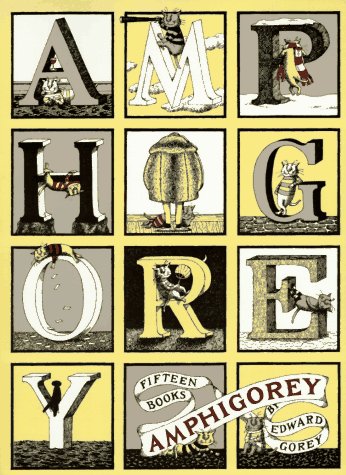
Started with Amphigorey by one of my heroes Edward Gorey. This is a collection of (I think) fifteen of Gorey’s works and was ideal because the ratio of pictures to words was high (or do I mean low – more of the former than the latter, anyway) and of course Gorey’s wonderfully gothic sensibility is just the ticket when you’re feeling a bit under the weather. Loved it as much as I knew I would.
I then moved on to The Rime of the Ancient Mariner (I actually wanted to call him the Ancient Manager, which is how I feel at the moment), and this was great fun in a very different way. The poem is one of my favourites (though over the years I’ve singularly failed to memorise it, though not for want of trying) and I have loved Hunt Emerson’s cartoons in Fortean Times which I have subscribed to for years. And the image of the albatross with a rubber-suckered arrow stuck on his head still tickles me.
So picture books good for early stages of a cold. When I actually gave in, stopped struggling in to work and flumped, I at least didn’t have a headache and could read more words I actually read more over that few days than I had in the weeks before so every cloud has a silver lining. But more of those later.


 Bride of the Book God