You are currently browsing the category archive for the ‘Reviews’ category.
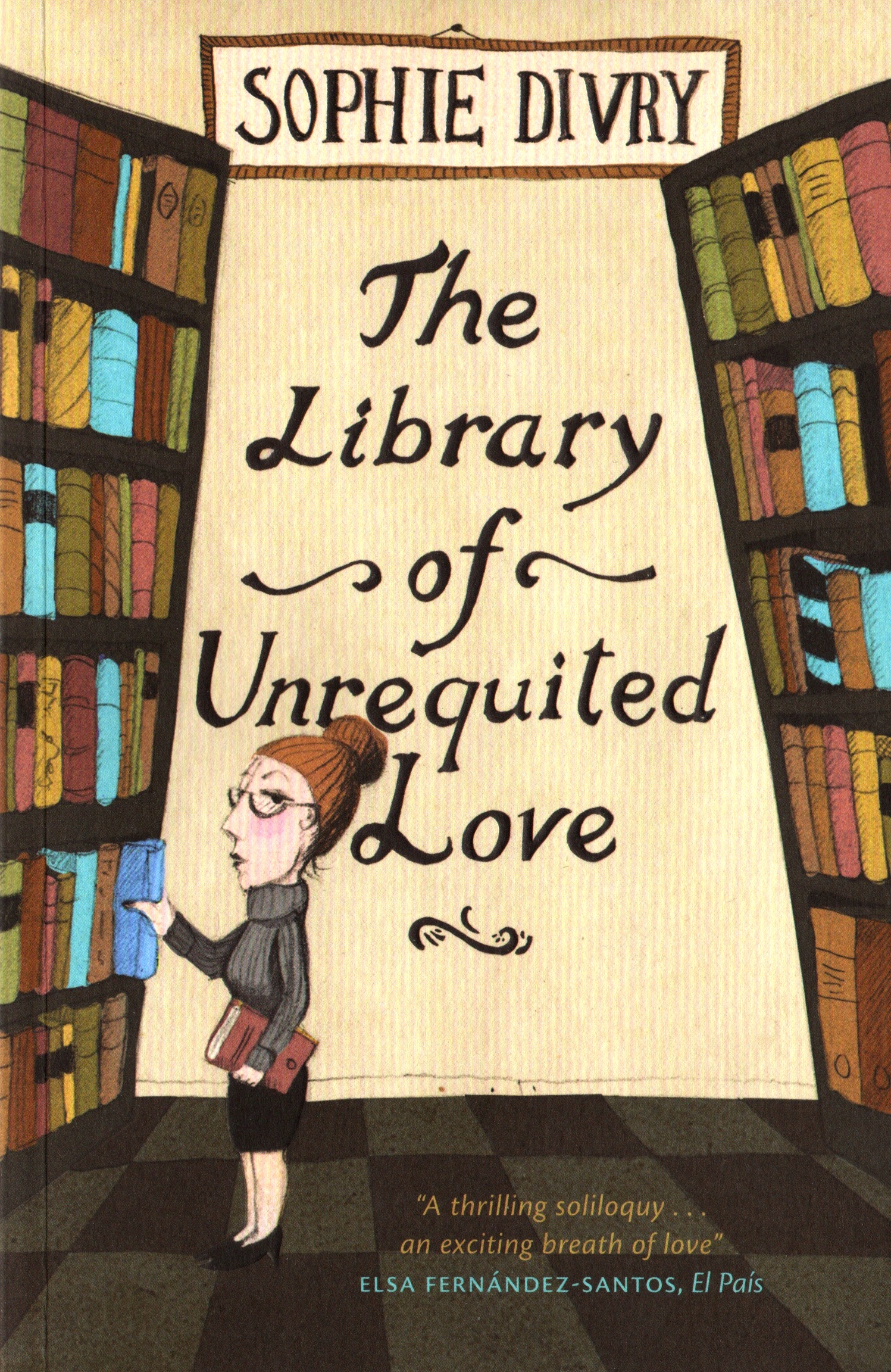 So, this is an odd little book. We are in the basement of the library where our unnamed narrator, one of the librarians, is setting up for the day and has found one of the library patrons who has managed to get himself locked in overnight (I’m pretty sure it’s a man though I can’t remember if that’s ever made explicit) and as she can’t let him out until the library is actually opened. She explains this but I’m not sure if it’s true or she just wants a captive audience for her to vent.
Because we are very much in the world of the unreliable narrator and she is going to let it all out, not just her view of her own position (disappointed in her career), her colleagues and the various strictures of librarianship but the passion she has developed for a young man called Martin who comes to the library to carry out research.
The Library of Unrequited Love is translated from the French and I’m not sure if that’s why the way in which the narrator spoke didn’t ring entirely true with me, but she certainly has a lot to say in such a small book.
 I have the feeling that she is older than Martin, not that that matters at all of course but it gave me a sense that her love would remain totally one-sided. Not sure I would like her in person but it was interesting to spend an hour in her company.
My fourth Readathon book.
 At its simplest Levels of Life is a book about loss and grief and love and sorrow. It brings together a number of disparate characters who are linked through their experience of ballooning – Nadar, an aerial photographer, Colonel Fred Burnaby, a British soldier and Sarah Bernhardt, the actress with whom it is thought Burnaby had an affair.
In considering their stories Julian Barnes also talks openly about his own grief at the loss of his wife, the absence that is in his life and his reaction to it.
You put together two things that have not been put together before. And the world is changed. People may not notice it at the time, but that doesn’t matter. The world has been changed nonetheless.
You put together two people who have not been put together before. […] Then, at some point, sooner or later, for this reason or that, one of them is taken away. And what is taken away is greater than the sum of what was there. This may not be mathematically possible; but it is emotionally possible.
This is a terribly sad book, and his emotions will be recognisable to anyone who has lost someone close to them, though the loss of a partner is not something I’ve experienced and must represent a real shift in perception of the future; the person you thought you were going to spend your whole life with is not longer there.
Deeply moving.
My third Readathon book.
 What’s it all about?
We are in Edinburgh and it is 1874. Jack comes into the world on the coldest night imaginable; his heart is frozen and Dr Madeleine, who has delivered him, has to perform an operation immediately to ensure that he lives. But she is an unusual doctor, and her response to the crisis is to surgically attach a cuckoo clock to his chest. So, clearly we are in the land of fairy tales. And all is well (more or less) until he falls in love…
Why did I want to read it?
This is one of those occasions where I was definitely attracted by the lovely cover. I bought it in Forbidden Planet on London’s Shaftesbury Avenue on a book-buying jaunt with (I think) Silvery Dude. And I’m embarrassed to say that I have had this in my possession for years, and it’s made its way on and off Once Upon a Time challenge reading lists. But this year I was determined to read it.
What did I think of it?
The Boy with the Cuckoo Clock Heart is a wonderfully dark story of love and obsession and difference and rivalry and jealousy and people doing what they think is the right thing without really considering the consequences. One to go back to, I think.
My second Readathon book, and my first completed read for OUAT VIII. (Edit – though of course it wasn’t , it was my second, duh!)

 What’s it all about?
Antony Gillingham is in the country and realising that he is not too far away from The Red House where his friend Bill Beverley is spending the weekend decides to wander over on a surprise visit, arriving just in time for a locked room mystery; the discovery of a dead body, a missing host and a soon-to-be-baffled local constabulary. And of course he decides to look into the matter himself, because that’s what you would do, wouldn’t you?
Why did I want to read this?
Recommendation from someone else’s blog (and sorry to that person, I can’t remember exactly where I saw this mentioned) plus attractive cover plus love of classic era whodunits made this irresistible.
What did I think of it?
The Red House Mystery is the only detective novel written by AA Milne, he of Winnie the Pooh fame, and the latter fact is hammered home to us several times on the cover of this book.
Far from the gentle slopes of the Hundred Acre Wood lies The Red House
[..] a lost gem from the time before Tigger [..]
and so on; you get the drift. And in some ways the harping on at Milne’s more famous creation seems to suggest the publisher is almost apologetic about this book which is a real shame as this really is a little masterpiece of detective fiction and I thoroughly enjoyed it. The lead characters are charming, the mystery is just mysterious enough and although I guessed the “twist” quite early on (which just shows that I spend far too much time watching crime shows on TV) and I had a fairly good idea of who the killer might be, I had absolutely no inkling as to the motive and none of this spoiled my enjoyment of a brisk and breezy read which was really great fun.
And as a bonus there is an introduction from Milne who outs himself as an aficionado of this type of fiction and makes very clear his likes and dislikes and that basically he wrote this novel for himself.
Such a shame that this is his only one. Really smashing, and a good start to Readathon.
 What’s it all about?
Joe Lennox is a young man in his mid-twenties, American but living in Vienna having made enough money when one of his stories was turned into a successful play that he can pursue a living as a writer and put behind him the impact of the death of his brother Ross when he was a teenager.
He meets Paul and India Tate, an American couple who fascinate him, take him under their wing and their lives become so entwined that when Joe and India start an affair it has horrible consequences for them all.
Why did I want to read it?
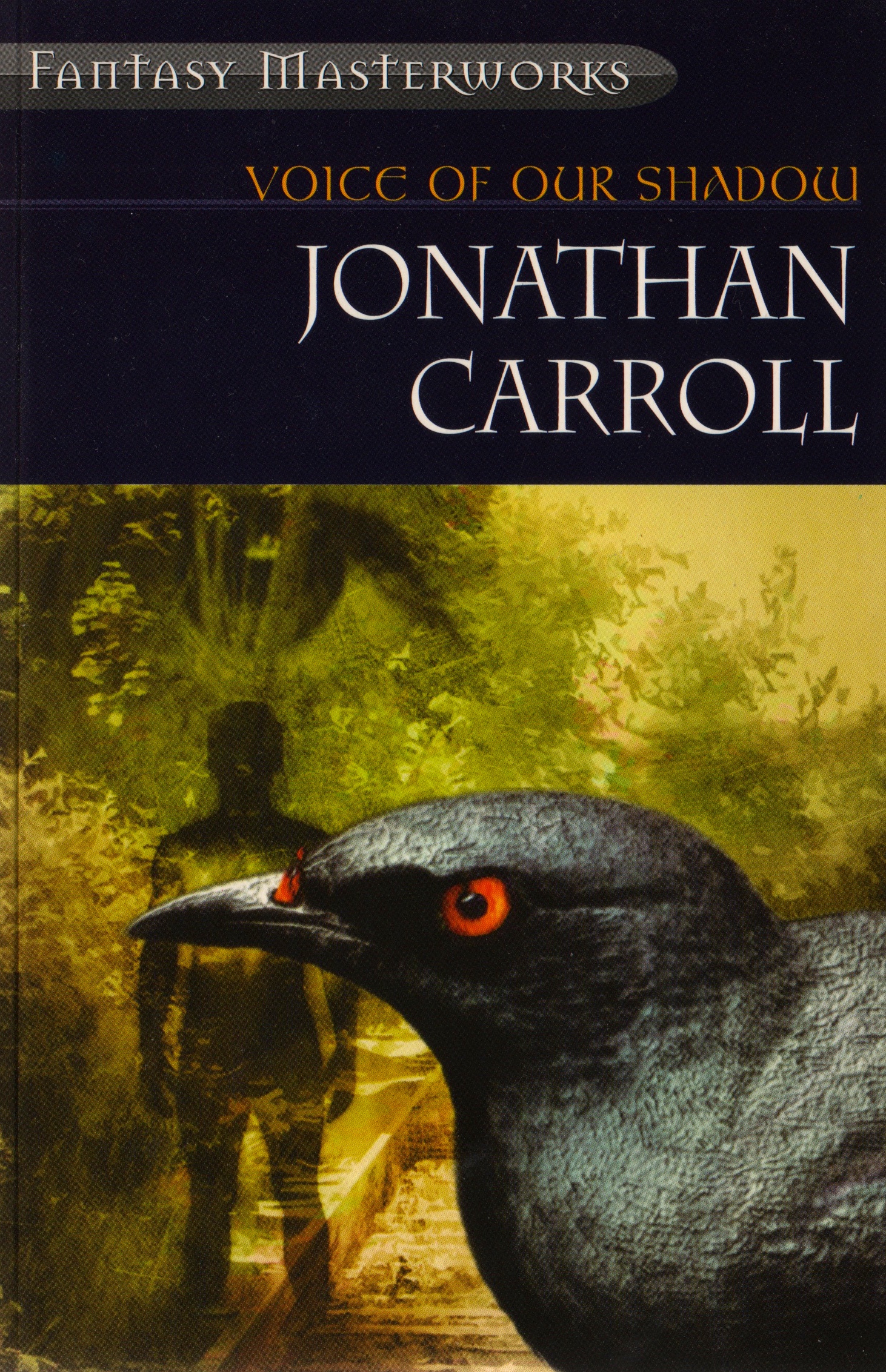
Voice of our Shadow is one of the Fantasy Masterworks series so is clearly regarded as a classic, and I enjoyed my previous foray into the word of Jonathan Carroll when I read Land of Laughs last year.
What did I think of it?
Wow, this is a weird one. I really couldn’t put it down, reading it in one day during two train journeys (London to Manchester and back again). I love Carroll’s writing style and was really absorbed in Joe’s troubles and in his love affair with India. Then the thing happens (Paul dies of a heart attack, possibly caused by finding out about the affair) and it turns into sort of a ghost story, then it moves into something even darker and ends up with one of those “really? I mean, really?” endings that has you revisiting everything you’ve read to that point. I can see why this would turn people against the novel because it is a bit of a jolt, and up until the aftermath of Paul’s death I wasn’t even sure this was fantasy at all but it gets very very strange very quickly indeed. And although it clearly has elements of horror I didn’t really find it scary.
I’m not entirely sure about the ending, it is so bizarre and abrupt and I’m honestly not entirely sure what the implications of the twist actually are, but it doesn’t diminish in any way the enjoyment I had in reading it, and I certainly want to read more of Carroll’s work.
An odd start to my reading for Carl’s Once Upon a Time Challenge.
 What’s it all about?
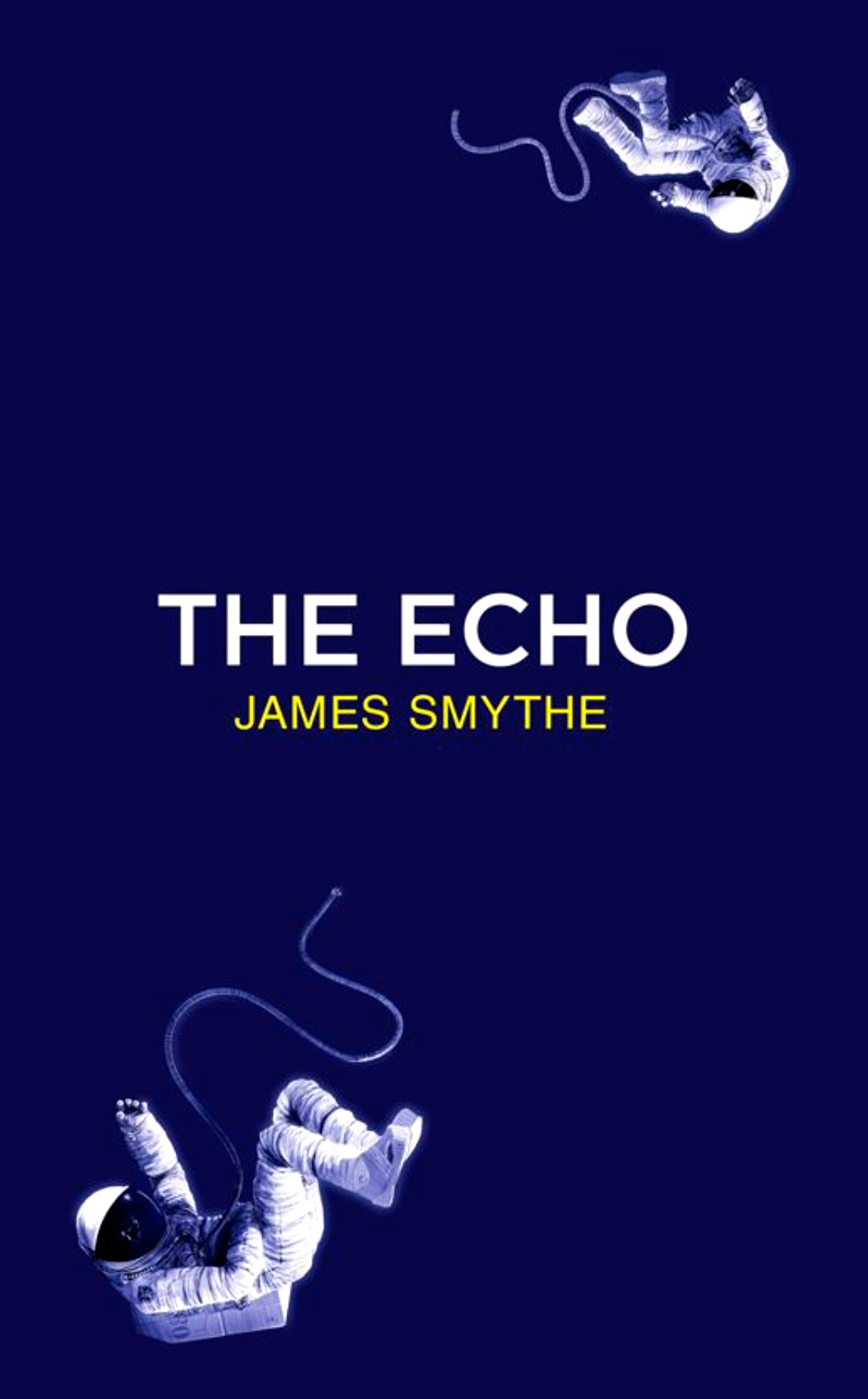
The Echo is the sequel to The Explorer which I reviewed here not 24 hours or so ago. It is Book Two of the Anomaly Quartet (which means hurrah! two more to look forward to but rats! no idea so far of when they will be published) and picks up the story two decades after the ill-fated (I think we can safely use that phrase) Ishiguro disappeared.
We are onboard the Lara with Mira (short for Mirakel as he was an unexpected second baby) who is the mastermind behind the expedition along with his older twin Tomas. The latter is on the ground playing an active part from a distance as an international crew heads off to investigate the Anomaly and find out what went wrong with the Ishiguro and what happened to its crew.
Of course we know what happened and can anticipate that things will probably not end well. And we are quite correct in that assumption.
Why did I want to read it?
If you read my review of the first book then you will know that there was no way I wasn’t going pick this up. Will there be answers or more of the same?
What did I think of it?
In some ways this is very similar to The Explorer, in that we have first person narrative, a crew with issues, the claustrophobia of being in space and a sense of the unknown. But that is a strength rather than a weakness; the characters of Mira and Cormac are sufficiently different to keep your attention and the central mystery of what the Anomaly is and how it “works” is to me at least fascinating. Paranoia is much more evident with this bunch than the crew of the Ishiguro and there is death and destruction as you might expect but I won’t go too much into the plot except to say that it both repeats and expands on the themes raised and stuff that happened in its predecessor.
If The Explorer was 2001 then The Echo is 2010 (one of my all-time favourite films, I love it so).
Worth noting that I read this in a single sitting on the same day I finished The Echo, which should tell you something.
Can’t wait for the next in the series, I really want to see how this all plays out. Recommended BUT needs to be read in sequence to maintain its power.
 What’s it all about?
The Explorer tells the story of Cormac Easton, a journalist who has been selected to take part in a major piece of space exploration, the only civilian in a crew of specialists on the good ship Ishiguro, though I suppose he’s a specialist in his own way as his job is to document the journey, interview the crew, put a human face on an expedition that’s partly designed to re-start humankind’s adventures in space after an earlier disaster and partly to investigate a phenomenon known only as the Anomaly.
Of course Things Do Not Go According To Plan, and it’s clear that there are deaths among the crew from the very beginning of the trip. But what’s going on?
Why did I want to read it?
I absolutely love sci-fi so this was always going to be of interest, but I would have missed this title if Simon at Savidge Reads hadn’t written an intriguing review, and of course once I’d read that I had to get the thing, didn’t I?
What did I think about it?
I absolutely loved this! It’s relatively short novel and I read it in two sittings which included staying up until 2am on a Sunday morning so that I could finish it. I was so desperate to find out what had happened to Cormac’s crewmates and of course what was going to happen to him; would he survive and if so how?
I sometimes find first person narratives difficult but the central idea in this story, the thing that happens in the middle when you think you’ve got it figured out and then suddenly WTF? was so engrossing that I didn’t experience my usual qualms.
I don’t want to talk too much about the plot; as mentioned above there is the Thing That Happens which for me turned the story around and it’s worth experiencing that for yourself. In terms of tone (first person storytelling, expedition gone wrong, something not quite right with the whole set-up) it made me think of The Annihilation which I also devoured earlier this year, and which, like The Explorer, is the first in a planned series.
I also thought afterwards about 2001; there are some similarities in that it’s an expedition going off to investigate something and it all goes wrong, but there is no HAL here, this is all (mostly) people stuff and it’s the relationships in a confined space that really push this along.
I loved it so much that apart from losing sleep to finish it I bought a copy for Silvery Dude (it’s the sort of book you want to share with people you know will appreciate it) AND discovered that the sequel had already been published so that was downloaded swiftly, but more of that anon.
If you love sic-fi I’m sure you’ll enjoy this, and even if you don’t it’s a very effective creepy thriller and well worth giving a shot.
 What’s The Bleeding Heart all about?
The resolution of the Peculiar Crime Unit’s relationship with Oscar Kasavian which took place in the previous volume (reviewed here) means a new home for the team (now under the auspices of the City of London police) and a super duper new liaison person who has a great line in management-speak, the sort of thing that has you banging your head on the desk (or is that just me).
While they all try to work out exactly how (or even if) they’re going to get along under the new arrangements they have two cases to deal with; a man who may (or may not) have risen from his (recent) grave and the disappearance of the ravens from the Tower of London.
Why did I want to read it?
I’ve said it before but its worth repeating, this is one of the most consistently enjoyable series of books I’ve had the pleasure to read. Sadly it looks like this may be the penultimate Bryant & May story (at least in novel form) which will be a real shame.
What did I think of it?
As always I really enjoyed this. I read a chunk of it during a bout of insomnia and it was great fun to read about someone apparently climbing out of their grave while I was sitting in the relative dark in the wee small hours of the morning, quite creepy. The two story threads aren’t really connected apart from the involvement of Bryant but one of the great pleasures of these books is seeing the development of all of the characters and the new dynamic means that all of them are taking stock in one way or another.
And of course I learned fascinating stuff about London along the way. Bleeding Heart Yard is another one of those places that I walk past regularly on my way from my office on Kingsway to London Wall where Silvery Dude works and next time I’m heading that way I really will make a detour to have a look. St. George’s Gardens, where the rising takes place, is also close by and I’m sure is on my preferred route to St Pancras where I occasionally meet friends for drinks, and made me think a little bit of Postman’s Park which is a shortcut I often take and well worth a visit, though less extensive I think.
I was also interested to find out that the whole legend of the ravens and what may happen to the nation if they disappear is a relatively modern invention.
So, really enjoyable and what do I have to do to get you lot to read these if you haven’t started already?
Postscript: and the Book God reminded me that we have a copy of Andrew Taylor’s Bleeding Heart Square which is set in the same area so that’s now been pulled out of the stacks to be read shortly. I like making these connections!
And this is my 600th post on the blog which is very cool and mildly astonishing! Glad to be marking it with a favourite author.
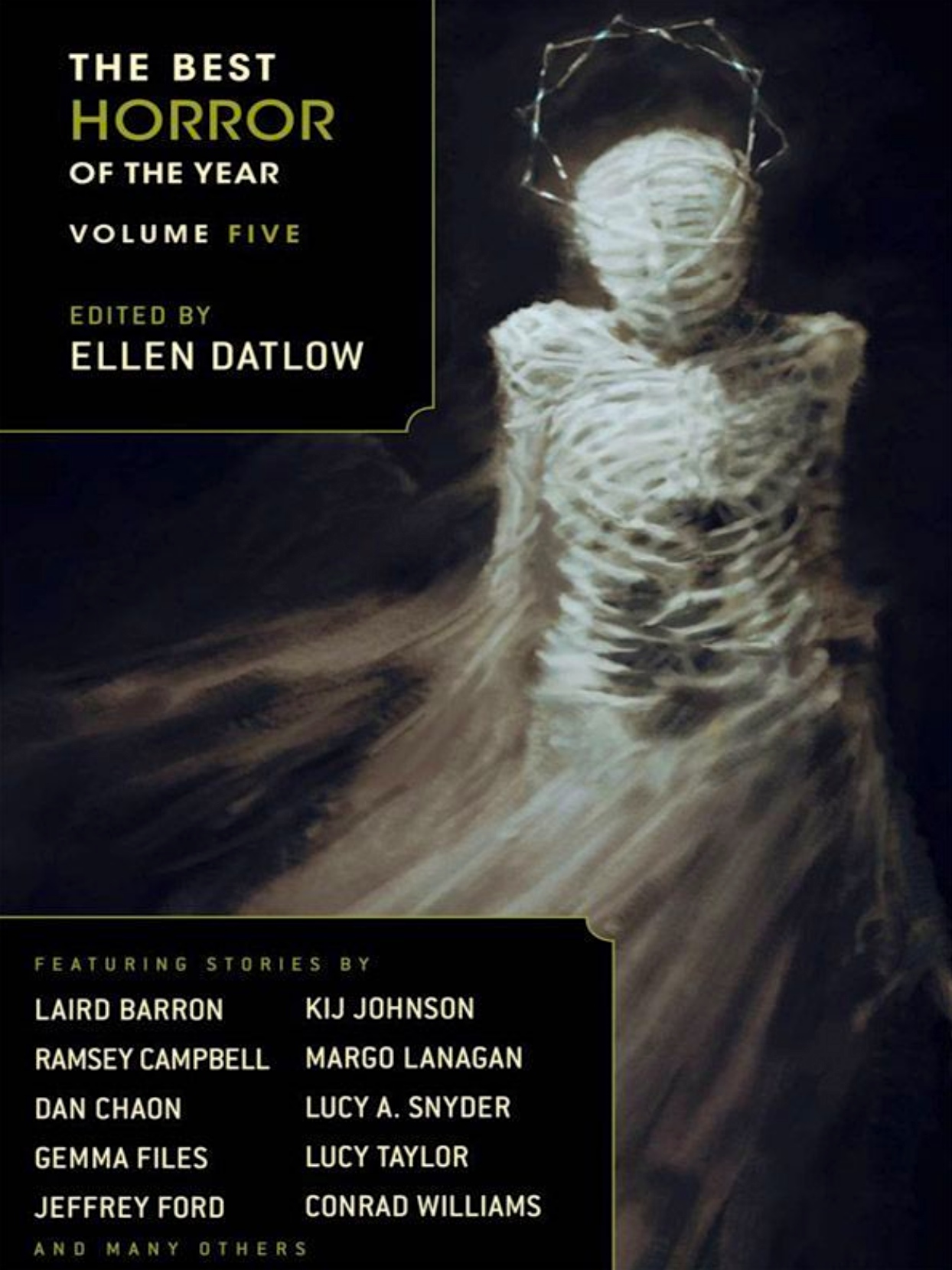 All as before, this is the fifth volume of the best horror stories as selected by Ellen Datlow for the year 2012; my review of the previous volume is here.
I found this collection a little more difficult to get into than volume 4 (my thoughts on that are here), and really questioned whether some of the stories were actually horror but I may just have a very traditional, some would say old-fashioned) view of the genre.
For me the stories that stuck with me were:
- Frontier Death Song by Laird Barron – a modern twist on the ancient tales of The Hunt
- Magdala Amygdala by Lucy A Snyder – looks like it’s going to be zombies (again) oh, but what’s this?
- Final Exam by Megan Arkenberg – really liked the structure of this one
- Some Pictures in an Album by Gary McMahon – very dark
- The House on Ashley Avenue – nice twist on a haunted house story
So not quite as satisfying as the previous volume but still worth a read.
A contribution to the 2014 Horror Reading Challenge.
 What’s it all about?
The world has been overrun by zombies (again) but at least one of them, known to us only as R because he has no memory of his name or age or anything including how he came to be a zombie, is not quite what he seems. And one day when hunting he sees Julie, a live human, and instead of eating her he decides to save her, triggering a whole set of events that could change the world.
Why did I want to read this?
Warm Bodies received a strong recommendation from Silvery Dude who apparently read it in one sitting and is hardly ever wrong when it comes to suggesting things that I might enjoy. Plus I’m coming around to the whole zombie thing (though so far nothing touches World War Z which I loved).
What did I think?
A different take on the whole zombie thing. Yes, in some ways its the same old same old (Zombie plague overrunning the world? Breakdown of civilisation as we know it? Rise of the military?) but it’s interesting to see it from the non-human side for a change, what it might feel like to be a zombie, all that jazz.
I liked R and his friend M and of course the lovely Julie very much, the love story was sweet and convincing but at one point I became so anxious about their situation and how it was going to work out for them that I had to stop reading for a bit. I don’t think I have ever wanted a happy ending quite so much. Very enjoyable indeed.
Now for the movie.


 Bride of the Book God