
You are currently browsing the category archive for the ‘Reviews’ category.
 What’s the book about?
Mr Mercedes is a proper crime thriller from the pen of the great master of horror Stephen King. It starts with a retired police detective, Bill Hodges, who is in a bit of a state, without any purpose in life now that he is no longer serving. He gets a letter from the perpetrator of one of the cases he never solved, that of a number of people killed when a Mercedes was driven into a queue of unemployed people outside a job fair. The letter is taunting Bill with his failure, but instead o driving him to suicide it gives him a new lease of life and he is determined to track the killer down.
Why did I want to read it?
King is one of my favourite authors, I’ve reviewed a number of his book on this blog and have been reading him since I was 15 (but I’m not going to labour the point – I just think he’s great). He’s often underrated as a writer because his preferred genre is seen as horror although I’ve always been clear in my own mind that he has drifted into other genres at various points in his career. I will admit that I pre-ordered the automatically before I knew what it was actually about but was excited about trying something a little bit different.
What did I think?
This was really I had a great time reading this. I’ve always been quickly drawn in by King’s prose style which is deceptively easy to read but has real pace and verve. I liked the structure of the book; we find out extremely early on who Mr Mercedes actually is and the book alternates between him and Bill as the former’s plans careen out of control and the latter works with some unlikely helpers to track the killer down. There are a couple of points where King tries to lead us a little bit astray which I found great fun. I liked Bill very much; I was sorry that one of the plot strands didn’t work out for him at the same time that I could see why it obviously couldn’t (speaking us someone still bearing the scars of ‘Salem’s Lot many years afterwards) but it’s a crime thriller so there is peril and racing against time and a satisfactory resolution. Spent time between reading sessions trying to cast the movie. Brilliant stuff.
 What’s the book about?
Beth is a teacher living on the Isle of Wight (though we’re not told that for a while) in a slightly future Britain where climate change has had a real impact socially and financially. She is on her own; her husband Vic has come back from war with significant problems and has been the victim of a treatment regime which has gone wrong, leaving him unable to communicate or look after himself. The treatment is delivered by The Machine, now out of use because of the damage done, and the story starts with her buying one of these devices on the black market because she wants to bring her husband back be reversing the treatment if she can.
Why did I want to read it?
I’ve read two of Smythe’s novels this year (reviewed here and here) and found both really compelling (if bleak, though I absolutely don’t mind bleak at all if the story warrants it, which both of those did) and always intended to read more, partly because of the number of favourable mentions I’ve seen on other blogs and elsewhere.
What did I think?
I thought this was great, another book that I stayed up late to finish (there have been quite a few of those recently, which is no bad thing) and I was totally absorbed in Beth’s story; I feel it’s important to stress that this really is Beth’s story. Of course Vic is important, there would be no book without him, but this is all about Beth’s loneliness and grief and drive to achieve what she needs, which is to get her husband home despite any risks. This is all against the background of the heat and a dysfunctional community and a friend who turns out to not be what she seems.
The book has been compared to Frankenstein but for me it has more of a resonance with The Monkey’s Paw, in the sense of getting what you wish for and that not being what you thought. Of course there are other layers to this story which, once you have read the end (and I read it twice just to make sure that what had happened had happened) become clearer and explained a key event which was pivotal to the plot but took place “offstage” (I wondered why at the time and came up with an explanation which turned out to be entirely wrong). The end has been much commented on; I don’t have a problem with it as such but I would like to read The Machine again as I’m sure it has made me want to re-read the book to see if I had missed anything obvious.
How you feel about this book will depend on what you think of Beth herself. I felt hugely sorry for her and understood why she thought she had to try to reconstitute Vic but there was always a feeling this wouldn’t end well.
I’ve already got a hold of another Smythe work, saving that for later 🙂
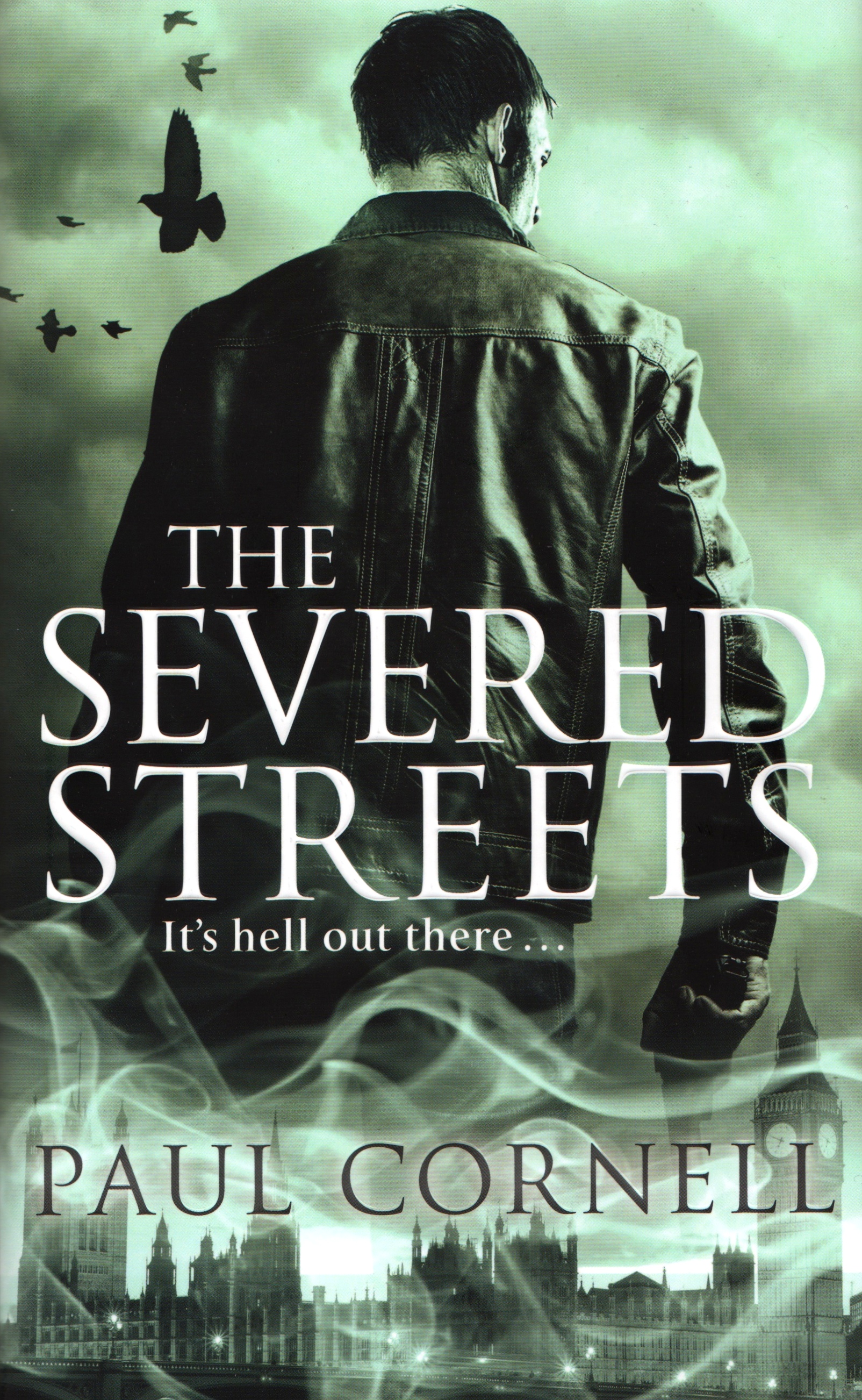 What’s the book about?
So, The Severed Streets is a sequel to London Falling which I read and enjoyed last year (you can find my thoughts about it here), though it’s a sequel in the sense of using the same characters and advancing their story arc with a standalone story.
It’s London, it’s summer and there are protests and riots with masked mobs blocking the streets and causing chaos. An MP is being driven in his official car when he is surrounded by one of these mobs and as a result is brutally murdered. But there is something odd; how did the killer get in (and out of ) the car without being spotted. And is what the driver saw really believable?
Enter Quill and his team who are still feeling their way around their new ability of second sight, and who are clear that something out of this world is involved in the death. And the others that follow. So they go into the underground community to find out what they can alongside good old-fashioned policing methods.
Why did I want to read it?
I really enjoy the whole urban fantasy genre (which I think this fits into but I’m sure someone will correct me if I’m wrong) and this series sits nicely alongside Fowler and Aaronovitch, and regular readers will know how much I love them. I really wanted to see how the team would develop and deal with the personal issues arising from the first book.
What did I think?
I read the final two-thirds of the novel during one of my many recent bouts of insomnia and it is meant as a real compliment when I say that I was so engrossed I actually forgot I was tired. I liked the way the characters developed, still the people we met in the first book but obviously changed by their experiences and trying to find a way to use their new abilities without any help or guidance. I though the story itself was very enjoyable and timely given recent events on which I won’t elaborate as I don’t want to get into the plot too much.
I particularly enjoyed the Neil Gaiman cameo; in other hands it might not have worked but he is properly integrated into the story (a bit more than I expected actually and in a very interesting and unexpected way). I liked the resolution and the introduction of new elements and characters which I hope will continue into future volumes. Quill is a great protagonist and it’s really nice to see a detective with what appears to be a happy home life.
New readers could start here but I would recommend reading them in order. I really enjoyed this and I’m looking forward to the next one.
I have a mild (OK, not that mild) interest with fashion and jewellery and over the past month I’ve had some major issues with insomnia – just one of those things but deeply annoying at the time. You may wonder why these two things are connected, so let me explain…..
One of my tactics is to not lie there feeling sorry for myself, willing myself to go to sleep etc., but to get up and do something to take my mind off the sleeplessness. Sometimes that means watching TV, sometimes reading fiction, but often dipping into what are sometimes described as coffee-table books. And these are my two most recent, all about QEII.
Dressing the Queen: The Jubilee Wardrobe by Angela Kelly
 Angela Kelly is a designer and Personal Assistant, Adviser and Curator to the Queen, and this book takes us through the steps involved in creating the dazzling suite of outfits that the Queen wore during the Diamond Jubilee and it is totally fascinating. Fabulous pictures in full colour, covering everything from fabric to storage to packing to hats and umbrellas, shawls and accessories. It’s quite a light book, not at all academic but nice and gossipy without being indiscreet. It is entirely responsible for my new obsession of spotting the hat pin(s) whenever I see a photo of the Queen.
The Queen’s Diamonds by Hugh Roberts
 I still feel a little bit guilty about this. Last year the Book God and I finally (after living in London for 26 years) took the tour of Buckingham Palace, partly because it was something we’d always wanted to do and partly because of the special exhibition about the Coronation. And of course we ended up in the garden shop and of course we bought stuff, and this was my indulgence. I love love love jewellery, and this is apparently the first authorised account of the history of the diamonds in the royal collection from the time of Queen Adelaide in the 1830s to now. It is full of astonishing pictures of fabulous things. Written by the Surveyor Emeritus of the Queen’s Works of Art (what a title) and a previous Director of the Royal Collection. An expensive indulgence but a lovely thing to look at if you love bling.
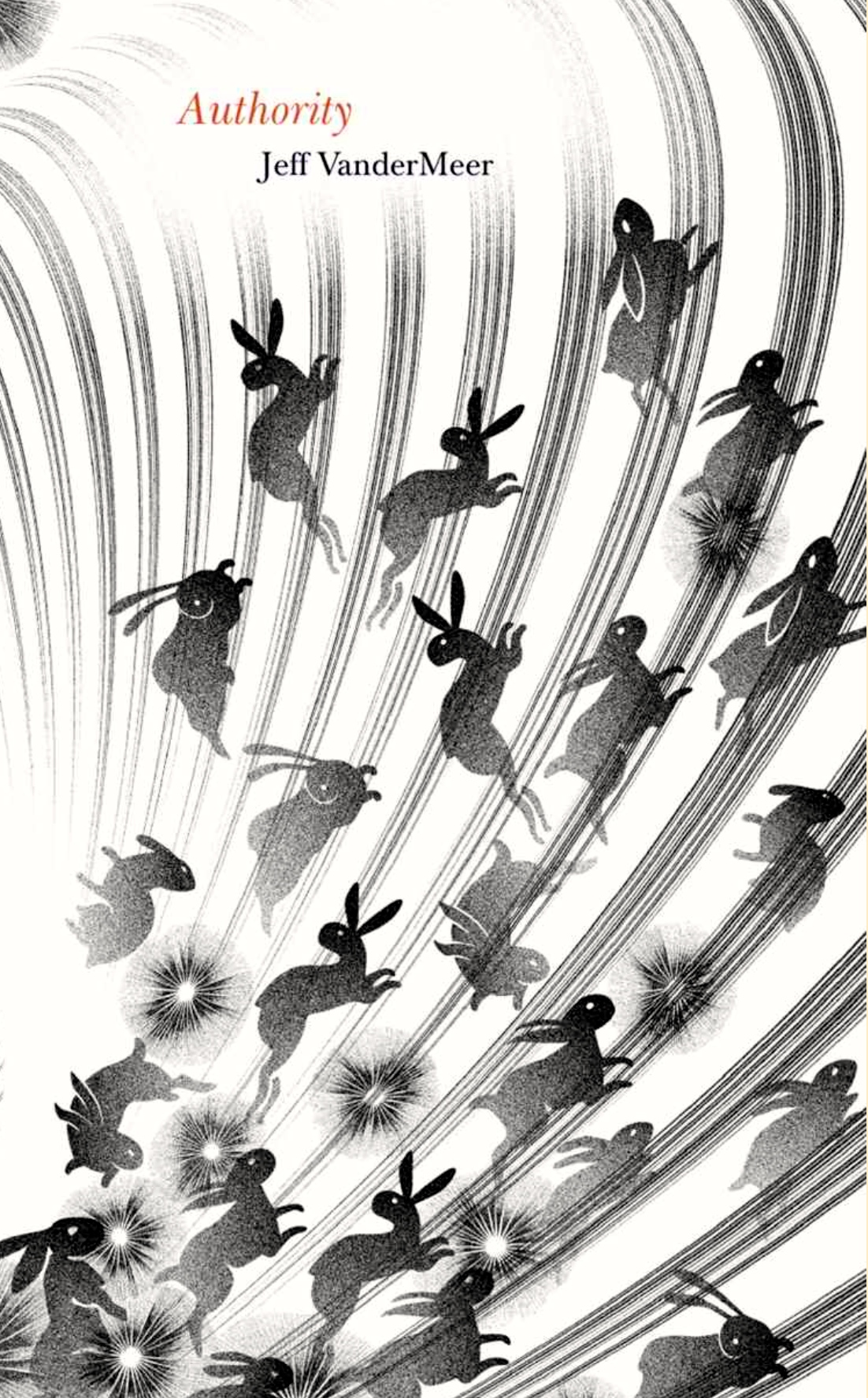 What’s it all about?
Authority is the second novel in Jeff VanderMeer’s Southern Reach Trilogy. It picks up from the events of the first novel with the survivors of that expedition having made their way back without knowing how and remembering little if anything of what happened while they were there.
This new instalment is told through the perspective of Control, the new leader of the team of scientists who monitor the Southern Reach and who send each expedition in and try to deal with the aftermath. Control wants answers, but is himself apparently thwarted at every turn by his second in command and becomes dangerously obsessed.
Why did I want to read this?
I really loved the first volume, Annihilation, which I devoured and wrote about here. I pre-ordered this as soon as I finished the first and I’m anxious to get my hands on the final volume when it comes out later this year.
What did I think of it?
I just thought it was all wonderful stuff. The change of perspective was unexpected but just as compelling as the events in the first novel. It’s not really a fair or accurate comparison, but while I was reading it in my head I had the feeling that if Annihilation was Alien then Authority is Aliens and that has kind of stuck with me as a reference.
I loved the fact that we were seeing quite extraordinary events from the the other side of the fence (almost literally) with office politics and alliances and secrets and behind-the-scenes machinations all getting in the way of Control figuring out what’s going on.
I really liked the fact that his predecessor had actually broken protocol and led the ill-fated (as they all are) 12th expedition, which gives the events of the first book a really different slant (and guarantees a re-read). The sense of dread, the unsettling feeling, the paranoia all carried through to Authority, and once again I read this in virtually a single chunk, I was so keen to find out what revelations were in store. And we did get some revelations, though as with all of these things we may have been given some answers but there are still a lot of questions tantalisingly hanging there.
I have absolutely no idea what’s going to happen next, but I can hardly wait to find out!
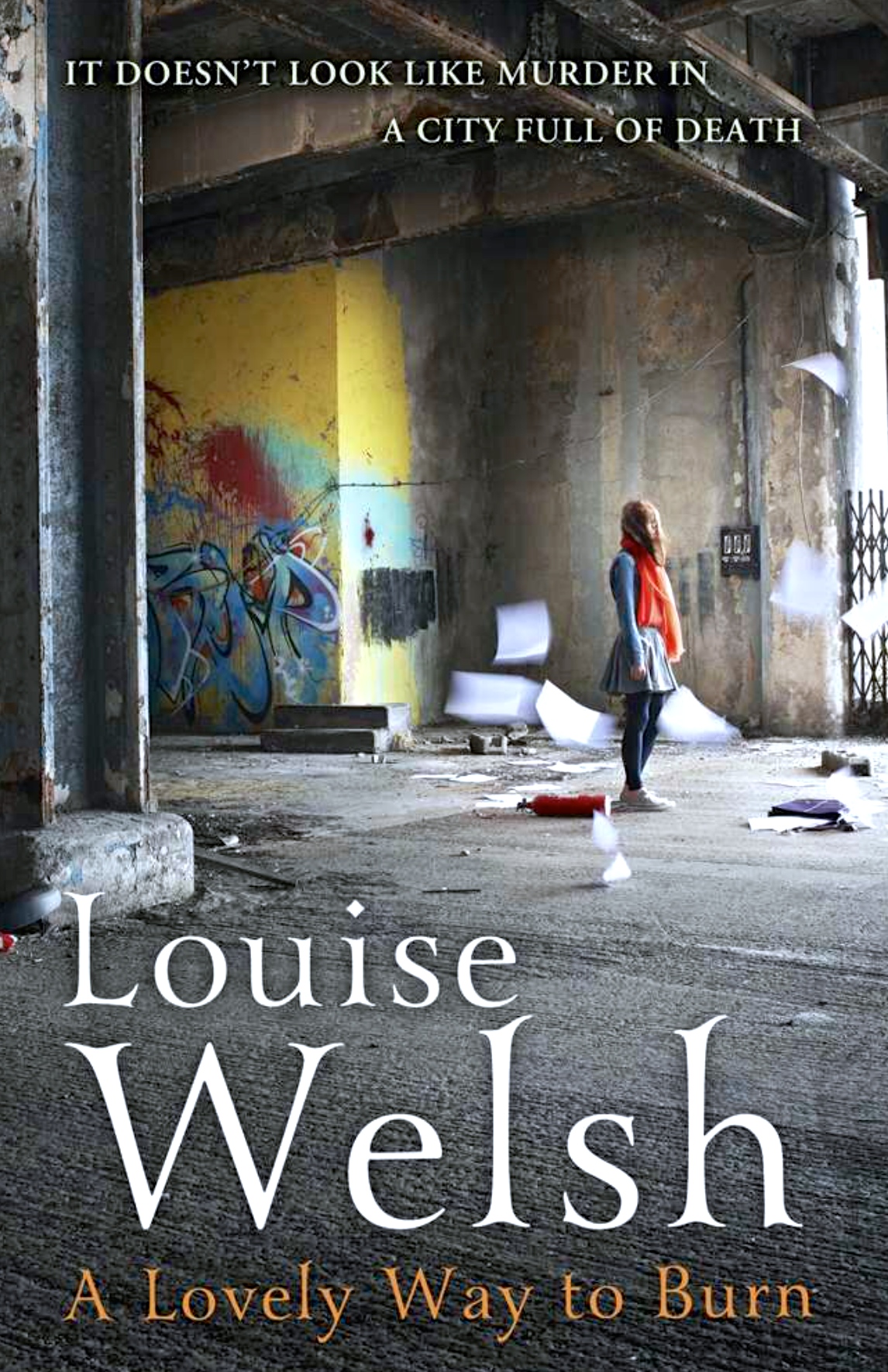 What’s it all about?
Stevie Flint is a presenter on a TV shopping channel (she used to be a journalist), with a job that seems to suit her (up to a point) and a glamorous doctor for a boyfriend. But something is going wrong in the London she works in; a mysterious disease, “the sweats” is spreading though out the population at a rapid rate. When her boyfriend fails to turn up for their planned date she finds him dead in his flat and of course first thoughts are that he too has succumbed to the same sickness as so many others. But it becomes clear to Stevie that his death doesn’t fit, and she starts to investigate his apparent murder against a backdrop of death and paranoia and societal breakdown.
Why did I want to read this?
I’ve not read much of Louise Welsh’s work but I’ve really enjoyed what I have read, particularly The Girl on the Stairs which was one of my last reads of 2013 and was really gripping, so a dystopian thriller slash murder mystery which is also the first of a trilogy couldn’t be resisted.
What did I think of it?
I enjoyed it so much I mentioned the author in a Tweet (what a fangirl I can be sometimes, even at my age) (and she very kindly replied, even better!).
A Lovely Way to Burn is a really interesting book which starts off with some action (the random shootings carried out by three different people) implying one sort of book and then heads off in a rather different and in some ways more interesting direction.I kept expecting certain things to be connected and was consistently wrong-footed which I particularly liked. Stevie is a fabulous character, strong but vulnerable, and determined to get answers.
I read this in two sittings over a weekend and was desperate to get to the end. The stuff about how quickly society can fall apart under duress was really convincing and provided an unsettling backdrop to what could have been a fairly standard murder mystery. I’m so glad this is part of a series, I can’t wait to see what the next volume has in store. Recommended.
 What’s it all about?
The Child’s Child is a book within a book, or at least a contemporary story wrapped around a tale of an unmarried mother in Devon which starts off between the wars. Grace is working on her thesis about illegitimacy in the English novel and is asked to read the story of Maud and her pregnancy and the things she has to do to maintain face at a time when this sort of thing was a major problem (disowned by her parents, that sort of thing). The events of Maud’s story start to echo what’s happening in Grace’s life as she shares a house with her brother Andrew and begins to deal with his partner James who moves in with them setting off a chain of events that will change them all.
Why did I want to read this?
I really like the Barbara Vine novels; I’m pretty sure I have read all of them over time, and I certainly have come to prefer them to Ruth Rendell’s (for it is she, of course) more straightforward police procedurals. So it’s always a bit of an event when a new Vine is published.
What did I think of it?
I enjoyed reading this novel but the lingering feeling I have, almost six weeks later (I am SO behind on my posts) is one of vague disappointment. I came to find Maud really, really annoying, and although I know that the way she behaves is a product of what has happened to her and the way she has had to adapt to her circumstances but I came to find her deeply unlikable. I know very well that you don’t have to like a character to find their story compelling but I came to care about the futures of almost everyone except her. At the same time I wanted to know more about Grace and the modern-day setting which I found much more interesting and which seemed to me to be a bit rushed. And for me the connections between the two narratives were a bit tenuous.
 So by no means bad, well written as always and worth reading, it just seemed to be missing something for me at any rate. Will still look forward to her next novel, though!
This was my final book for Readathon !!
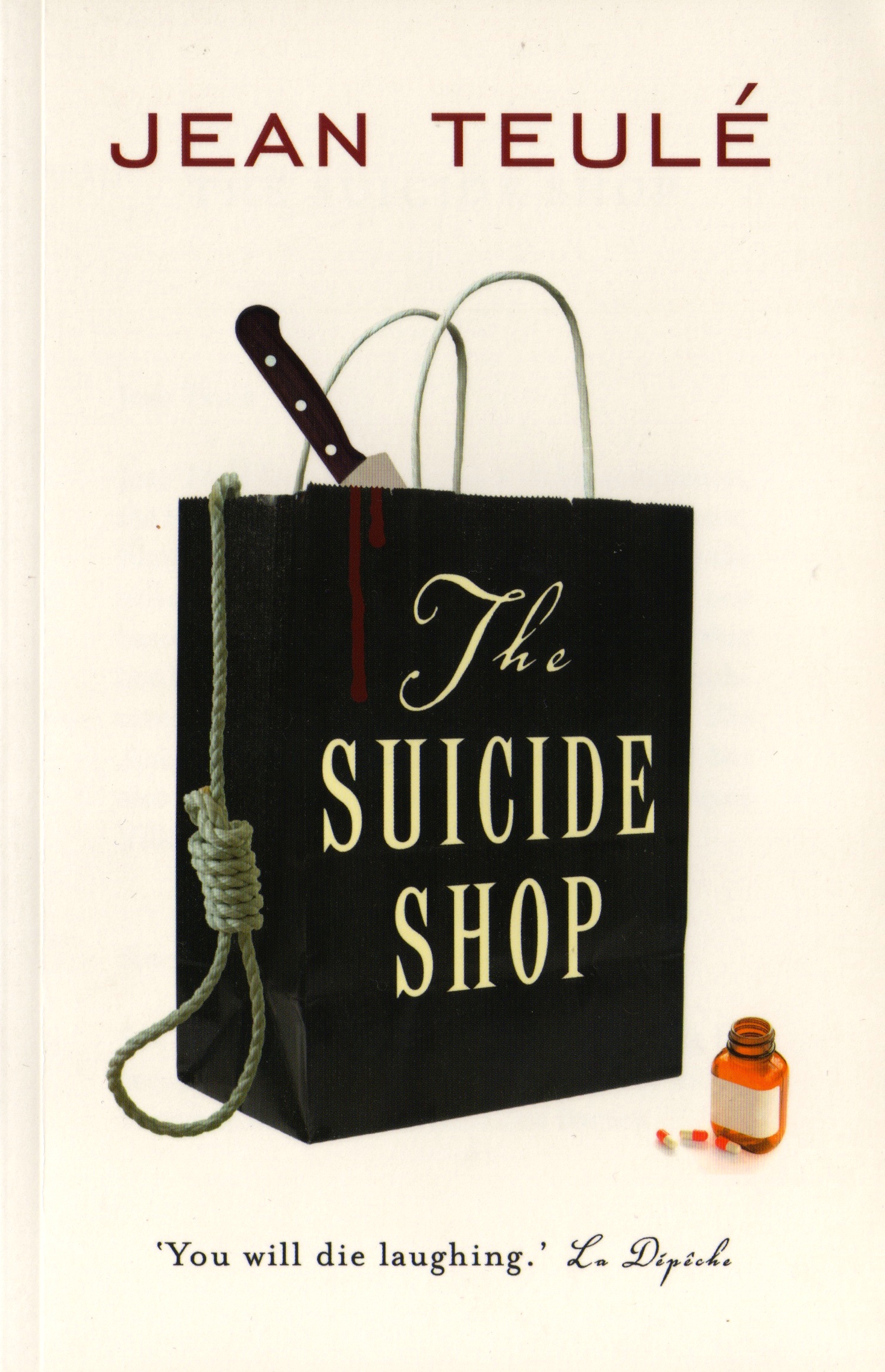 What’s it all about?
This is a story set some time in the future, where the world has gone through some form of environmental crisis and large numbers of people no longer want to continue living. And in order to help them shuffle off their mortal coil(s), the Tuvache family has for many many years run The Suicide Shop, providing a range of means to end it all to suit all pockets. They are a family suited to this work, a mournful bunch. But then something extraordinary happens – Mme. Tuvache gives birth to Alan (named after Alan Turing who of course committed suicide himself), who turns out to be a bit of a disappointment – he really enjoys life, and sets out on a mission – to make his family happy.
Why did I want to read this?
I came across this initially not as a book but as a film, an animation which sadly doesn’t seem to have been released in the UK and isn’t available on DVD unless you can speak French (which despite many years of school I still haven’t managed). The Book God found out that the novel was published in English and having read and enjoyed (if that’s the word, and I’m really not sure it is) Eat Him if You Like by the same author I decided to give this a go.
What did I think of it?
I enjoyed this short novel very much. Alan is a lovely character, completely subversive, going about the business of changing his family quietly and steadily and against all the odds. It’s described as a black comedy and that seems fair; it’s amusing rather than laugh out loud funny and is also actually very sweet.
I won’t give away whether Alan succeeds, I’ll only say that I found the end both unexpected (though perhaps I shouldn’t have) and satisfying, and would definitely recommend this to you if you would like something a little bit different and, yes, very French. I would love to see how the film handles the story.
This was my seventh and penultimate Readathon book.
 What’s it all about?
The Dead Men Stood Together is a re-telling of the Rime of the Ancient Mariner, from the perspective of a young boy serving on the voyage, whose uncle is instrumental in the terrible events that befall the ship and its crew.
Why did I want to read it?
I love Chris Priestley. I think I now have all of his published novels and short story collections, whether in hard copy or as e-books. He has a wonderful way with the ghostly and the ghoulish and the downright creepy. And of course who can resist the Ancient Mariner, an iconic tale.
What did I think of it?
Thoroughly enjoyed it. As well as the traditional elements of the tale it gives a both a back story to the events and a resolution which is really moving (well I thought so anyway). The prose is simple but the story is totally compelling even though it is entirely familiar (to anyone who has read the poem of course; and if you haven’t then go and do so now. I’ll wait).
It is dark and atmospheric and another good book to read in the dark in the middle of the night. Recommended.
Though someone does really need to start thinking about the poor old albatross.
This was my sixth Readathon book.
 What’s it all about?
The House of Dead Maids is set in an unidentified part of (presumably) the British Isles and tells the story of Tabby, who is taken from the orphanage where she lives and brought to Seldom House, a decaying mansion in the middle of nowhere, as she understands it to take up a position as a maid. When she is joined by a young boy it becomes clear that there is something rather more sinister going and, reinforced by the number of ghostly maids and masters that haunt the house, she fears for her life.
Why did I want to read it?
As happens far too often these days I have no recollection of where I found out about this book, but it went onto my Christmas wish list and duly turned up under the tree. I liked the premise and found the cover compelling. Of course I entirely missed the obvious (i.e. it’s mentioned on the front cover) reference to the sort being “a chilling prelude to Wuthering Heights”, duh!
What did I think of it?
This is definitely a good book to read in the middle of the night if you want to be creeped out. It’s dark and Gothic and has a strong atmosphere, and I felt worried for the fate of Tabitha and the little unnamed boy and the rather unpleasant adults that surround them. Well, at least one adult was kind to them but she was of the determined not to interfere variety of servant. A short book, very enjoyable and the author’s epilogue gives some good links to the real Bronte world.
This was my fifth Readathon book.


 Bride of the Book God