You are currently browsing the category archive for the ‘Reviews’ category.
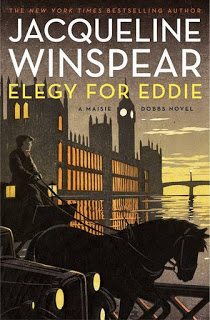 What year are we in? 1933
What’s Maisie’s case?
In Elegy for Eddie Maisie is approached by a group of men from her childhood who want her to look into the death of Eddie, a gentle but educationally challenged man with a real talent for working with horses, who has been killed in an apparent accident at a local paper factory. But he wasn’t himself in the weeks up to his death and his friends are convinced there is more to his death than appears.
What did I learn that I didn’t know before?
This is less about the impact of the war than most of the other novels in the series so not much knew to learn, but there is quite a bit about the inter-war period and politics and the shadow of coming war.
What’s happening in Maisie’s personal life?
She is still getting used to her change in circumstances, but worries about her love life are lurking in the background.
Did I enjoy it?
I came to enjoy this once the story really got going, but was worried at first because it smacked a little of those episodes of crime stories on TV where the murder of the week directly involves one or more members of the resident cast in a way that I almost always find entirely implausible. But here it makes sense that the men would seek out someone they knew and trusted to look into things and it does develop into something rather more interesting. I also like the fact that matters don’t work out entirely to Maisie’s satisfaction, which also seems realistic. A transitional novel for reasons that will become clear if and when you read it.
 What year are we in? 1932
What’s Maisie’s case?
In A Lesson in Secrets, Maisie goes undercover in an independent college in Cambridge on behalf of Special Branch and the Secret Service to observe the goings-on of students and staff in the light of potential un-British activities (though I’m not sure such a thing actually exists). It’s all about the politics. there is of course a death and there is also much about identity and passing off.
What did I learn that I didn’t know before?
I didn’t know how badly some conscientious observers were treated when they ended up in prison rather than driving ambulances or working on the land. Horrible.
What’s happening in Maisie’s personal life?
She is getting used to her change in circumstances, and love continues to develop. Oh and it’s clear she is really good at teaching (and enjoys it).
Did I enjoy it?
I think this is my favourite of the four I read in a row, simply because I’m an absolute sucker for tales set in college or university and the whole administration of it all. I worked out quite early on what the reason behind the murder was but dithered backwards and forwards on the who dunnit part. And this is the first of the books where the rise of the Nazis has an impact.
 I’ve talked about my binge-reading of the Maisie Dobbs mysteries here so won’t go into the details again, but I will say that I have read and enjoyed all of the novels in the series (and we are now on volume 10 and a little gap in the story) and they are just lovely books to read. I love Maisie as a character and one of the most enjoyable things is the development of her story over time informed by the cases she’s investigating, all harking back to her experiences in WWI. So when you read this and next three mini-reviews please keep this in mind as I want to avoid repeating myself. 🙂
And Lee Child is a massive fan apparently, so there you go.
What year are we in? 1932
What’s Maisie’s case?
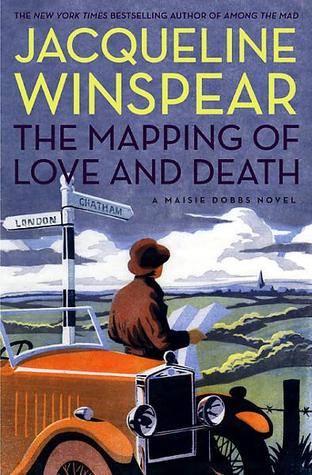
In The Mapping of Love and Death, the remains of an American of English heritage who joined the British Army as a cartographer have been found and there are questions about how he actually died. Maisie is asked by his parents to look into the matter, and in particular to find the young English nurse with whom he fell in love.
What did I learn that I didn’t know before?
All the stuff about the work of cartographers in WWI was fascinating, and I also learned a little bit about the early days of documentary film-making.
What’s happening in Maisie’s personal life?
A key figure is coming to the end of his life, but love is on the horizon.
Did I enjoy it?
Absolutely, the story of the young soldier far from home and finding love and how the consequences of that all spilled over into the present was very affecting, and I was glad the ending didn’t tie everything up into a neat bow.
 What’s it all about?
The Atrocity Archives is all about The Laundry, a secret part of the British security services which deals with the supernatural and the occult and unmentionable things in other dimensions and that sort of stuff. It is most particularly the story of Bob Howard and how he moves from being the tech guy (albeit the tech guy with some very particular knowledge and skills) to an operative in the field. Other than that I shall say nothing about the events that transpire in the two connected stories that make up the novel.
Why did I want to read it?
This is actually a re-read, picked up again because I bought the most recent Laundry Files novel by Charles Stross (The Rhesus Chart) and realised that it would be a good thing to read the lot in sequence and then appalled myself by realising I only had the first one so decided to start from the top and ease myself back into the Laundry world.
What did I think of it?
Re-reads are often a bit dangerous especially after some time has passed because what you may have loved way back then you may not still love now. However, I was really pleased that I found this equally as enjoyable as the first time I read it and it sets me up nicely for the rest of the sequence. Bob is a very engaging character and his origin story (for it kind of is that thing) is cleverer than most because he’s already in the secret organisation, so knows loads of stuff, it’s just the change in his status because of the particular case he gets involved in that by necessity leads him into learning loads of additional cool stuff; and he is good at what he does without being totally smug.
I particularly love this because having been a civil servant for *gulp* 28 years – I was very, very young when I started 🙂 – I recognise the bureaucracy and the obsession with the small things at the risk of missing the bigger picture and the office politics and petty rivalries and the jockeying for position which made this all so believable. Well, recognisable when you put aside the liberal use of the adjective squamous, the zombie doorman, the deployment of Hands of Glory and the general Lovecraftian-ness of it all.
Though now I come to think of it…..
The staff disciplinary measures are a bit extreme!
Great fun and looking forward to working my way steadily through the remaining four novels and three (I think) short stories.
 What’s it all about?
The Girl With All The Gifts is the story of Melanie, about 10 years old and clearly very bright indeed. She also happens to be a zombie, something we learn very early on in the story though Melanie herself doesn’t come to realise this for quite some time. She attends school on an army base with a number of other children just like her in that although they have the drive to eat human flesh like the other “hungries” who have apparently overrun the world, they are also high functioning, intelligent, able to learn and therefore of great interest to the authorities. For the reason they are being held on this base is to be tested (by being taught like normal children would) and experimented on (in rather unpleasant ways) to find out exactly why they are so different and whether this could lead to a cure.
And then it all goes a bit wrong….
Why did I want to read this?
I think I’ve said before that I tend to be more of a vampire than zombie girl but I’ve had the good fortune to read a couple of very good zombie stories over the past few years, and this one came highly recommended. The idea of intelligent zombies who can (at least in Melanie’s case) come to understand what they are and up to a point exercise some level of self-control sounded fascinating, and I really wanted to give this a go to see if it lived up to expectations.
What did I think of it?
Oh, I had all the feelings about this book!
This is an absolutely brilliant novel and I read it in a couple of sittings, desperate to find out what would happen to Melanie. The great strength of the novel is the characterisation, and not just that of Melanie whose side I was definitely on all the way through but the adults that surround her especially once things move outside the base itself. The most sympathetic is Miss Justineau, Melanie’s favourite teacher who has come to think of her as a “normal” child and has introduced her to the Greek myths including the story of Pandora (who was the original “girl with all the gifts”) and believes that her life is worth preserving despite the risks.
But we also have Sgt Parks who over time comes to respect Melanie (in his own way), Pte Gallagher who has known nothing other than a world full of zombies, and Dr Caldwell, the female scientist so obsessed with understanding how the infection that caused zombies spread that she is unable (or refuses) to see the children as people and treats them with appalling cold-bloodedness.
I’m not going to say anything else about the plot because it needs to be experienced first hand though I would agree with other reviews that there isn’t a huge amount that is new here, but I came to feel so strongly about Melanie that none of that mattered. I could see where it might end up and was mostly right but that’s not really the point, and I found the end of the story very satisfying.
I was really pleased that this turned out to be such a good read given that I persuaded Silvery Dude to buy a copy to take on holiday with him. I think he’s finished it but he hasn’t told me what he thinks of it – I’m assuming positive response as we had an exchange of e-mails casting the movie version.
I loved this and can’t recommend it highly enough.
 What’s it all about?
So The Gone-Away World is set at an unidentified point in the future when there has been a catastrophic war which has left the world seriously damaged. The trigger for the story is a fire and explosion at an important facility which our protagonist (who doesn’t have a name as this is all first person) and his friends and colleagues are summoned to sort out. We then flashback to the early life of our guy and his best friend Gonzo to explain the background to how we got to this point, before the story moves forward. It’s post-apocalyptic science fiction of the very best kind.
Why did I want to read it?
I was vaguely aware of this novel when it came out in 2008 and it’s been hovering around my to-buy list since then but I only got a hold of it after reading and loving Angelmaker (you can read my review at that link) and wanting to read more of Harkaway’s work. The impetus for reading it now was a request from my lovely friend Silvery Dude who wanted to discuss it with me and asked if I would bring it to the top of the TBR pile (he also wants me to read the latest Harkaway, Tigerman, which I hope to get to soon). And you know, it’s my sort of thing.
What did I think of it?
Well, this is a bit special. I read the bulk of it in one sitting as I was ill and housebound and needed to keep my mind away from feeling sorry for myself, and when I say the bulk of it I mean something like 400 pages in a day; when I told Silvery Dude by e-mail that I had finished it his response was (and I quote) “Finished already? Holy shit !!” which was gratifying and amusing in equal parts 🙂
The story is totally absorbing and the whole background to narrator’s current predicament, his childhood and martial arts training, his university life and his military career, the war and his true love and the rebuilding of a world that had been significantly damaged completely captured my imagination. And then you have the main event of the story, the attempt to repair the pipeline and the thing that goes wrong followed by a complete and utter and unexpected WTF moment that makes you revisit everything you’ve read. And I got very very anxious on his behalf, hoping that it was all going to work out and would he find out what had really happened to him and who was/were the bad guy(s) and who was on his side and would there be a happy ending? Or at least a satisfactory resolution?
Totally swept along by it. Thought it was fabulous. Lots to think about and discuss. Loved it.
And bees. Again.
 What’s it all about?
The Gospel of Loki is the re-telling of the rise and fall of the Norse Gods entirely from the perspective of the Trickster, Loki, using (as far as I can tell and goodness knows I’m no expert) the structure of the sagas but also very much in the style of the self-serving memoir. Which makes it sound a bit dull and worthy when in fact (jumping ahead a little here) it is witty and funny and quite moving. I’m going to say right up front that I loved it.
Why did I want to read it?
I’ve come a bit late to the work of Joanne Harris. I was obviously aware of Chocolat because of the film (which I still haven’t seen and I’ve only recently bought the book) and I’ve read a couple of her other novels (Gentlemen and Players a particular favourite) and enjoyed her view of the world which is a lot darker than you might expect. I also have an enormous (and I will be clearly, entirely pre-Tom Hiddleston) love for Loki as a character; I even had a lilac-point Siamese cat of that name back in the 1980s. So I like to think I’m the ideal audience for this.
What did I think of it?
Like I said at the beginning of the post, I loved this. It’s so entirely its own thing and introduces (or hopefully re-introduces) us to the world of Norse mythology untainted by the Marvel thing which is the main reference these days for so many young people (and again I will say that I really enjoyed the Thor and Avengers films as you will see if you visit my other blog, but I am very clear that it is not the same thing at all). So we have Odin and his ravens and his single eye binding Loki to him in a form of brotherhood that of course is not going to end well, and you have Loki and his too-clever-for-his-own-good-ness trying to fit in but not really, the permanent outsider who can never win and who will inevitably trigger the disaster that is Ragnarok. I still liked him though. And it made me want to go and find out more about the original tales, which is always a good thing. Recommended.
 What’s the book about?
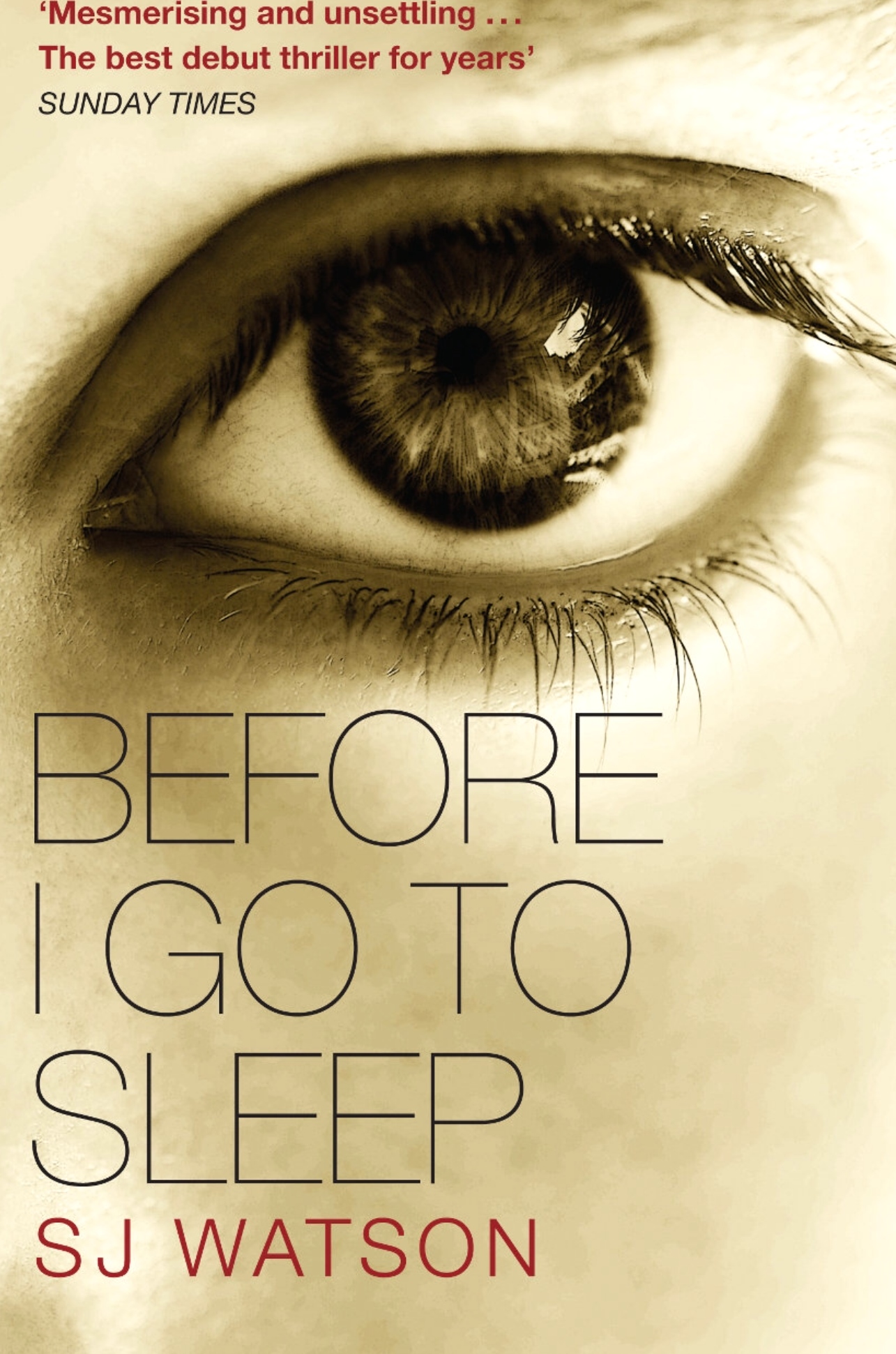
As I think I am one of the very last people in the universe to read this it seems a bit redundant to talk about the plot, but just in case there is someone out there even further behind in catching up with best-sellers than I am, it’s worth explaining that this is the story of Christine Lucas, who wakes up every day with no memory of what’s gone before and has to reconstruct her past before she goes to sleep and loses it all again (hence the title). But it becomes clear that she wants to get better, is seeing a doctor and has begun to keep a journal so that she has access to things that would otherwise be completely gone, and through this process starts to question what she has been told about her life and what happened to her.
Why did I want to read it?
There was a point when you absolutely could not miss the advertising for Before I Go To Sleep, something to which I often react badly (I have spoken before about my perversity in not wanting to read what everyone else is reading, at least while they are all reading it), but I knew I would eventually succumb as I enjoy a good psychological thriller so its been lurking on iBooks for ages. The trigger to actually picking it up (if you can pick up an e-book in the traditional sense) was the trailer for the movie version with Nicole Kidman which I really fancy watching so thought I should read the thing first.
What did I think of it?
I really enjoyed it. I’ll admit that I have a soft spot for protagonists who share my first name (even when they are evil possessed murderous cars who are IMHO vastly misunderstood!) and this Christine isn’t that much younger than me. I liked the way she swung to and fro on whether to trust her husband, rationalising why he might tell her things that she finds out are not accurate, sympathising with his point of view in having stood by her in what she can see even in her distress are horrendously difficult circumstances. I like the way she begins to question everything, her understandable vulnerability which is necessary for the plot and which I would have found really really annoying in anyone else but her condition makes understandable.
Of course most of the fun in this sort of psychological thriller is working out what’s real and what isn’t, who to trust and who not, will she work it out and if so will she survive. I spent most of the book coming up with theories of my own about how the story would work out and reckon I was 40% right. I think the ending was a little too rushed compared to the careful groundwork that had gone before but that’s a very small quibble (and I know others have pointed that out before me so nothing new in that thought).
The only downside of having seen the film trailer is a tendency to fit the actors into the characters on the page rather than letting them come alive in my own imagination but again that wasn’t a big issue. I found the story satisfying and enjoyable, and knowing the outcome would be interested in seeing through a re-read how well (if at all) the clues were planted and why I missed them.
Into the Woods by John Yorke
 I think it’s worth saying up front that I am not a writer. I use my blogs (here and at Screen God) to record my feelings about books and films so I can share them with others who might be interested, and that’s all. I know lots of bloggers who write fiction or poetry but that’s not me. But I am fascinated by the creative process; as well as loving to read about books, I like to read about how writers write, and Into the Woods (subtitled “How stories work and why we tell them”) definitely falls into that category, though its focus is on film and TV scriptwriting. It’s really fascinating, wonderfully write and full of insight. I now understand a little better three and five act structures and how they still apply even when the writer is consciously trying to subvert them. Lots and lots of practical examples (one of the appendices has the act structure for Raiders of the Lost Ark), I now spend my time looking for Inciting Incidents in everything I’m reading. Very worthwhile.
Darling Monster by Diana Cooper
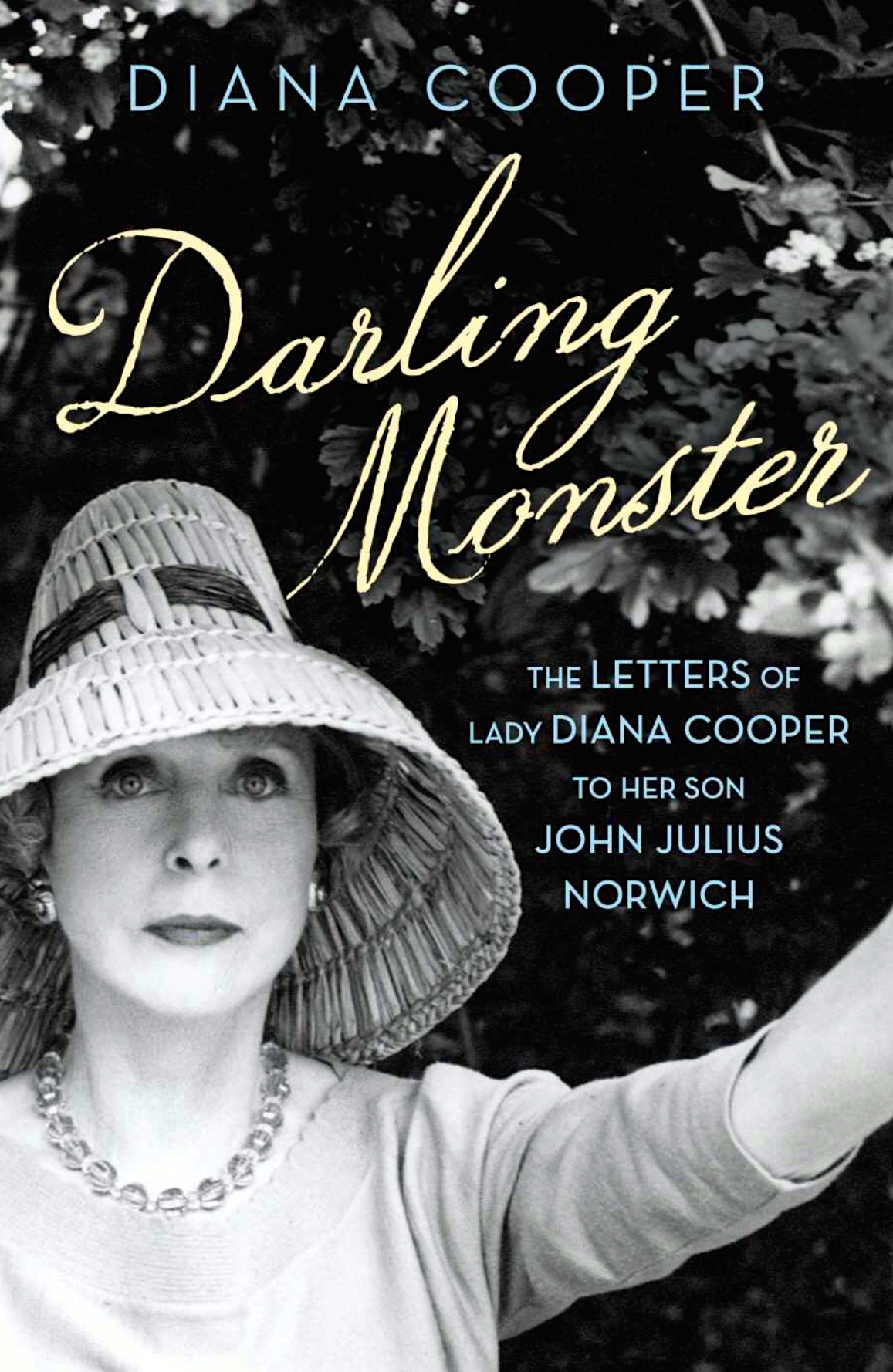 I have mentioned elsewhere I’m sure the fascination I have with aristocratic and Royal ladies especially, and I couldn’t resist the letters of Lady Diana Cooper to her son John Julius Norwich, written between 1939 to 1952, so covering the momentous events of WW2 (when her husband Duff Cooper was in Churchill’s government) and their time spent in the British Embassy in Paris. Full of gossip and clothes and politics and culture and farming, this is a really touching collection and I was absorbed all the way through.
A quick round-up of recent short reads.
 I Murdered My Library by Linda Grant
Linda Grant, like all writers I suppose, was totally surrounded by books, a collection built up over many years. But moving house meant weeding out her extensive collection to fit into her new space. In doing so she is taking apart her own history and in this short work talk about how she went about it, how it feels like now and how our development as people is reflected in the book collection we have. If you’re the kind of person who keeps books, that is. Really enjoyed this but a chill did settle on my heart as the Book God and I really really need to do something similar though not because we’re moving but simply because we are running out of room. Book lovers will enjoy this.
 Unlocked: An Oral History of Haden’s Syndrome by John Scalzi
This is a taster for the novel Locked In which is due out over the summer and which I have already pre-ordered based on the strength of this story and a sample chapter which I’ve read. I’m a sucker for this kind of plague/disease/disaster type thing and I am also very fond of the oral history style (whether in fiction or non-fiction). Great little store explaining what Haden’s Syndrome was, how it was dealt with (or not) and where we are at the point the main story will start. Clever way to get that info out there without burdening the narrative (at least that’s my assumption, we’ll have to wait and see). Cool, though.


 Bride of the Book God