
You are currently browsing the monthly archive for September 2007.
 In Donald Thomas’ book of short stories, Holmes finds himself involved in some of the most intriguing and sensational crimes of his time, including amongst others the Lambeth Poisoner and the Brides in the Bath murders. The enjoyment of reading these stories is in seeing how Holmes and Watson are carefully fitted into narratives that are already pretty familiar to anyone with an interest in true crime. I read most of these in one sitting, a real indulgence for me, and will certainly look out for the other Sherlockian stories by the same author. It has a lovely Atkinson Grimshaw cover too……………
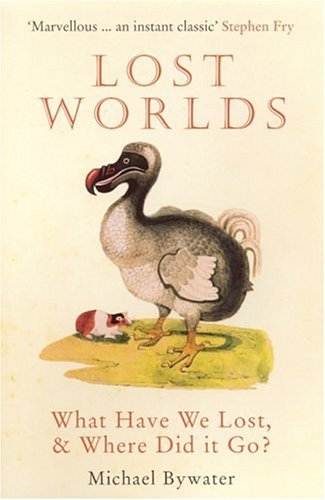 What have we lost and where did it go? asks Michael Bywater in Lost Worlds, a collection of observations on things that appear to be no more. These often go off into tangents which are not wholly connected with the subject at hand. He talks about the love that “then, dared not speak its name, but which is now, thank heavens, walking cheerfully about the place saying hello and introducing itself” when reminiscing about favourite armchairs, men for the use of. He asks what has happened to the Little Man when wondering about the disappearance of clerks. He refers to a mythical Scotland where stockings are still made of lisle, and no-one speaks of things Best Not Spoken Of, and which largely exists in the English mind, when considering pudeur (which I confess to having to look up in the dictionary).
I’ve been dipping into this book for weeks, often laughing out loud followed by the infliction of a particularly humorous quote on the long suffering Book God, and although I haven’t always agreed with the outcome of Bywater’s musings, the experience has been very pleasurable.
 Holmes and Watson are called to Scotland at the behest of Holmes’ brother Mycroft in Caleb Carr’s The Italian Secretary. Queen Victoria’s peaceful retreat to the Highlands has been disturbed by the gruesome murders of two men at Holyrood when she was expected to be in residence, and the mystery must be solved.
The goings on at the palace hark back to the events surrounding the violent death of David Rizzio, Mary, Queen of Scots’ Italian secretary. Is there a link? Does Rizzio’s spirit stalk the palace apartments? Holmes, of course, finds the solution, exposing corruption and preventing a domestic tragedy along the way.
Victorian Edinburgh is beautifully re-created, and although the tale of Rizzio is presented in a rather floridly romantic way to my taste (I’ve never been convinced that Mary was as innocent as some like to make out) the supernatural elements really add something to the atmosphere.
I thought the story here was much slighter than the other Holmes pastiches I have read so far, but I think the characters of Holmes and Watson have rarely been so clearly drawn, and the dialogue (except for Holmes re-telling of Rizzio’s demise) is really spot on.
 Night Watch by Stephen Kendrick, the second of the Holmes pastiches on my list, is slightly unusual, introducing as it does another famous detective as a young man, namely Father Brown. It is Christmas Day, 1902, and Holmes’ brother Mycroft seeks his involvement in the investigation of the murder of a priest in a London church. The murder is significant as a secret conference of leaders from various religious denominations is being held there, and the murderer is likely to be among the distinguished guests.
Father Brown is attending the conference as assistant to the Pope’s representative, and is himself under suspicion; I’m sure I’m not giving anything away if I reveal that he is not only not the murderer, but he provides some assistance to the great detective.
Although most of the novel is set in the claustrophobic atmosphere of the church itself, there are some thrilling outdoor scenes including a chase through the snow on the Thames, and the climax takes place high above the streets on the roof of the church itself.
I really enjoyed the story; I failed to guess the murderer, but loved the Edwardian setting and the short timeframe in which the story takes place. Of course, it made me want to buy the complete Father Brown stories, but that’s for another day.
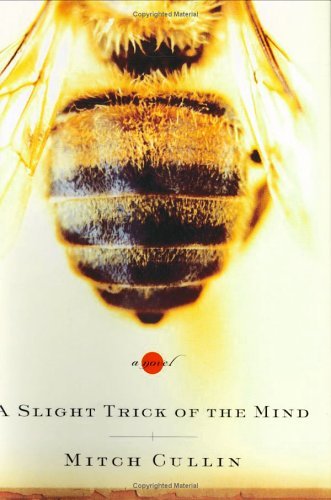 It’s 1947, and an elderly Holmes is in retirement in Sussex with his bees, being looked after by his housekeeper, Mrs Munro, and her son, Roger in the absence of Mrs Hudson and Watson, who are both long dead. He is afraid that his mind is beginning to fail now that he has reached his nineties, and he cuts a very lonely figure.
Mitch Cullin’s story revolves around three things of importance to Holmes: his relationship with Roger, in whom he has encouraged an interest in bees; a recent trip to Japan to investigate the properties of a particular plant which he believes may help to prolong his faculties; and the recollection of a case from his past where he became obsessed with a young woman who had lost both of her children.
There is a tragic event in the middle of this story which, along with Holmes’ experience of Japan in the aftermath of the war through a visit to Hiroshima, makes this a sad and beautiful novel. Holmes has to face up to ageing, and the fact that other people, including Mrs Munro and his Japanese host, ask more of him than he is able to give. I found this a remarkable addition to the vast body of work about about Holmes, and would suggest it even to those who don’t follow the life of the Great Detective.
It has also led me to dig out a number of other Holmes pastiches which the Book God and I have collected over the years, so don’t be surprised to see more on this subject in future posts.
The old favourites:
Attack of the Unsinkable Rubber Ducks by Christopher Brookmyre – the latest Jack Parlabane story. Apparently this time he is investigating a particular psychic, and at some point he finds himself on the other side, with “an exclusive still to file” – his books are always a treat, and so I’m saving this for holiday reading in October.
First Among Sequels by Jasper Fforde – I know that his books divide people, but I have always enjoyed the stories for their inventive silliness, perhaps because I don’t mind fantasy for it’s own sake. The return of Tuesday Next.
White Corrider by Christopher Fowler – the latest Bryant & May adventure. A cold winter, a body in a locked autopsy room, and two elderly detectives trapped in the snow and trying to solve the crime from a distance. Again, a likely holiday read.
The Gravedigger’s Daughter by Joyce Carol Oates. I spoke in my last post about my great love for her work, and this looks fascinating. It focusses on Rebecca, whose family has come from germany tos ettle in America and how her life develops. I can never speak too highly of her, and if you have never read any of her novels I urge you to try.
The Devil in Amber by Mark Gatiss. I really like Mark Gatiss as an actor and writer for TV (especially his involvement with Dr. Who), and I liked the previous Lucifer Box novel, so expect to enjoy this too; I’m a sucker for fascist messiahs with peculiarly satanic designs.
Recommended by others:
Twenty Thousand Streets Under the Sky by Patrick Hamilton. Originally published in the 1930s, this comes highly recommended by a number of people, including David Hepworth who has mentioned it in The Word more than once.
Hard-boiled female PIs:
Vanishing Point and The Ever Running Man by Marcia Muller. I have all of the Sharon McCone stories, and think she is one of the best of the female Private Eyes; I have stuck with her when I have given up on V I Warshawski and others, but am slightly behind on my reading, with another one published before these still on the pile.


 Bride of the Book God